
GE Dishwasher Won't Start or Latch — 5 Door Latch Failures & Fixes
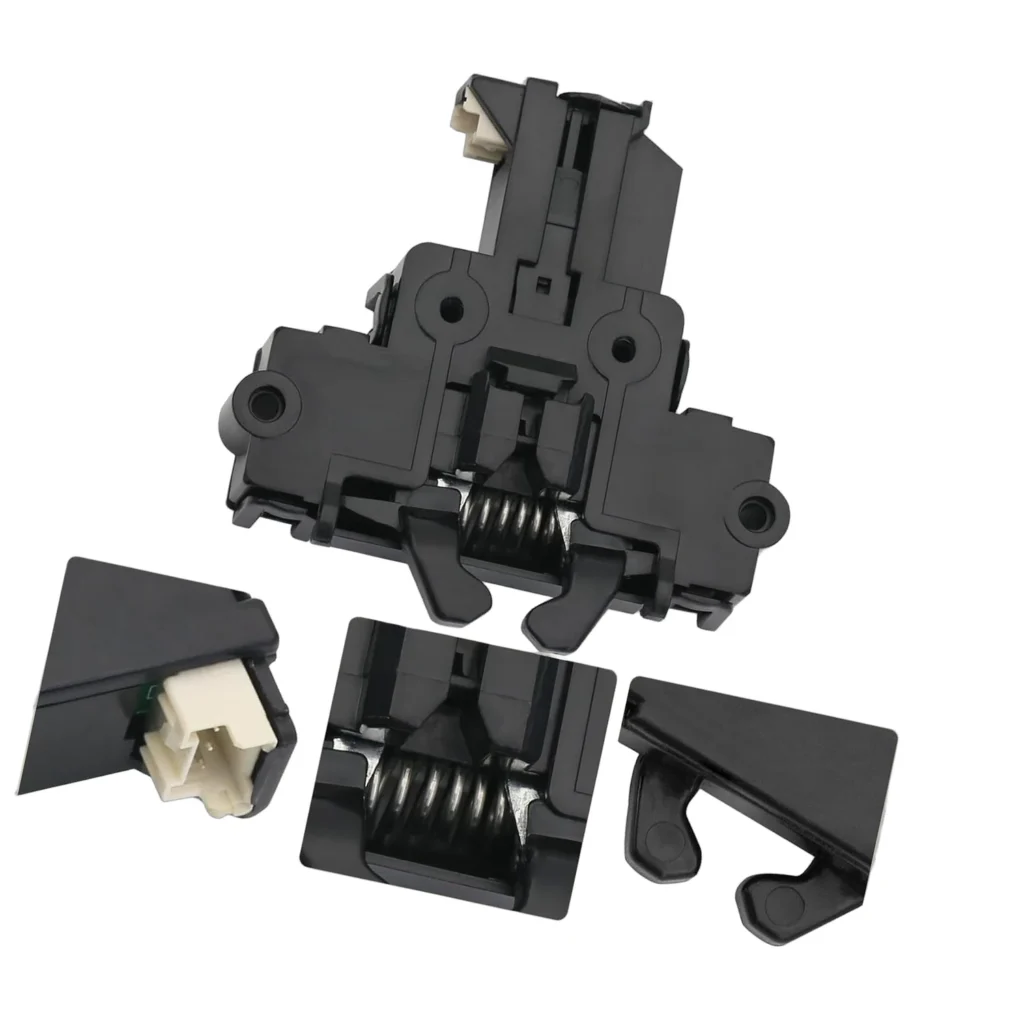
You press Start on your GE dishwasher. The lights blink. Maybe you hear a faint click. But the cycle never begins. You push the door harder — still nothing. Nine times out of ten, this exact scenario points to a failed door latch and switch assembly (WD21X10490). This $35 part is the gatekeeper: if the dishwasher can't confirm the door is closed and locked, it won't fill, won't spray, won't do anything except frustrate you.
The WD21X10490 assembly does two jobs simultaneously. First, it physically latches the door shut against water pressure. Second, it closes an electrical switch that signals the control board "door secured, proceed with wash." When either function fails — mechanical latch or electrical switch — your dishwasher becomes an expensive dish rack.
Quick Symptom Check: Is Your Door Latch Failing?
Check these symptoms against what you're experiencing:
- Door won't catch or stay closed — latch striker misaligned or plastic hook broken
- Door closes but lights blink or flash — switch contacts aren't making connection
- Dishwasher starts then immediately stops — intermittent switch contact during vibration
- Must slam door multiple times to start — worn latch mechanism or switch actuator
- Control panel works but cycle won't begin — switch failed in open position
- Error code displayed (if digital) — many GE models show door-related fault codes
If you're experiencing two or more of these, the WD21X10490 assembly is your likely culprit. This part fits dozens of GE, Hotpoint, Café, and Monogram models including GDT695SSJ0SS, GDF510PGM4BB, GDF630PGM3WW, and GDT720SSF2SS.
Cause #1: Broken Latch Switch Contacts (Probability: 45%)
What happens: The mechanical latch still catches, but the electrical switch inside has failed. Contacts get pitted from thousands of open-close cycles, or moisture intrusion corrodes them. Your door physically closes just fine, but electrically the control board never gets the "go ahead" signal.
How to diagnose:
- Close the door and listen carefully — do you hear a click? That's the latch catching.
- Open the dishwasher door and locate the latch assembly (right side of the tub opening, behind the door)
- Disconnect power at the breaker
- Remove the two screws holding the latch assembly
- Disconnect the wire harness and use a multimeter set to continuity
- With the latch manually engaged, test across the switch terminals — you should get continuity (beep)
- Release the latch — continuity should disappear
If you get no continuity in the closed position, or continuity that comes and goes when you wiggle the assembly, the switch is toast. This is the most common failure mode because the switch takes mechanical stress every single cycle.
The fix: Replace the entire WD21X10490 assembly. GE doesn't sell the switch separately, and attempting to repair the switch contacts is futile — they'll fail again within weeks.
Cause #2: Cracked or Worn Latch Hook (Probability: 30%)
What happens: The plastic hook that catches the door striker wears down or cracks completely. You'll feel the door "close" but it doesn't engage with that satisfying click. Sometimes it catches after multiple attempts, or you need to lift up on the door handle while closing.
How to diagnose:
- Open the door and look at the latch hook (the part that extends when you close the door)
- Manually push the hook in and out — does it move smoothly or feel gritty?
- Inspect the hook tip for cracks, chips, or excessive wear
- Check the striker plate on the door itself — is it loose or bent?
- Close the door slowly and watch the hook engage — does it fully extend and catch?
Worn hooks often show a shiny spot where plastic has been ground away. Cracked hooks are obvious — you'll see the fracture line, usually at the base where stress concentrates.
Why it fails: Every wash cycle involves pressure changes and vibration. The latch holds the door against 1-2 PSI of internal pressure during spray cycles. Over 2,000+ cycles, plastic fatigues. Hardwater deposits can also gum up the mechanism, forcing you to slam the door harder, which accelerates wear.
Cause #3: Misaligned Door or Striker Plate (Probability: 15%)
What happens: The latch assembly works fine, but the door striker plate (the metal loop on the door that the latch catches) is bent or the door has sagged on its hinges. The latch and striker don't line up, so the door won't catch consistently.
How to diagnose:
- Close the door slowly and watch where the striker enters the latch opening
- Does it enter centered, or does it hit one edge?
- Open the door and check if it feels "heavy" or drops quickly — sign of weak hinges
- Inspect the striker plate mounting screws on the door — are they tight?
- Look for gaps between the door and tub — uneven gaps indicate sag
The fix: If the striker plate is loose, tighten the mounting screws. If it's bent, carefully bend it back to center alignment using pliers (protect the finish with a cloth). If the door has sagged, you may need to adjust or replace door springs/hinges first, then install the new WD21X10490 assembly.
Cause #4: Water Damage to Switch Terminals (Probability: 7%)
What happens: A leak elsewhere in the dishwasher (often from the door gasket above the latch) drips onto the latch assembly. Water corrodes the electrical terminals or gets inside the switch housing. You'll see green or white corrosion on the wire connector or terminals.
How to diagnose:
- Remove the latch assembly (power off first)
- Inspect the wire harness connector — look for corrosion, moisture, or discoloration
- Check inside the switch housing for water intrusion
- Trace the wires back — are they wet or showing corrosion further up?
If you find water damage, replacing the WD21X10490 won't fix the underlying leak. You must address the leak source (usually door gasket, spray arm seal, or tub crack) or the new latch will fail the same way.
Cause #5: Thermal Damage from Overheating (Probability: 3%)
What happens: Rare but real — a shorted heating element or wiring fault causes excessive heat near the latch location. The plastic housing melts slightly, or internal switch components warp. You'll often smell burnt plastic or see discoloration on the latch body.
How to diagnose: Visual inspection is key. If the latch housing looks melted, warped, or discolored (brown/black spots), and you've had other electrical issues with the dishwasher, thermal damage is likely. This usually accompanies other symptoms like tripped breakers or burnt wire insulation.
The fix: Replace the latch AND investigate the electrical system. A melted latch means something else is wrong — find and fix that issue or the new latch will melt too. Check heating element resistance, inspect wiring for shorts, and verify proper grounding.
Installation Tips: Getting It Right the First Time
Replacing the WD21X10490 is straightforward but there are two common mistakes:
Don't overtighten the mounting screws. The latch mounts to thin sheet metal or plastic tub material. Overtightening cracks the mounting bosses or strips threads. Snug is enough — you're not mounting an engine block.
Test before you reassemble everything. Before you screw the latch back in permanently, connect the wire harness, restore power, and test operation. Close the door and try to start a cycle. Confirm the latch catches and the dishwasher begins filling. This saves you from disassembling twice if something's not quite right.
Align carefully. The latch must line up with the striker plate perfectly. Close the door slowly while watching the latch engage. If it binds or misses, loosen the screws slightly and shift the latch position up/down or left/right until alignment is perfect, then tighten.
What You'll Need for This Repair
- Phillips screwdriver (most common) or T20 Torx driver (some models)
- Needle-nose pliers (to release wire harness connector)
- Flashlight or headlamp
- Multimeter (for diagnostic testing)
- 10-15 minutes of time
Difficulty level: Easy. Two screws, one connector, zero special tools required. If you can operate a screwdriver, you can do this repair.
When to Call a Professional
Call a pro if:
- You replaced the latch and the dishwasher still won't start — indicates a control board or wiring issue
- You found water damage and can't locate the leak source
- The door is severely misaligned and adjusting the striker doesn't help — may need door hinge or tub replacement
- You see burnt wiring or melted components — electrical system needs professional diagnosis
- Your model has a complex control panel integrated with the latch assembly — some European-style models do
Otherwise, this is a perfect DIY repair. The WD21X10490 is one of the most-replaced dishwasher parts because it's a high-cycle wear item, and GE designed it to be user-replaceable.
Cost Breakdown: DIY vs. Service Call
DIY: $34.99 for the WD21X10490 assembly plus 15 minutes of your time. Total: under $40.
Service call: $95-$150 diagnostic fee plus $35 part plus $60-$100 labor. Total: $190-$285.
You're saving $150-$245 by doing this yourself. That's enough to buy several nice dinners — dinners you can actually wash dishes from because your dishwasher works again.
Frequently Asked Questions
Will any door latch fit my GE dishwasher, or does it have to be WD21X10490?
It has to be the WD21X10490 or an exact equivalent (also sold as AP5668411, PS6447681, or part numbers 2997693 and 265D1214G001). GE uses different latch assemblies across model lines, and they're not interchangeable. The mounting holes, striker geometry, and wire connector configuration differ. Using the wrong part means it won't fit, won't align, or won't connect electrically. Check your model number against the compatibility list — this part fits GDT, GDF, ADT, and CDT series dishwashers from GE, Hotpoint, Café, Monogram, and Haier brands.
My dishwasher is 8 years old — should I just replace the whole thing instead of fixing the latch?
Not unless you've got other major problems. Door latches are a wear item like brake pads — they're expected to fail eventually. If the rest of your dishwasher works (cleans well, no leaks, no control board issues), replacing a $35 latch makes perfect sense. Modern dishwashers aren't built better than 8-year-old GE models — they're often built cheaper. You could spend $600-$900 on a new dishwasher and have the latch fail in year 6 anyway. Replace the latch, get another 4-6 years of service, and you've spent $35 instead of $800.
I replaced the latch but now the door won't stay closed at all — what did I do wrong?
Three possibilities: (1) You didn't align the latch assembly correctly with the striker plate — the hook is missing the striker entirely. Solution: loosen the screws, close the door slowly while watching the engagement, adjust position, retighten. (2) You overtightened the mounting screws and cracked the latch housing — the hook mechanism can't move freely. Solution: replace the latch again and tighten screws just until snug. (3) The striker plate on the door got bent during your repair attempt. Solution: carefully bend it back to center position using pliers, or replace it if severely damaged. The most common culprit is misalignment — that latch needs to be positioned within 1-2mm of perfect for the striker to enter the hook opening.
Diagnosed the problem?
WD21X10490 · In Stock · Fast shipping