
LG Washer Won't Agitate or Spin — 5 Causes & How to Fix
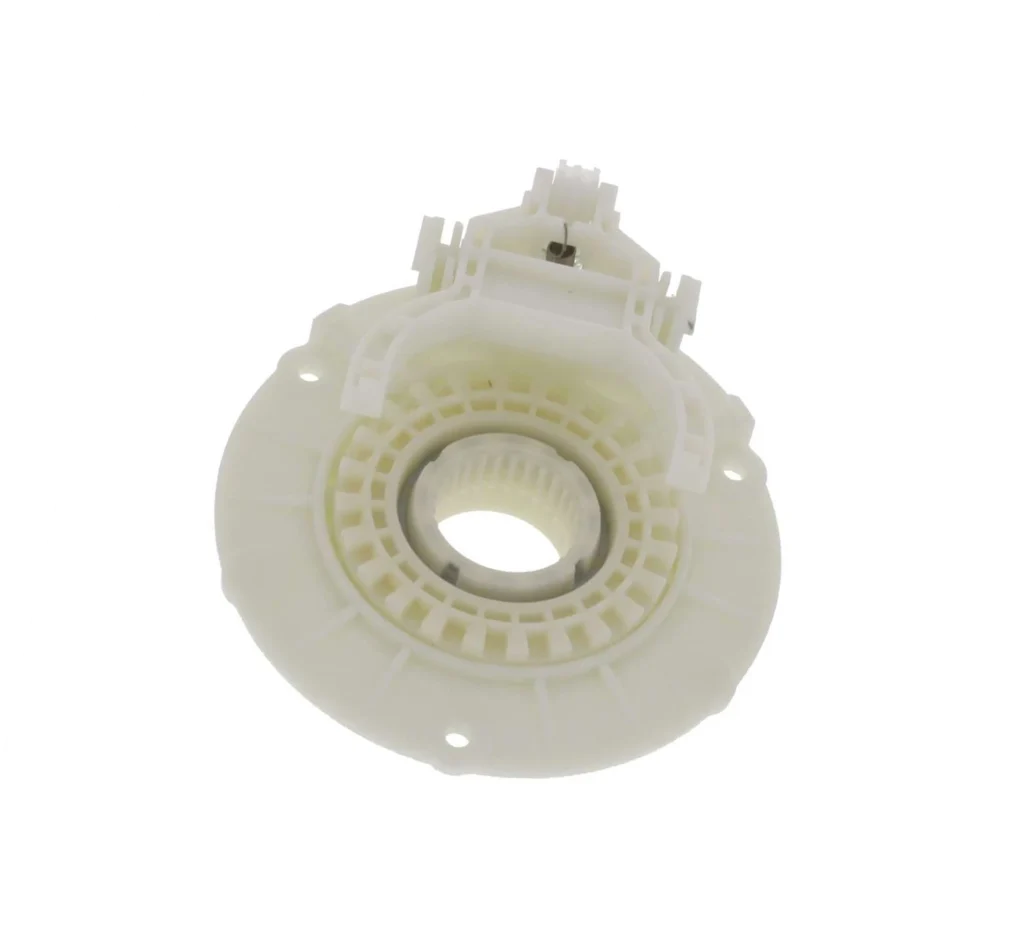
You load the washer, hit start, and hear the motor running — but nothing's moving inside. Or maybe it fills and drains fine, but when it's time to agitate or spin, the drum just sits there with soaking wet clothes. For LG top-load washers like the WT5001CW, WT1101CW, and WT5270CW, this frustrating problem often points to a failed shift actuator coupling.
This small plastic coupling (part 4323EA2001C) connects the shift motor to the transmission. When it strips out or cracks, your washer loses the ability to shift between agitate and spin modes. Let's walk through what's actually happening and how to fix it.
Quick Symptom Check
Before tearing into the machine, confirm you're dealing with a shift actuator issue:
- Motor runs but drum doesn't move during wash cycle
- Washer fills and drains normally but won't agitate
- Won't spin, or spins weakly and clothes come out soaking wet
- You hear a grinding or clicking sound during cycle transitions
- Works in some cycles but not others (inconsistent shifting)
If you've got two or more of these symptoms, keep reading. The shift actuator coupling is likely your culprit.
Cause #1: Stripped Shift Actuator Coupling (Most Likely — 70% of Cases)
The shift actuator coupling is basically a plastic sleeve with internal teeth that grab onto the shift motor shaft. Over time — we're talking hundreds of cycles — those teeth wear down or strip completely. When that happens, the motor spins but can't actually move the transmission shifter.
How to diagnose: Unplug the washer and remove the cabinet. Locate the shift motor on the bottom of the machine (usually on the left side). You'll see the coupling connecting it to the transmission. Try rotating it by hand — if it spins freely without resistance, it's stripped.
The fix: Replace the coupling assembly (4323EA2001C). You'll need to disconnect the shift motor, slide off the old coupling, and install the new one. Takes about 30-45 minutes if you're methodical about it.
Cost: $40.99 for the OEM-quality replacement part.
Cause #2: Seized Shift Motor
Sometimes the coupling is fine, but the shift motor itself has seized up. This usually happens when water leaks onto the motor over time, causing internal corrosion. You'll often hear a humming sound but see no movement.
How to diagnose: With the washer unplugged, try manually rotating the shift motor shaft. It should turn with moderate resistance. If it won't budge at all, the motor's seized.
The fix: Replace the shift motor assembly. While you're in there, replace the coupling too — it's likely damaged from the motor trying to force movement.
Cost: $60-$90 for the motor, plus the coupling.
Cause #3: Broken Transmission Shifter Assembly
Less common but worth checking: the shifter fork inside the transmission can crack or break. This usually happens after years of use or if something heavy (like shoes) got stuck and created excessive force during a spin cycle.
How to diagnose: With the coupling removed, look into the transmission shifter opening. Try moving the shifter arm manually — it should move smoothly through its range. If it's stuck, loose, or you see broken plastic pieces, that's your problem.
The fix: Transmission shifter replacement requires significant disassembly. On older machines (8+ years), you're often better off replacing the entire transmission or considering a new washer.
Cost: $120-$180 for shifter parts, or $250+ for full transmission.
Cause #4: Worn Drive Belt
If your washer won't spin but agitates fine, check the drive belt. These rubber belts can stretch, crack, or slip off the pulleys. You'll usually hear the motor running at full speed with no corresponding drum movement.
How to diagnose: Remove the access panel and visually inspect the belt. Look for cracks, glazing, or excessive looseness. Try spinning the drum by hand — if it rotates too easily, the belt's probably slipping.
The fix: Replace the drive belt. While you're in there, check the coupling too — belt problems often coincide with coupling wear.
Cost: $15-$25 for the belt.
Cause #5: Failed Rotor Position Sensor (Hall Sensor)
On newer LG models (2015+), a faulty rotor position sensor can prevent the washer from agitating or spinning properly. The control board can't determine drum position, so it refuses to engage the motor.
How to diagnose: This one's trickier. You'll typically see an error code (often LE or tE) on the display. Use a multimeter to test the sensor's continuity according to your service manual.
The fix: Replace the hall sensor. It's located near the stator assembly under the tub.
Cost: $35-$50 for the sensor.
When to Call a Pro
The shift actuator coupling replacement is honestly a straightforward DIY job if you're comfortable with basic tools and following instructions. You'll need a socket set, screwdrivers, and maybe an hour of your time.
Call a technician if:
- You're dealing with transmission or stator issues (requires specialized tools)
- Multiple components need replacement and labor costs approach half the washer's value
- You're uncomfortable working around electrical components
- The washer is still under warranty (DIY repair might void it)
Professional repair for coupling replacement runs $150-$220 including parts and labor.
Preventing Future Coupling Failures
Here's the thing about these couplings — they're a wear item. But you can extend their life:
- Don't overload the washer (seriously, that "extra large" capacity isn't a challenge)
- Balance loads properly to reduce strain on the transmission
- Address any unusual noises immediately instead of ignoring them
- Use the right cycle for your load type (heavy-duty cycles add stress)
Most LG washers will go through 2-3 couplings over their lifetime. If you're replacing yours every year, something else is wrong — possibly a transmission issue or chronic overloading.
Frequently Asked Questions
Can I use a generic coupling instead of the 4323EA2001C?
You can find cheaper aftermarket versions, but quality varies wildly. The $40.99 OEM-compatible part uses the same materials and tolerances as the original. Cheap knockoffs often strip out within months. For a part you're spending an hour to install, don't cheap out on a $15 version that'll fail in six months.
My washer agitates but won't spin — is it still the coupling?
Possibly, but if it agitates normally, look at the drive belt and lid switch first. The coupling typically affects both agitation and spinning when it fails. A washer that agitates but won't spin usually has a belt or lid switch issue. That said, a partially stripped coupling can cause intermittent problems, so don't rule it out completely.
Will this coupling work on my Kenmore washer?
If your Kenmore is actually an LG-made model (starts with 796.4 or similar), yes — many Kenmore top-loaders from 2008-2018 are rebadged LG machines. Check your model number against the compatibility list. Models like the Kenmore 28132 series use this exact coupling.
Diagnosed the problem?
4323EA2001C · In Stock · Fast shipping