
Whirlpool Washer Won't Start or Door Won't Lock — 5 Causes & How to Fix
You load the washer, press start, and... nothing. The control panel lights up, you hear a faint click, but the cycle never begins. Or maybe you get an error code — F7E1, LO FL, or just a blinking door lock light that mocks your dirty laundry pile.
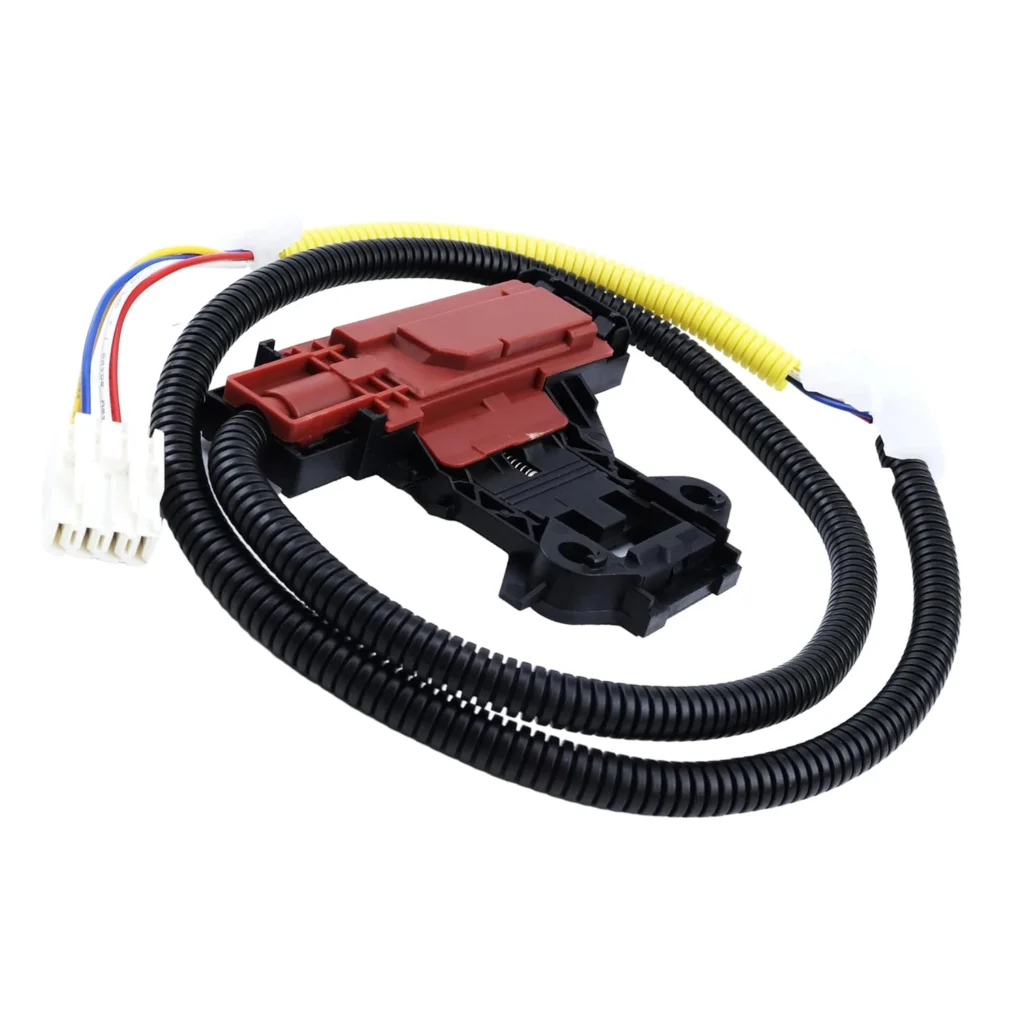
Here's what's happening: Your Whirlpool, Maytag, or Kenmore washer won't start because it can't verify the door is locked. No lock signal = no wash cycle. It's a safety feature, but when the door latch assembly (part W10482836) fails, that safety feature becomes a pile of unwashed clothes.
This affects dozens of models — from the MVWP575GW series to the CAE2795FQ lineup. The latch assembly is identical across Whirlpool, Maytag, and Kenmore top-loaders made between 2010-2020. When it fails, you'll know.
Quick Symptom Check
Your washer likely has a failed door latch if you're experiencing:
- Washer won't start — control panel works, but cycle never begins
- Door lock light flashing — continuous blinking without starting
- Error codes — F7E1 (door lock failure), LO FL (lid lock failure), or similar
- Clicking sound at door — you hear the lock attempt to engage but it doesn't catch
- Door feels loose — lid doesn't feel securely closed even when latched
- Intermittent starting — washer works sometimes, fails other times
Cause #1: Worn Strike Mechanism (Most Common — 60% of Cases)
The strike is the part of the latch that physically catches the door hook. Over thousands of cycles, the plastic striker wears down — usually on one side more than the other. When this happens, the magnetic sensor can't detect proper door closure.
How to diagnose: Open the washer lid and look at the latch assembly mounted on the cabinet. You'll see a white or gray plastic piece with a hook-shaped opening. Run your finger along the inside edges. If you feel grooves, notches, or uneven wear, that's your problem. The door hook has been grinding against the same spot for years.
Why it fails: These latches on models like the CAE2763BQ0 and MVWP575GW1 are designed for about 5,000 cycles. If you do 8-10 loads per week, that's roughly 5-6 years. Heavy items like comforters accelerate wear because they put extra pressure on the door when closing.
Fix difficulty: Easy. The entire assembly replaces as one unit. You're not rebuilding individual components.
Cause #2: Failed Lid Lock Switch (25% of Cases)
Inside the latch assembly is a small switch that tells the control board "door is locked." This switch has tiny metal contacts that can corrode, especially in humid laundry rooms. When the contacts fail, the door might physically lock, but the washer doesn't know it.
How to diagnose: If your door locks firmly (you can't open it during a cycle attempt) but the washer still won't start, the switch is likely bad. You can test this with a multimeter set to continuity. Unplug the washer, remove the latch assembly (two screws), and disconnect the wire harness. Test across the two center terminals while manually pressing the latch closed. No continuity = failed switch.
The tricky part: Sometimes the switch works when cold but fails when warm. The heat from the motor can cause intermittent failures. This is why your washer might work fine on a cool morning but refuse to start after running a hot wash cycle.
Cause #3: Broken Door Hook on Lid
The latch assembly is only half the equation. The door itself has a metal or plastic hook that inserts into the latch. If this hook cracks, bends, or breaks off, the latch can't engage properly.
How to diagnose: Close the lid slowly and watch where the hook meets the latch. The hook should slide smoothly into the latch opening and sit flush. If it's sitting at an angle, not inserting fully, or if you see a crack in the plastic surrounding the hook mounting point, you've found it.
Common on these models: The CAE2743BQ0, CAE2745FQ0, and CAE2793BQ0 series used a press-fit hook design that can pop loose over time. You'll actually hear a difference — a healthy latch clicks firmly. A broken hook makes a loose rattling sound.
The fix: If just the hook is broken, you might not need the full latch assembly. Some hooks are available separately. But if you're already replacing the latch, check the hook condition carefully.
Cause #4: Misaligned Latch Assembly (10% of Cases)
The W10482836 latch mounts to the washer cabinet with two screws. If these screws loosen over time — from vibration during spin cycles — the entire latch can shift a few millimeters. That's enough to prevent proper engagement.
How to diagnose: Open the lid and look at the latch from the side. It should be perfectly vertical and centered with the door hook path. If it's tilted, shifted left/right, or the screw holes look elongated (worn), that's your issue.
Quick test: While someone holds the door almost closed, gently push on the latch assembly. If you can move it and suddenly the door locks, you've confirmed misalignment.
Fix: Sometimes you can just tighten the mounting screws. But worn mounting holes won't hold. The replacement latch includes new mounting hardware, which solves this permanently.
Cause #5: Wiring Harness Corrosion (5% of Cases)
The latch assembly connects to the washer's control board via a wiring harness. This connector sits right in the lid area where humidity, detergent spray, and temperature changes create the perfect environment for corrosion.
How to diagnose: Unplug the washer. Remove the two screws holding the latch assembly. Pull the latch out enough to see the wire connector. Disconnect it. Look at the metal terminals inside both the latch connector and the harness connector. Green or white crusty buildup = corrosion. Even light corrosion causes intermittent connection problems.
Why this matters: You might replace the latch assembly and still have problems if you don't address corroded wiring. Clean the harness connector with electrical contact cleaner and a small wire brush before installing the new latch.
How to Replace the Door Latch Assembly
Time required: 15-20 minutes
Tools needed: Phillips screwdriver, needle-nose pliers (maybe)
Difficulty: Easy — this is a great first DIY repair
Step-by-step:
- Unplug the washer completely. Not just turning it off — actually unplug it.
- Open the lid. Look at the top of the washer cabinet where the latch is mounted.
- Remove the two Phillips screws holding the latch assembly. They're usually right on top, obvious.
- Gently pull the latch forward. You'll see a wire harness connected to the back.
- Press the locking tab on the harness connector and pull it straight off. Don't yank on the wires.
- Inspect the old latch. Check for wear on the strike area, cracks, or damage.
- Take your new W10482836 assembly. Connect the wire harness — it only fits one way. You'll hear it click.
- Position the latch in the mounting holes. Make sure it's sitting flush and vertical.
- Install the two screws. Tighten firmly but don't overtighten (plastic threads can strip).
- Close the lid slowly and listen. You should hear a solid click as the hook engages.
- Plug the washer back in. Run a rinse/spin cycle to test.
The whole job takes less time than driving to a repair shop.
When to Call a Pro
You should definitely call a technician if:
- You've replaced the latch assembly and the problem persists — this indicates a control board issue
- You're getting error codes beyond F7E1 or LO FL — multiple error codes suggest bigger problems
- The washer is sparking, smoking, or making grinding noises — these are safety issues
- You notice water leaking from around the door area — door seal problems need professional diagnosis
But honestly? This repair is straightforward enough that most people can handle it. The latch assembly is a complete plug-and-play unit. You're not soldering wires or calibrating sensors.
Cost Breakdown
DIY repair: $68.99 for the W10482836 part + 20 minutes of your time
Professional repair: $175-$280 (parts + service call + labor)
Savings: $106-$211 by doing it yourself
The part works across Whirlpool, Maytag, and Kenmore models. Whether you've got a QCAE2733BQ0 or a CAE2765FQ0, it's the same latch. One part fixes dozens of model numbers.
Prevention Tips
Want to make your new latch last longer?
- Don't slam the lid. Seriously. Close it gently. Slamming accelerates wear on the strike mechanism.
- Keep the area clean. Wipe detergent residue off the lid and latch area monthly. Buildup can interfere with proper closure.
- Don't overload. When you pack the washer so full that items push against the lid, you're putting stress on the latch every time it locks.
- Check the hook periodically. Once every few months, look at the lid hook for cracks or looseness. Catching a failing hook early prevents latch damage.
Frequently Asked Questions
Will this latch work on my Kenmore washer?
Yes. Whirlpool manufactures washers for Kenmore, and the W10482836 latch is used across both brands. The part supersedes WPW10482836, AP6022148, PS11755478, and 3020730 — all the same latch, just different part number formats. If your Kenmore is a top-load washer made between 2010-2020, this latch likely fits.
Can I just repair the latch instead of replacing the whole assembly?
Not practically. The latch assembly is designed as a sealed unit. While you could theoretically disassemble it and try to replace the internal switch or strike components, replacement parts aren't sold separately, and you'd spend more time than it's worth. The complete assembly replacement is the standard repair — even professional techs do it this way.
Why does my washer work sometimes but not others?
Intermittent failure is classic for worn latch components. As the plastic strike wears, it creates a situation where the hook might catch properly one time but not the next — depending on exactly how the lid closes. Temperature also affects this. The latch switch contacts expand slightly when warm, which can temporarily restore contact that fails when cold. If you're experiencing intermittent problems, the latch is on its way to complete failure. Replace it now before you're stuck mid-laundry day.
Diagnosed the problem?
W10482836 · In Stock · Fast shipping