
Whirlpool Dryer Making Squealing Noise — 5 Causes & How to Fix
You're standing in your laundry room and your Whirlpool dryer sounds like a bag of angry cats. The high-pitched squealing starts about 30 seconds into the cycle, right when the drum gets up to full speed. Your model WED8200YW0 worked perfectly fine yesterday, and now it's auditioning for a horror movie soundtrack.
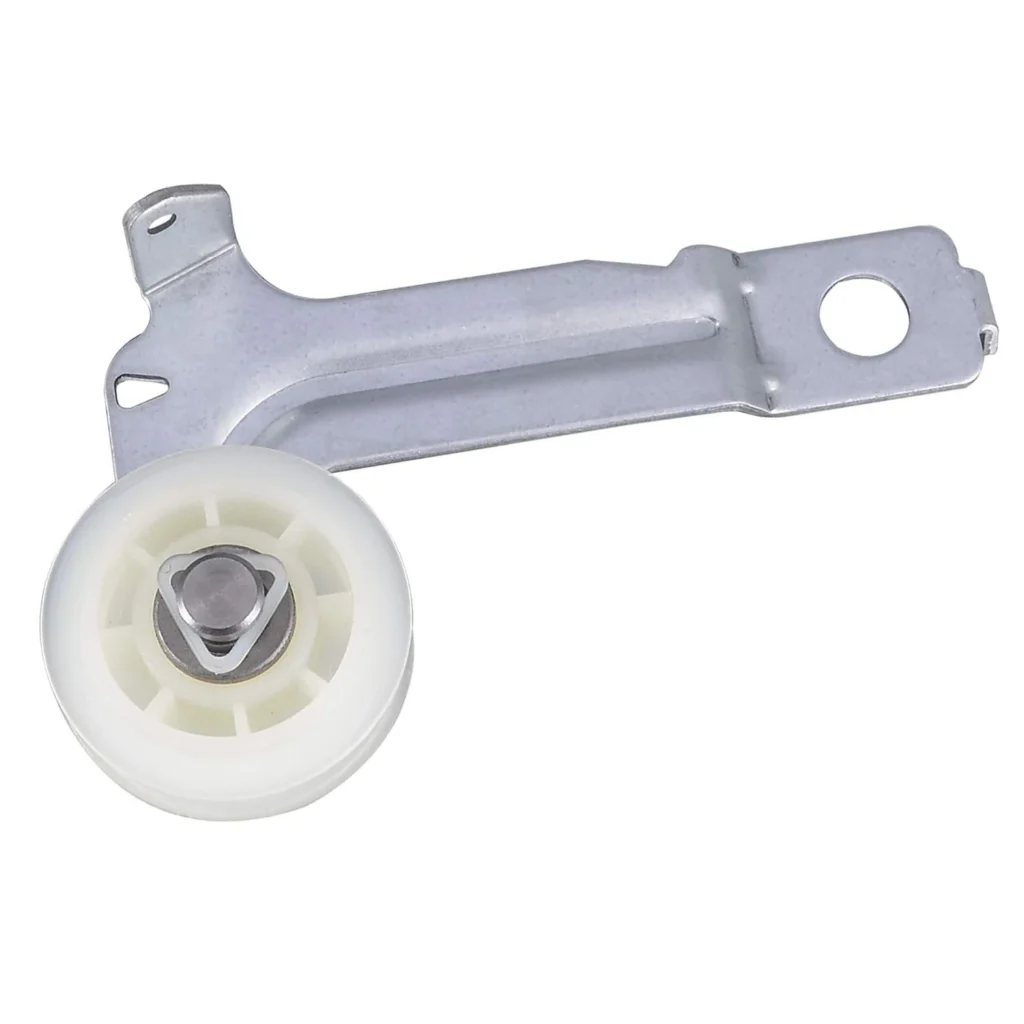
That squealing noise is usually the idler pulley—a small wheel that keeps tension on the drive belt. When it wears out, the bearing inside starts grinding metal-on-metal. The good news? This is one of the more straightforward dryer repairs, and the part (W10547292) runs about $29.
Quick Symptom Check
Before you tear anything apart, confirm what you're hearing:
- High-pitched squeal or screech that changes pitch as the drum speeds up or slows down
- Noise stops when you open the door (drum stops spinning)
- Gets louder over several weeks—starts as a slight chirp, becomes unbearable
- Drum still turns normally—no jamming or resistance
- No burning smell (that's a different problem—likely the motor or belt)
If you're nodding along to most of these, keep reading. If the drum won't turn at all or you smell burning rubber, skip to "When to Call a Pro" below.
Cause #1: Worn Idler Pulley Assembly (80% of Cases)
The idler pulley on Whirlpool, Maytag, and Kenmore dryers (they're all the same parent company) is a spring-loaded arm with a plastic wheel. That wheel spins on a bearing. After a few years and a few thousand loads, the bearing wears out. Metal starts grinding against metal, and you get that lovely squealing sound.
How to diagnose: Unplug the dryer, pull the front panel off (two screws at the top, lift up and forward), and manually spin the idler pulley wheel. If it doesn't spin freely or makes a grinding noise, that's your culprit. You'll see the W10547292 assembly—it's the L-shaped metal arm with the wheel on one end and a spring on the other.
Difficulty: Moderate. Takes about 45 minutes if you've never done it before. You'll need to remove the front panel and release belt tension.
Cost: $28.99 for the part. No special tools needed beyond a screwdriver and maybe a putty knife to pop the clips.
Cause #2: Frayed or Misaligned Drive Belt (15% of Cases)
Sometimes it's not the pulley—it's what's riding on the pulley. The drive belt wraps around the drum, the motor pulley, and the idler pulley. If the belt is fraying or has accumulated lint buildup, it can squeal as it rotates. Think of it like old windshield wipers chattering across glass.
How to diagnose: While you've got the front panel off to check the idler pulley, inspect the belt. Run your hand along it (carefully—no jewelry or loose sleeves). You're feeling for:
- Frayed edges or cracks in the rubber
- Shiny glazed spots (overheating)
- Buildup of lint or residue
- Belt riding off-center on any of the pulleys
If the belt looks worn but the idler pulley spins freely, replace the belt. If both look questionable, replace both—you've already got everything apart anyway.
Cost: $15–$25 for a belt, or grab a maintenance kit with belt, idler, and rollers for around $60.
Cause #3: Drum Support Rollers (3% of Cases)
Your dryer drum sits on two or four rubber rollers at the back (depending on the model). When these wear flat or the bearings inside them fail, they can squeal. The sound is usually lower-pitched than an idler pulley, though—more of a rumble or thumping squeal rather than a high screech.
How to diagnose: Reach inside the drum and manually rotate it. Feel for resistance or hear any thumping? Pull the drum out (yes, it comes out—you'll need to release the belt first) and inspect the rear rollers. They should spin freely and have even wear. If they're flat-spotted or won't spin, replace them in pairs.
This one's less common for the models that use the W10547292 pulley (WED7300XW0, WED8500BC0, MEDB850WR0, etc.). Those machines usually have pretty robust roller bearings. But if you've got 10+ years on your dryer, check them while you're in there.
Cause #4: Motor Bearing Failure (1% of Cases, But Worth Mentioning)
If the squealing is coming from lower in the machine and doesn't change much with drum speed, you might have a motor bearing issue. This is rare on Whirlpool/Maytag units—those motors are tanks—but it happens.
How to diagnose: With the belt disconnected (so the drum isn't spinning), start the dryer. If the motor runs and squeals without the drum moving, that's your answer. Motor replacement on these units runs $150–$200 for the part, plus it's a pain to access.
Honestly? If the motor's shot and your dryer is more than 8 years old, you're approaching the "just buy a new dryer" math.
Cause #5: Foreign Object in the Blower Housing (1% of Cases)
Occasionally a sock, a pen, or—I've seen this—a small toy gets past the lint filter and wedges into the blower wheel. This creates a rhythmic squealing or scraping sound that matches the drum rotation (because the blower is belt-driven on some models).
How to diagnose: Remove the front panel and look down into the blower housing (usually bottom right). Shine a flashlight in there. If you see something that doesn't belong, fish it out with needle-nose pliers.
This one's more "annoying" than "expensive." Just don't let it run too long or you'll crack the blower wheel.
How to Replace the W10547292 Idler Pulley Assembly
Since that's the most likely culprit, here's the quick version:
- Unplug the dryer. Not kidding. Don't be that person.
- Remove the front panel: Two screws at the top corners, lift up, tilt forward. Some models have spring clips at the bottom—pop them with a putty knife.
- Release belt tension: Push the idler pulley arm toward the motor to create slack in the belt. Lift the belt off the motor pulley.
- Remove the old idler assembly: Usually one bolt through the bracket. Note the spring orientation (take a photo with your phone).
- Install the new W10547292: Bolt it in, hook the spring the same way the old one was positioned.
- Loop the belt back on: Around the drum (seam side against the drum), under the idler pulley, around the motor pulley. Pull the idler arm to tension it.
- Spin the drum by hand to make sure the belt tracks properly. No squealing.
- Reassemble and test.
Total time: 30–60 minutes depending on how many times you drop that spring. And you will drop it. Everyone does.
When to Call a Pro
Look, I'm all for DIY repairs, but some situations warrant a service call:
- You smell burning or see smoke—shut it down immediately
- The drum won't turn at all—could be a seized bearing or broken motor mount
- You've replaced the idler pulley and belt but still have noise—might be a motor issue or internal drum bearing
- You're not comfortable working with the belt system—no shame in that, it's spring-loaded and can be tricky
A local appliance tech will charge $150–$250 for this repair including the part. That's reasonable if you value your time or just don't want to deal with it.
Preventing Future Idler Pulley Failure
Want to avoid this repair again in 3 years? Here's how:
- Clean your lint filter after every load—seems obvious, but lint buildup causes the motor to work harder, which stresses the belt system
- Don't overload the dryer—heavy wet loads strain the idler pulley bearing
- Check the vent exhaust annually—a clogged vent makes the motor run longer, wearing parts faster
- If you hear a chirping noise, address it early—that's the pulley warning you before it fully fails
Realistically, the W10547292 idler pulley assembly should last 5–8 years with normal use. If yours failed sooner, you probably have a vent restriction or overloading issue.
Frequently Asked Questions
Will a squealing dryer damage other parts if I keep using it?
Short answer: yes, but slowly. A worn idler pulley puts uneven tension on the belt, which can cause premature belt failure. It also creates extra friction heat. If the pulley seizes completely, the belt can snap or the motor can overheat trying to turn the drum. You've got a few weeks of "I'll deal with it later" buffer, but don't push it to months.
Is the W10547292 the same as WPW10547292 or AP6022817?
Yes. Those are just different part numbering systems. W10547292 is the base Whirlpool number, WPW10547292 is the "white parts" designation (same part), and AP6022817 is the AM Appliance Parts cross-reference. They're all the exact same idler pulley assembly. Same with the PS11756154 and 8547160 numbers—all compatible.
Can I just lubricate the pulley bearing instead of replacing it?
Technically, maybe—but it won't last. The bearing in the idler pulley wheel is a sealed unit. Once it's grinding and squealing, the damage is done. You can spray some silicone lubricant on it and it might quiet down for a week or two, but the bearing will continue to deteriorate. For $29 and 45 minutes of work, just replace it. The temporary fix will fail at the most inconvenient time, like when you're trying to dry clothes for a trip tomorrow morning.
Diagnosed the problem?
W10547292 · In Stock · Fast shipping