
Whirlpool Washer Won't Start — Lid Lock Assembly Causes & How to Fix
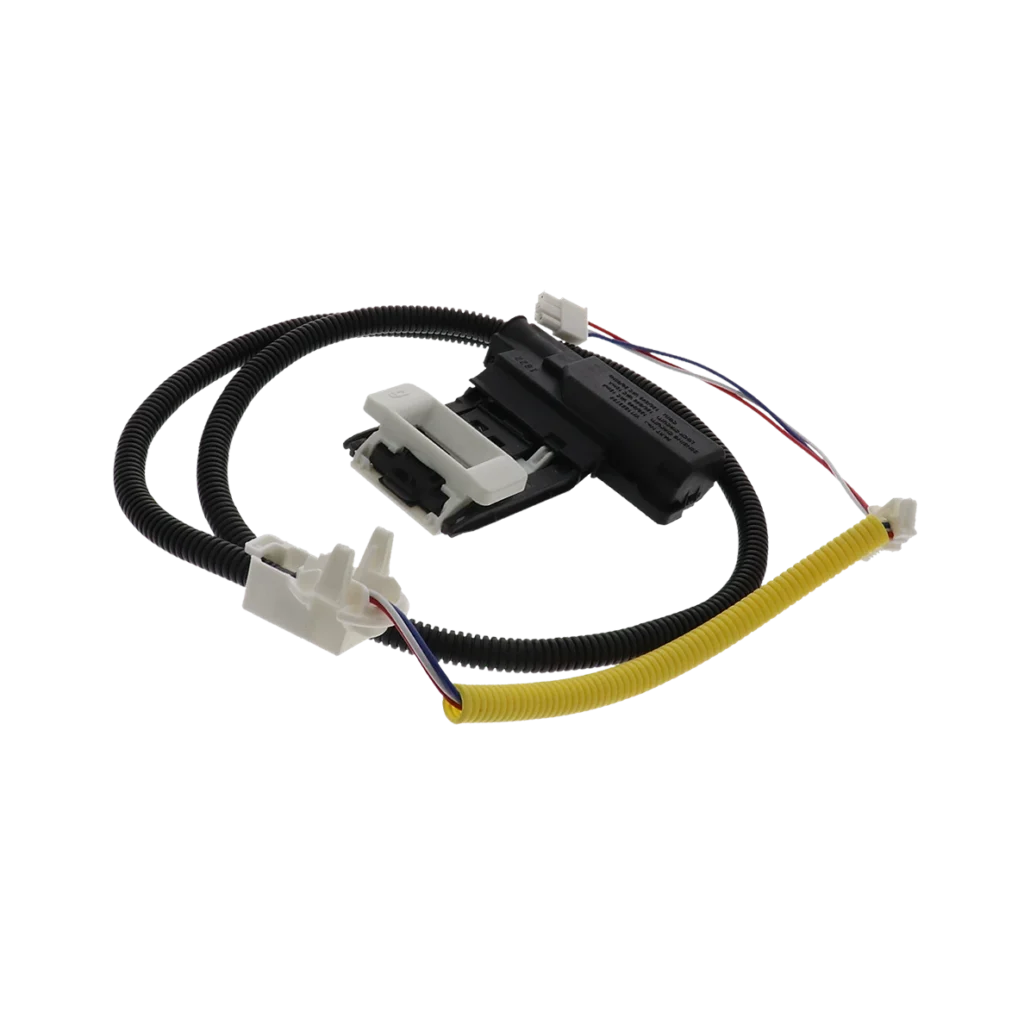
You load the washer, add detergent, press start — and nothing happens. The control panel lights up, you hear a click or two, but the drum won't fill or spin. On most Whirlpool top-load washers built after 2010, this frustrating scenario points directly to one component: the lid lock assembly.
The lid lock is a safety mechanism that prevents the washer from spinning with the lid open. When it fails, your washer thinks the lid is still open even when it's securely closed. Models like the WTW5000DW1, WTW4816FW2, and WTW4955HW0 all use the same W11307244 lid lock assembly — and they all fail the same way.
Quick Symptom Check
Your washer has a failed lid lock if you're experiencing:
- Washer won't start at all — control panel works but cycle doesn't begin
- Clicking sound from lid area — you hear the lock trying to engage but it doesn't catch
- Lid lock light flashing — error indicator on control panel
- "Lid" error code displayed — F5E2, F7E1, or LF code on screen
- Washer fills but won't spin — gets stuck at the agitate phase
Important: If your replacement part arrives in the locked position, don't panic. That's normal. The manufacturer ships them locked, and the lock will reset to open position once you install it and power up the machine.
Cause #1: Lid Lock Striker Misalignment (40% of Cases)
Before you replace anything, check if the striker (the plastic piece on the lid itself) is properly aligned with the lock assembly. Over time, the striker can crack, shift, or wear down.
How to diagnose:
- Open the lid and locate the small plastic hook or tab that extends down from the underside
- Close the lid slowly and watch if this striker piece centers into the lock assembly hole
- Look for cracks, chips, or worn edges on the striker
- Listen for the distinct "click" when closing — no click means no contact
Quick fix: If the striker is intact but slightly off-center, you can sometimes adjust it by loosening the screws that hold it to the lid. If it's cracked or broken, you'll need a new striker (usually $8-15).
Probability: High if your washer is 3-5 years old and you've been forceful with the lid.
Cause #2: Failed Lid Lock Solenoid (35% of Cases)
The W11307244 assembly contains a small solenoid (electromagnet) that physically locks the lid. This solenoid burns out from repeated cycling, power surges, or moisture infiltration.
How to diagnose:
- Unplug the washer completely
- Remove the top panel (usually 2-3 screws at the back)
- Locate the lid lock assembly — it's mounted to the underside of the top panel
- Disconnect the wire harness and test the lock with a multimeter set to ohms
- Across the lock terminals, you should read 1000-1500 ohms
- If you get infinity (OL) or zero, the solenoid is dead
Why it fails: Each wash cycle activates this solenoid. After 1,500-2,000 cycles (about 4-6 years of normal use), the coil wears out. Models like the WTW4850HW0 and WTW4616FW1 are particularly prone to this because of their high-efficiency cycle designs that keep the lock engaged longer.
Probability: Very high if your washer is 4+ years old and you wash 5+ loads per week.
Cause #3: Wiring Harness Corrosion (15% of Cases)
The lid lock connects to the control board through a wire harness. If moisture gets into this connection (from oversudsing, steam, or installation in humid environments), corrosion can prevent proper electrical contact.
How to diagnose:
- Access the lid lock (remove top panel as described above)
- Disconnect the wire harness connector
- Inspect both the male and female terminals for green/white corrosion or bent pins
- Check the wires themselves for signs of burn marks or melted insulation
Quick fix: If corrosion is minor, spray with electrical contact cleaner and reconnect firmly. If pins are bent or wires are damaged, you'll need to replace the harness (usually comes with the W11307244 assembly).
Cause #4: Control Board Communication Error (8% of Cases)
Sometimes the lid lock itself is fine, but the control board isn't sending the signal to engage it. This is less common but happens after power outages or if the control board has moisture damage.
How to diagnose:
- Put the washer in diagnostic mode (varies by model — usually holding specific buttons for 3 seconds)
- Run the lid lock test sequence
- Listen for clicking from the lock — if you hear clicks but no engagement, it's likely the lock
- If you hear nothing at all, the control board isn't sending power
When to suspect this: Recent power surge, washer is less than 2 years old, or you've already replaced the lid lock once and it's failing again.
Cause #5: Mechanical Binding Inside Lock Assembly (2% of Cases)
Rarely, something gets jammed inside the lock mechanism — usually a small piece of fabric, lint buildup, or a broken plastic bit from the striker.
How to diagnose:
- Remove the lid lock assembly completely
- Look into the cavity where the striker enters
- Use a flashlight to spot any debris or broken plastic
- Try manually moving the locking mechanism — it should move smoothly
Quick fix: Vacuum out any debris, use compressed air, and test the mechanism by hand. If it still binds, the internal spring or latch is broken — replace the assembly.
Step-by-Step Replacement Process
If you've determined you need a new W11307244 lid lock assembly, here's how to install it:
- Safety first: Unplug the washer completely — not just turn it off
- Access the lock: Remove 2-3 screws at the back of the top panel, slide it back 2 inches, then lift up
- Disconnect wiring: Press the tab on the wire harness and pull straight out
- Remove old lock: Usually 2-3 Phillips screws hold it to the underside of the top panel
- Install new lock: Position it exactly where the old one was — alignment is critical
- Reconnect wiring: Push firmly until you hear a click
- Replace top panel: Slide forward first, then push down, then screw in back screws
- Reset the lock: Plug in the washer and run a test cycle — the lock will reset itself to open position on first power-up
Time required: 15-25 minutes for most people
Skill level: Easy — if you can use a screwdriver, you can do this
Important Installation Note
The W11307244 assembly might arrive in the locked position. This is completely normal and exactly how the manufacturer ships them. Do not try to force it open manually. Once you install it and power up your washing machine, the control board will automatically send a signal to reset the lock to its open position. If you try to manually unlock it before installation, you might damage the internal mechanism.
When to Call a Pro
You probably need professional help if:
- You've replaced the lid lock and the problem persists after 2-3 wash cycles
- Your control board shows multiple error codes (not just lid-related)
- You smell burning plastic or see visible wire damage
- The washer is still under warranty (don't void it with DIY repairs)
- You're uncomfortable working with the top panel removed
Average service call: $150-250 including parts and labor. Since the W11307244 part alone is $94.99, you'll save about $100-150 doing it yourself.
Model-Specific Notes
These Whirlpool models are particularly affected by lid lock failures:
- WTW5000DW series: Lock typically fails around year 4-5
- WTW4816FW models: Watch for striker alignment issues first
- WTW4955HW series: Prone to wire harness corrosion in humid climates
- WTW4616FW models: Solenoid failure is most common cause
- Maytag MVWC series: Uses identical lock, same failure patterns
Frequently Asked Questions
Can I bypass the lid lock to make the washer work temporarily?
Technically yes, but absolutely don't. The lid lock is a critical safety feature that prevents the drum from spinning at 1000+ RPM with the lid open. Bypassing it is dangerous — you or a family member could reach in and get seriously injured. The proper fix with the W11307244 assembly takes under 30 minutes and costs less than $100. Not worth the risk.
Why does my washer click three times but won't lock?
That clicking sound is the solenoid trying to engage but failing. It's receiving power from the control board (which is good — means the board works), but the mechanical lock mechanism is worn out or jammed. Three clicks usually means the control board tried three times to engage the lock, then gave up and threw an error code. Replace the entire W11307244 assembly — you can't repair just the solenoid inside.
Will this same lock work for my Kenmore or Amana washer?
Yes. The W11307244 replaces multiple part numbers including W10682535, W10838613, and W11253733. It works across Whirlpool, Maytag, Amana, and Kenmore brands because they're all made by Whirlpool Corporation and share the same top-load platform. Check your model number against the compatibility list — if your model is from 2010 or newer and has a top-load design with a lid lock, this is almost certainly the right part.
Diagnosed the problem?
W11307244 · In Stock · Fast shipping