
Samsung Washer Won't Fill with Water or Overfills — 5 Causes & How to Fix
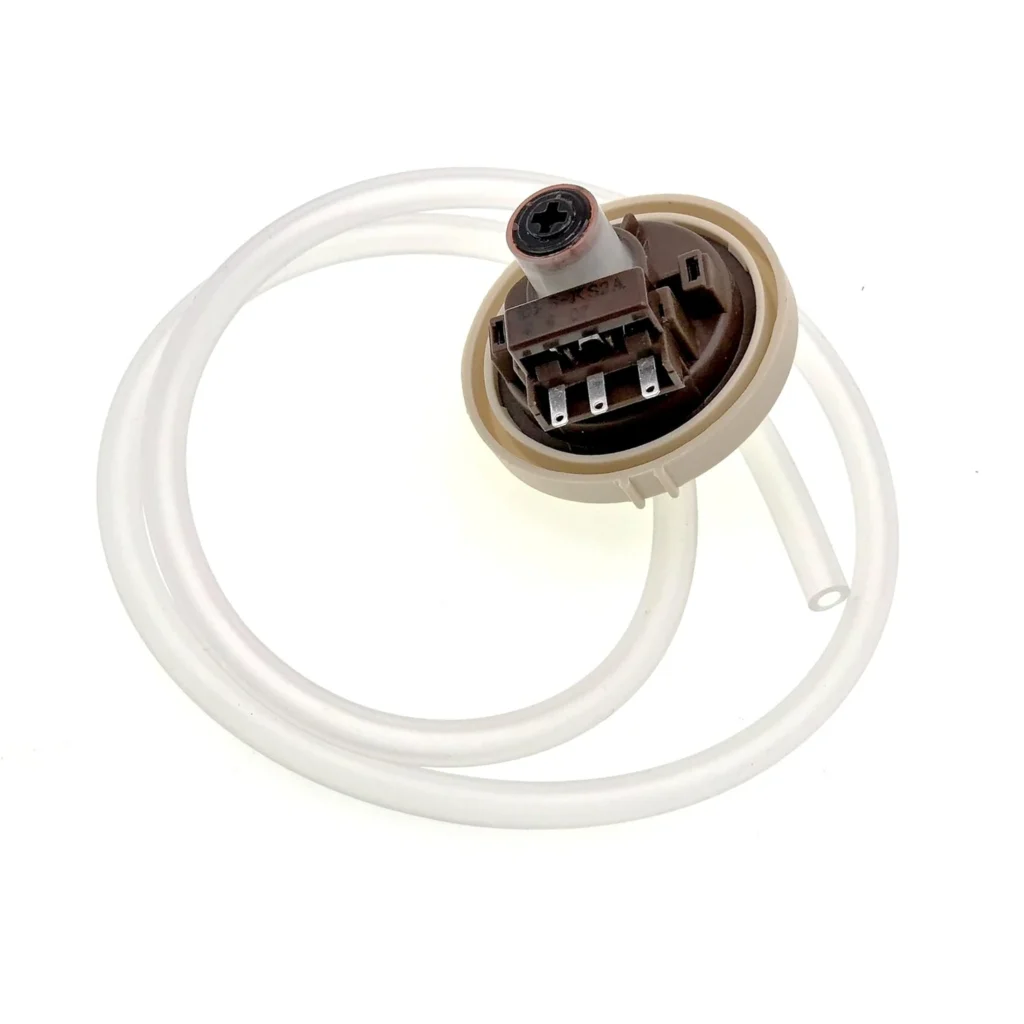
You toss a load of laundry in your Samsung washer, press start, and... nothing. The drum sits there bone-dry. Or worse — you walk back to find water pouring over the top because the machine never stopped filling. Both scenarios point to the same culprit: your water level pressure switch has lost its ability to communicate with the control board.
The DC96-01703C pressure switch is the sensor that tells your washer exactly how much water is in the tub. When it fails, your machine becomes functionally blind — unable to know when to stop filling or when there's enough water to start the wash cycle. Let's diagnose which of the five common causes is affecting your specific model.
Quick Symptom Check
Check off what your washer is doing:
- Won't fill at all — cycle starts but drum stays dry
- Overfills constantly — water keeps running past normal level
- Underfills — barely covers clothes, poor wash results
- Error codes — displays dC, 4C, 4E, or E4
- Runs but won't agitate — water present but drum won't move
- Stuck mid-cycle — fills partway then stops completely
One symptom? Probably electrical. Multiple symptoms? The pressure switch itself is likely shot.
Cause #1: Failed Pressure Switch (60% of Cases)
The pressure switch on Samsung top-loaders typically lasts 7-10 years before the internal diaphragm degrades. When it fails, the switch can't detect air pressure changes from the water level, so it sends incorrect signals to the control board.
How to diagnose:
- Unplug the washer completely
- Locate the switch behind the control panel — it's a round component with a clear air tube attached
- Disconnect the wiring harness and air tube
- Using a multimeter set to continuity, test between terminals with the tube disconnected (should be open)
- Gently blow into the air tube port — you should hear a click and see continuity change
- No click or no continuity change? Switch is dead
This applies to models WA400PJHDWR, WA40J3000AW, WA45K7600AW, WA5471ABW, and dozens of others using the DC96-01703C switch. Replacement takes 20-30 minutes and requires only a screwdriver.
Probability: 60% | Part cost: $71.99 | DIY difficulty: Easy
Cause #2: Clogged Pressure Tube (25% of Cases)
That clear plastic tube running from the tub to the pressure switch? It can accumulate detergent residue, lint, and mineral deposits over time. A partial blockage gives false pressure readings; a complete blockage makes the switch think the tub is always empty.
How to diagnose:
- Disconnect the clear air tube from both the switch and the tub connection
- Hold it up to light — can you see through it clearly?
- Try blowing through it — air should pass freely
- Look for soapy buildup, calcium deposits, or trapped debris
Fix: Remove the tube completely and soak it in white vinegar for 30 minutes, then flush with hot water. If it's rigid or cracked, replace it (usually under $10 at appliance parts stores). Sometimes cleaning the tube solves everything without needing the new switch.
Probability: 25% | Part cost: $0-$10 | DIY difficulty: Very Easy
Cause #3: Loose or Corroded Wiring Connections (8% of Cases)
The pressure switch connects to the main control board via a multi-wire harness. Vibration from thousands of spin cycles can loosen these connections. Moisture exposure (common in laundry rooms) causes corrosion on the terminals.
How to diagnose:
- Unplug the washer
- Remove the control panel access (usually 2-4 screws)
- Locate the wiring harness at the pressure switch
- Disconnect and inspect for green/white corrosion on pins
- Check the connection at the control board end too
- Wiggle connections — do they feel loose?
Fix: Clean corroded terminals with electrical contact cleaner and a small wire brush. If pins are severely corroded, you'll need to replace the wire harness (around $15-25). Make sure connections snap firmly into place.
Probability: 8% | Part cost: $15-$25 | DIY difficulty: Easy
Cause #4: Control Board Misreading the Signal (5% of Cases)
Sometimes the pressure switch works perfectly, but the main control board can't interpret its signals due to a failed relay or damaged circuit trace. This is more common on models WA456DRHDSU, WA456DRHDWR, and WA45M7050AW that saw power surge issues.
How to diagnose:
- Test the pressure switch — if it clicks and shows proper continuity changes, it's good
- Check for error codes pointing to control board issues
- Try a "hard reset" — unplug for 5 minutes, hold Start for 3 seconds while plugged back in
- If reset temporarily fixes it but problem returns, suspect the board
Control board replacement on Samsung top-loaders runs $150-$300 and requires transferring multiple wire harnesses. Honestly? Unless your washer is fairly new, this repair cost often doesn't make economic sense.
Probability: 5% | Part cost: $150-$300 | DIY difficulty: Moderate
Cause #5: Damaged Tub Air Dome Connection (2% of Cases)
The pressure tube connects to a small air dome on the outer tub. If this connection point cracks or the rubber seal deteriorates, air pressure never reaches the switch properly. Your washer might fill inconsistently or show erratic behavior that doesn't match any pattern.
How to diagnose:
- Access requires removing the cabinet — not for beginners
- Inspect where the pressure tube connects to the outer tub
- Look for cracks in the plastic dome or missing rubber grommet
- Check if the tube pushes on but doesn't seal properly
Fix: Replace the damaged connection point or air dome assembly. Some techs successfully repair minor cracks with marine-grade epoxy, but replacement is more reliable. This repair requires significant disassembly.
Probability: 2% | Part cost: $20-$40 | DIY difficulty: Hard
When to Call a Pro
DIY is realistic if you're dealing with the pressure switch itself, the air tube, or wiring connections. But call a professional if:
- You've replaced the switch and cleaned everything, but symptoms persist
- You're uncomfortable working with electrical connections while standing near a water source
- The washer needs cabinet removal to access internal components
- You're seeing multiple error codes or the control board is suspect
- Your washer is still under warranty (DIY repairs can void coverage)
A service call runs $100-$150 for diagnosis plus parts and labor. For a pressure switch replacement, you're looking at $150-$200 total with a pro vs. $71.99 DIY.
Frequently Asked Questions
How do I know if my Samsung washer pressure switch is bad?
Unplug the washer, remove the pressure switch, and test it with a multimeter. Disconnect the air tube and check for continuity between terminals. Then gently blow into the air tube port — you should hear a distinct click and see the continuity reading change. No click means the internal diaphragm is stuck or broken. Also check that the air tube itself isn't clogged with detergent residue, which causes the same symptoms but costs nothing to fix.
Can a bad pressure switch cause a Samsung washer to overflow?
Absolutely. The pressure switch tells your washer when to stop filling. If it fails in the "empty" position, the control board never receives the signal that water has reached the correct level, so the inlet valve stays open and water keeps flowing. You'll also see this if the pressure tube is clogged — the switch can't sense the rising water level, so it thinks the tub is still empty even when it's overflowing onto your floor.
Why won't my Samsung washer fill with water at all?
If the pressure switch fails in the "full" position, the control board thinks there's already water in the tub, so it never opens the inlet valves. Before replacing the switch, verify your water valves are fully open and the inlet screens aren't clogged with sediment. Also check for error codes — 4C, 4E, or E4 specifically indicate water supply issues. Test the switch with a multimeter to confirm it's actually switching when air pressure changes.
Diagnosed the problem?
DC96-01703C · In Stock · Fast shipping