
Frigidaire Washer Leaking or Won't Fill — 5 Water Inlet Valve Failures & How to Fix
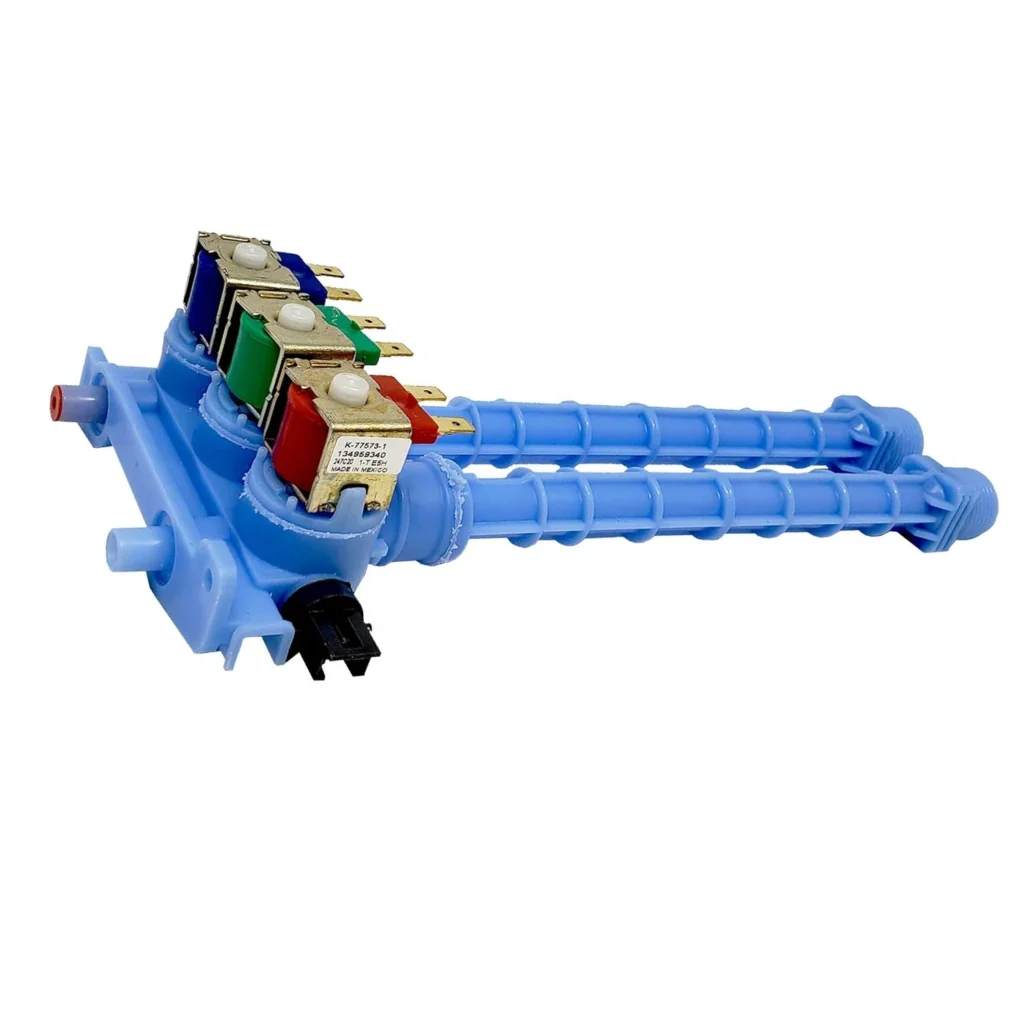
You walk into your laundry room and there's a puddle spreading across the floor behind your Frigidaire front-loader. Or maybe your washer starts a cycle but nothing happens — the drum sits empty while the machine hums away. Both scenarios usually point to the same culprit: a failing water inlet valve like the 134959340.
This valve controls water flow into your washer. When it wears out or gets clogged with sediment from your water supply, it either leaks constantly or won't open at all. Let's walk through what's actually happening inside your machine.
Quick Symptom Check
Before you grab tools, confirm what you're dealing with:
- Water pooling behind the washer — even when it's off, water drips from the valve
- Washer won't fill — cycle starts but drum stays dry, or fills extremely slowly
- Overfilling — water keeps running past the proper level
- Low water pressure during fill — takes 10+ minutes to fill when it used to take 3-4
- Humming noise during fill — valve tries to open but struggles
If you've got active leaking right now, shut off the water supply valves behind your washer before diagnosing further.
Cause #1: Sediment Blockage in Valve Screens (40% of Cases)
Most water inlet valves have small mesh screens where the fill hoses connect. Over time, mineral deposits, rust particles, and sediment from your home's water supply pack into these screens.
How to diagnose: Unscrew both fill hoses from the back of your washer (you'll need pliers). Look at the valve inlets — see those small screens? If they're brown, crusted, or you can't see through the mesh clearly, that's your problem.
The fix: You can try cleaning the screens with an old toothbrush and vinegar, but here's the reality — if sediment got past those screens into the solenoids inside the valve, cleaning won't help. The valve costs $101.99 and takes about 30 minutes to replace. Cleaning might buy you a few weeks if you're lucky.
Probability: If your washer is 5+ years old and you have hard water, this is very likely your issue.
Cause #2: Failed Solenoid Coils (35% of Cases)
The 134959340 has two solenoid coils — electromagnetic switches that open the valve when your washer needs water. These coils fail from repeated cycling or power surges.
How to diagnose: With the washer unplugged, remove the top panel of your Frigidaire (usually two screws at the back). Locate the inlet valve where the hoses connect. You'll see two wire connectors. Use a multimeter set to ohms and test each coil — you should get 500-1500 ohms of resistance. If you get infinite resistance (no reading) or zero, that coil is dead.
The fix: You can't replace individual solenoids. The entire valve assembly needs replacement. This is actually good news — it means you're fixing everything at once rather than chasing multiple problems.
Probability: High if your washer won't fill at all but you confirmed water supply is good.
Cause #3: Valve Body Cracks or Seal Failure (15% of Cases)
The plastic valve housing can crack from overtightening fill hoses, freezing (if you store your washer in a garage), or just age. Internal rubber seals also degrade and let water seep through constantly.
How to diagnose: Look for water trails on the valve body itself, not just at hose connections. If you see water weeping from the plastic seams or around the electrical connectors, the valve body has failed internally.
The fix: No repair possible — valve replacement required. Don't waste time with sealants or epoxy. They won't hold under water pressure.
Probability: Moderate if you're seeing constant dripping even with the washer powered off.
Cause #4: Stuck Open Valve (8% of Cases)
Sometimes the solenoid works but the valve won't close properly. This causes overfilling or continuous water flow.
How to diagnose: Start a cycle and watch the water level. If it fills past the normal point and keeps going, or if you can hear water trickling into the tub when the washer is off, the valve isn't sealing shut.
The fix: Usually caused by debris stuck in the valve seat. You can try tapping the valve body firmly while water is shut off — sometimes this dislodges particles. But if it doesn't work immediately, replace the valve.
Probability: Lower, but definitely check this if you've had water quality changes recently (construction on water mains, new well pump, etc.).
Cause #5: Pressure Switch Miscommunication (2% of Cases)
Rarely, the valve is fine but your washer's pressure switch (the component that tells the valve when to stop filling) fails.
How to diagnose: If you replaced the inlet valve and still have fill problems, suspect the pressure switch. Test the valve outside the washer — connect a 9V battery briefly to each solenoid terminal. If you hear clicks and the valve opens/closes, it works. Problem is elsewhere.
The fix: That's a different repair (pressure switch replacement), but at least you'll know you didn't need a new valve after all.
How to Replace the 134959340 Water Inlet Valve
What you need: Phillips screwdriver, pliers, towel, new valve.
Steps:
- Unplug washer and shut off both water supply valves
- Pull washer away from wall to access the back panel
- Place a towel underneath — some water will spill from hoses
- Use pliers to unscrew both fill hoses from the old valve
- Disconnect the wire harness from the valve (squeeze the tab and pull)
- Remove the mounting screws holding the valve to the washer frame (usually 2-3 screws)
- Pull out the old valve and note how internal hoses connect
- Install the new 134959340 in reverse order — secure mounting screws first, then reconnect internal hoses, wire harness, and external fill hoses
- Turn water back on slowly and check for leaks before pushing washer back
Total time: 25-35 minutes for most people. No special skills needed.
When to Call a Pro
This is honestly one of the easier washer repairs. But call someone if:
- You replaced the valve and still have the same problem (likely a control board or pressure switch issue)
- The leak is coming from somewhere other than the valve area
- You're not comfortable working with water supply lines
- Your washer is built-in and requires cabinet disassembly to access the back
A service call typically runs $150-250 including the valve. Doing it yourself saves about $100-150 in labor.
Frequently Asked Questions
Will my washer work with only one solenoid functioning?
Partially. Most Frigidaire front-loaders use one solenoid for hot water and one for cold. If one fails, you'll still get water flow but only from one temperature source. Your cycles will take longer and may not rinse properly since the washer expects both supplies to work.
Can I clean the inlet valve instead of replacing it?
You can try if the only issue is screen blockage, but wear and sediment damage usually affect the internal components too. If cleaning the screens doesn't fix your problem within one or two wash cycles, don't wait — replace the valve before it leaks and causes water damage.
Why does my new valve still leak at the hose connections?
Check the rubber washers inside your fill hoses — they're probably worn out. Each hose should have a rubber gasket where it screws onto the valve. If those washers are flat, cracked, or missing, you'll get leaks even with a new valve. Replace the hoses or just the washers (available at any hardware store for under $5).
Diagnosed the problem?
134959340 · In Stock · Fast shipping