
Frigidaire Dishwasher Not Cleaning Dishes — 7 Causes & How to Fix
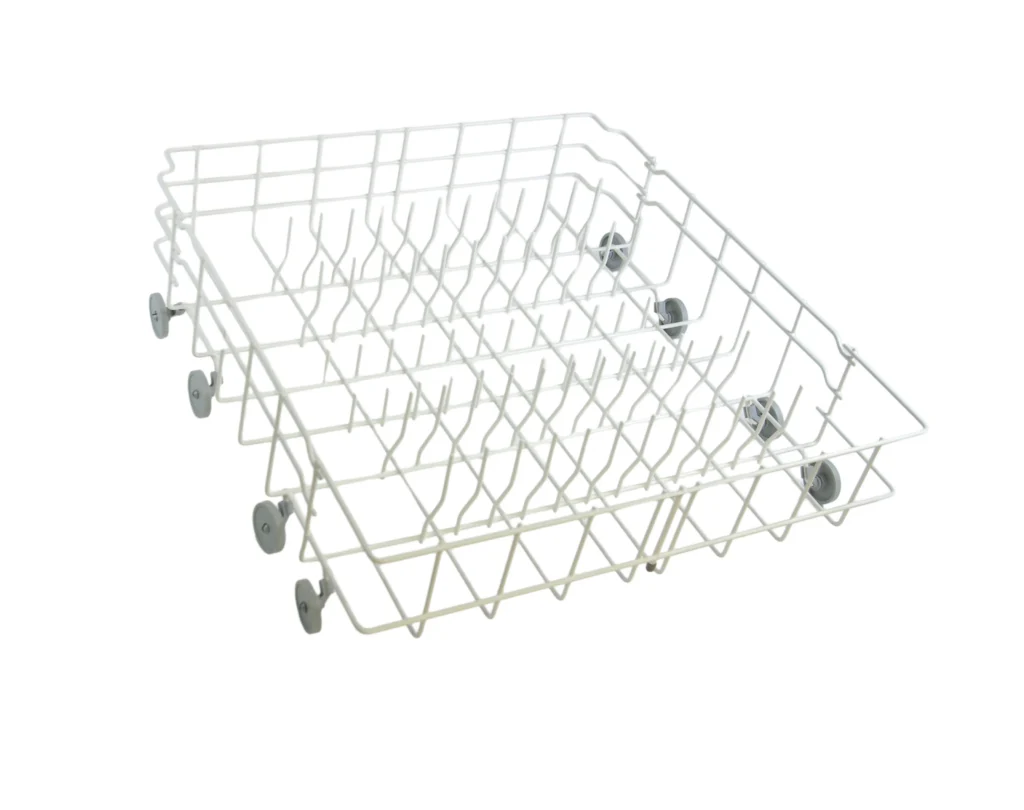
You're pulling dishes out of your Frigidaire dishwasher and they're still crusty. Coffee rings on mugs, dried food on plates, that greasy film on glasses. You've run the cycle twice, and it's not getting better. Before you drop $600 on a service call or start shopping for a new dishwasher, let's walk through what's actually causing this.
I've diagnosed this exact problem on hundreds of Frigidaire models — from the FDB641RAS2 to the FDB1050REB0 — and about 70% of the time, it's something you can fix yourself in under an hour.
Quick Symptom Check
Before we dive into causes, verify what you're actually seeing:
- Food particles still stuck to dishes after full cycle
- White film or spots on glassware
- Greasy residue that won't rinse off
- Clean dishes on top rack, dirty on bottom (or vice versa)
- Detergent cup not opening or detergent not dissolving
- Water pooling in bottom of tub after cycle
If you're seeing multiple symptoms, you've likely got a combination problem. Let's start with the most common.
Cause #1: Damaged or Warped Lower Dishrack (40% Probability)
Here's what most people miss: a damaged lower dishrack doesn't just make loading awkward — it actively prevents proper cleaning. When the rack wheels break or the tines bend, dishes tilt at wrong angles. Water spray hits the back of plates instead of the front. Bowls nest together and trap dirty water.
How to diagnose:
- Pull out the lower rack completely (it slides right out)
- Check all four wheels — they should roll smoothly without wobbling
- Look for broken or bent tines that won't hold dishes upright
- Inspect the rack coating for rust or sharp edges
- Try loading your typical dish arrangement — do items tilt weird?
Models like the FDB641RJB0, FDB657RJC1, and FDB737GFR0 use the 808602302 lower dishrack assembly. If yours is damaged, it's a direct replacement that, as one user put it, "was easy install." No tools beyond pulling the old one out and sliding the new one in.
Fix cost: $80–$120 for the part, 5 minutes to replace.
Cause #2: Clogged Spray Arms (30% Probability)
The spray arms are supposed to spin and shoot water through tiny holes. When hard water minerals, food debris, or detergent buildup clogs those holes, you get uneven cleaning or no cleaning at all.
How to diagnose:
- Remove the lower dishrack to access the lower spray arm
- Unscrew the spray arm center cap (usually just twists off)
- Hold it up to light — can you see through every hole?
- Repeat with upper spray arm (remove upper rack first)
- Check if arms spin freely when you flick them
The fix: Soak spray arms in white vinegar for 30 minutes, then use a toothpick to clear each hole. Use a wire brush on stubborn buildup. If the arms are cracked or the holes are eroded too large, you'll need replacements.
Fix cost: Free if cleaning works, $15–$30 per arm if replacement needed.
Cause #3: Failing Wash Pump Motor (15% Probability)
The wash pump creates the pressure that forces water through the spray arms. When it's dying, you'll hear it running but get weak water pressure. Dishes on the bottom rack especially won't get clean because the lower spray arm needs the most pressure.
How to diagnose:
- Start a wash cycle and open the door mid-cycle (after it fills)
- You should see strong water spray from the arms
- Weak spray or dribbling water = pump problem
- Grinding or humming noise without water movement = seized pump
This is a tougher repair — you're pulling the dishwasher out, accessing the sump assembly, and replacing the motor. Doable for a confident DIYer, but this is where some folks call a pro.
Fix cost: $80–$150 for pump motor, 2–3 hours labor if DIY.
Cause #4: Blocked or Kinked Fill Hose (8% Probability)
If your dishwasher isn't getting enough water in the first place, it can't clean properly. This happens when someone pushed the dishwasher back too hard after a kitchen remodel, crimping the water supply line.
How to diagnose:
- Pull dishwasher forward slightly to access back panel
- Trace the water inlet hose — any kinks or sharp bends?
- Turn on a cycle and listen — should take about 1 minute to fill
- If it takes 3+ minutes or sounds like trickling, you've got restriction
The fix: Straighten the hose, replace if damaged. Also check the inlet valve screen for debris.
Fix cost: Free to $40 if hose needs replacement.
Cause #5: Worn Out Wash Impeller (5% Probability)
The impeller is the spinning component inside the pump assembly that actually moves the water. Over time, the fins can wear down or break off. You'll have a working pump motor but reduced water flow.
How to diagnose: This requires removing the lower spray arm and looking down into the sump. Shine a flashlight and start a cycle — the impeller should spin rapidly. If it's sluggish or wobbly, it's worn.
Fix cost: $30–$60 for impeller, but you're already halfway to a full pump replacement at that point.
Cause #6: Faulty Detergent Dispenser (1.5% Probability)
If the detergent cup doesn't open during the wash cycle, you're basically just rinsing dishes with hot water. On Frigidaire models, the dispenser is controlled by a wax motor or solenoid.
How to diagnose:
- Load detergent and start a cycle
- Stop cycle after 10 minutes and check if cup opened
- Cup still closed = dispenser failure
Fix cost: $40–$80 for dispenser assembly.
Cause #7: Bad Water Inlet Valve (0.5% Probability)
The inlet valve opens to let water in. When it fails partially, you get reduced water volume. The dishwasher runs through its cycle but with half the water it needs.
How to diagnose: Check water level in tub after fill cycle — should cover the heating element by about an inch. Less than that indicates inlet valve restriction.
Fix cost: $30–$60 for valve, 1 hour to replace.
When to Call a Pro
I'll be straight with you: if the problem is the lower dishrack, spray arms, or water supply — that's DIY territory all day. You can handle those with basic tools and confidence.
Call a pro if:
- You've replaced the obvious stuff and it's still not cleaning
- You're hearing electrical buzzing or smelling burning plastic
- Water is leaking onto your floor during cycles
- The control board is throwing error codes you can't reset
- You're just not comfortable pulling the dishwasher out of the cabinet
A diagnostic service call runs $100–$150 in most markets. If you've already spent $120 on a new lower rack and it didn't solve the problem, that service call might save you another $200 in wrong parts.
Frequently Asked Questions
How often should I replace my dishwasher lower rack?
There's no set schedule — it depends on use and water quality. If you run your Frigidaire daily in a hard water area, expect 5–7 years. Light use with soft water? You might get 10+ years. Replace it when you see broken wheels, bent tines that won't hold dishes, or rust forming on the coating.
Can I just bend the tines back instead of replacing the whole rack?
You can try, but bent tines usually mean the rack has taken enough abuse that other parts are compromised too. The wheels are probably worn, the coating is cracked, and more tines will break soon. One user reported the 808602302 "was a direct replacement rack" that solved their cleaning issues — sometimes it's worth doing it right the first time.
Why does my dishwasher clean the top rack but not the bottom?
That's classic lower spray arm failure — either it's clogged, not spinning, or the pump pressure is too weak to push water through it effectively. Start by removing the lower rack, taking out the spray arm, and checking every hole for clogs. If it's clear and still not working, you're looking at a pump issue.
Diagnosed the problem?
808602302 · In Stock · Fast shipping