
Whirlpool Dishwasher Not Cleaning Dishes — 5 Circulation Pump Issues & Fixes
You run the WDF560SAFB0 through a full cycle, pull open the door expecting sparkling plates, and... there's still dried pasta sauce in the corners. The cycle finished. You heard water sloshing around. But your dishes look like they went through a lukewarm bath instead of an actual wash.
When a Whirlpool, KitchenAid, or Kenmore dishwasher stops cleaning properly, the circulation pump motor is often the hidden culprit. This isn't the drain pump — it's the workhorse that forces water through the spray arms with enough pressure to blast away food particles. When it fails, you'll get weak spray, strange grinding noises, or dishes that come out exactly how they went in.
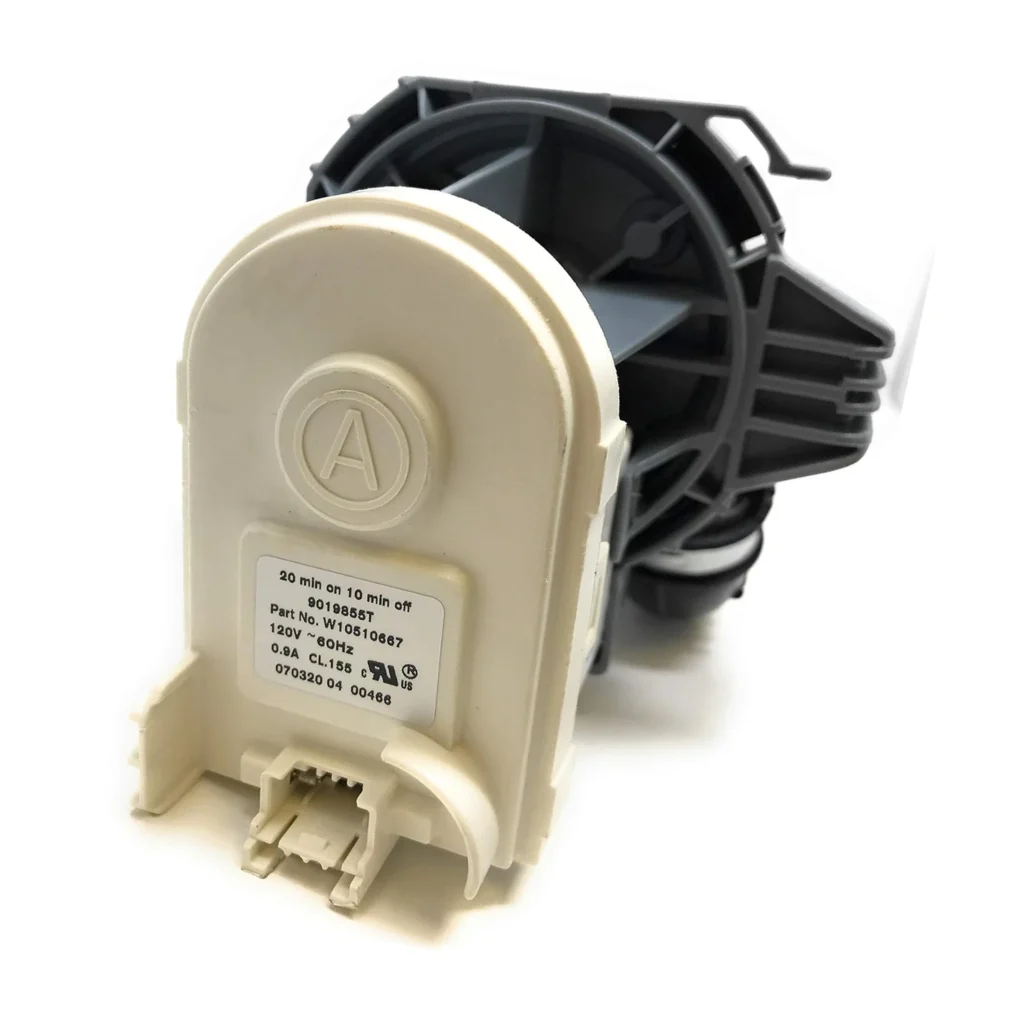
The W10510667 circulation pump motor (also sold as WPW10510667, W10349483, W10440715, and AP6022492) fits dozens of models including the WDF750SAYM3, WDT720PADM2, WDT780SAEM1, KDTE104DBL0, and WDF540PADM. Let's diagnose what's actually broken.
Quick Symptom Check: Is Your Circulation Pump Failing?
- Dishes come out dirty or spotty even after a full cycle with fresh detergent
- Weak water pressure from spray arms — you can see them barely rotating
- Grinding, humming, or buzzing noise during the wash cycle
- Dishwasher won't start or stops mid-cycle (pump motor failed to engage)
- Leaking water from underneath the dishwasher onto the floor
- Won't fill with water properly or takes unusually long to fill
If you're seeing two or more of these symptoms together, keep reading. We'll work through the most likely causes in order of probability.
Cause #1: Seized or Burned-Out Pump Motor (60% Probability)
The circulation pump motor runs for 1-2 hours per cycle, thousands of times over its lifetime. Eventually, the motor windings overheat, bearings seize, or the impeller locks up. When this happens, you'll hear a humming sound as the motor tries to start but can't spin, or complete silence where you'd normally hear the wash cycle whooshing.
How to diagnose: Open the dishwasher door mid-cycle during the wash phase. Listen closely near the bottom center. Do you hear a faint hum but no water spray? That's a seized motor. If the motor's completely silent and the cycle stops, it's likely burned out entirely.
Remove the lower spray arm and filter assembly. Shine a flashlight down into the sump area and try to manually rotate the pump impeller with a long screwdriver (power OFF, of course). If it won't budge or feels gritty, the pump's done.
The fix: Replace the W10510667 circulation pump motor assembly. This isn't a repair job — once the motor windings fail, you need a new unit. Budget 45-60 minutes for the replacement if you're comfortable working under the dishwasher.
Cause #2: Clogged Pump Impeller or Housing (25% Probability)
Food debris, broken glass, twist ties, fruit stickers — all of it can jam the circulation pump impeller. Models like the WDT730PAHZ and WDF520PADM have particularly tight pump chambers where even small obstructions stop the impeller cold.
You'll typically hear a grinding or rattling noise during the wash cycle, followed by weak spray pressure. Sometimes the pump runs but the water barely trickles out of the spray arms.
How to diagnose: Same access as above — remove the spray arm and filter. Look for foreign objects in the pump inlet. Check if the impeller spins freely by hand. If it's stiff or you see chunks of debris, that's your problem.
The fix: Clear the debris and test a cycle. If the pump motor still hums or won't start even after clearing obstructions, the motor likely overheated trying to push past the clog and needs replacement anyway.
Cause #3: Failed Pump Seal Causing Internal Leak (10% Probability)
The circulation pump has rubber seals that prevent water from leaking into the motor housing. When these seals deteriorate (usually after 7-10 years), water seeps into the electrical components, causing shorts or corrosion. You'll see water pooling under the dishwasher or notice rust stains on the pump housing.
How to diagnose: Pull the dishwasher out and remove the lower access panel. Run a cycle and watch for water dripping from the pump motor area (not the door seal or hose connections). If you see moisture around the pump motor itself, the seal's compromised.
The fix: Replacement seals aren't sold separately for the W10510667 assembly. You'll need the complete pump motor unit. Once water's damaged the motor, it's on borrowed time anyway.
Cause #4: Faulty Wiring or Control Board Signal (3% Probability)
Less common, but worth checking: the pump motor gets power from the main control board through a wiring harness. Corroded connections or a failed relay on the control board can prevent the motor from receiving voltage.
How to diagnose: Use a multimeter to check for 120V AC at the pump motor connector during the wash cycle. No voltage? Trace back to the control board. Check for burned or corroded wire terminals.
The fix: Repair or replace damaged wiring. If the control board relay is faulty, you're looking at a more expensive control board replacement — confirm the pump motor itself is functional before going that route.
Cause #5: Worn Pump Bearings Creating Noise (2% Probability)
Sometimes the motor still works but the bearings are shot, creating a loud grinding or squealing noise during operation. The pump technically functions, but it's living on borrowed time.
How to diagnose: The dishwasher cleans dishes adequately, but you can't stand the noise. When you manually spin the impeller (power off), it feels rough or makes scraping sounds.
The fix: Replace the pump motor before it seizes completely and leaves you with dirty dishes mid-dinner party. Bearings don't get better — they only get louder until they lock up.
When to Call a Pro
Replacing the W10510667 circulation pump motor is intermediate-level DIY. You'll need to pull the dishwasher out, disconnect water and electrical, and access the pump from underneath. It's not complicated, but it's awkward and you're working in tight spaces.
Call a pro if:
- You're not comfortable disconnecting the dishwasher or working with electrical connections
- The pump is replaced but symptoms persist (indicates control board or other issues)
- You've found multiple leaks and aren't sure which component is actually failing
Expect to pay $250-400 for professional pump motor replacement, including parts and labor.
Frequently Asked Questions
How long does the W10510667 circulation pump typically last?
Most circulation pumps last 8-12 years with normal use. If you run your dishwasher daily or don't pre-rinse dishes (forcing the pump to work harder), expect closer to 6-8 years. Heavy mineral content in your water can also accelerate wear on the impeller and seals.
Can I just replace the impeller instead of the whole motor?
No — Whirlpool sells the W10510667 as a complete motor and pump assembly. The impeller, motor, and housing are integrated. Attempting to disassemble it usually destroys the seals, and you can't get replacement parts for internal components.
Why does my dishwasher hum but won't spray water?
That humming is the motor trying to start but failing to spin the impeller. Either something's jamming the impeller (check for debris), or the motor's seized internally. If you've already cleared obstructions and it still hums without running, the motor's done — replace it with the W10510667 assembly.
Diagnosed the problem?
W10510667 · In Stock · Fast shipping