
AC Unit Won't Start After Power Outage — 4 Hard Start Kit Failures & Fixes
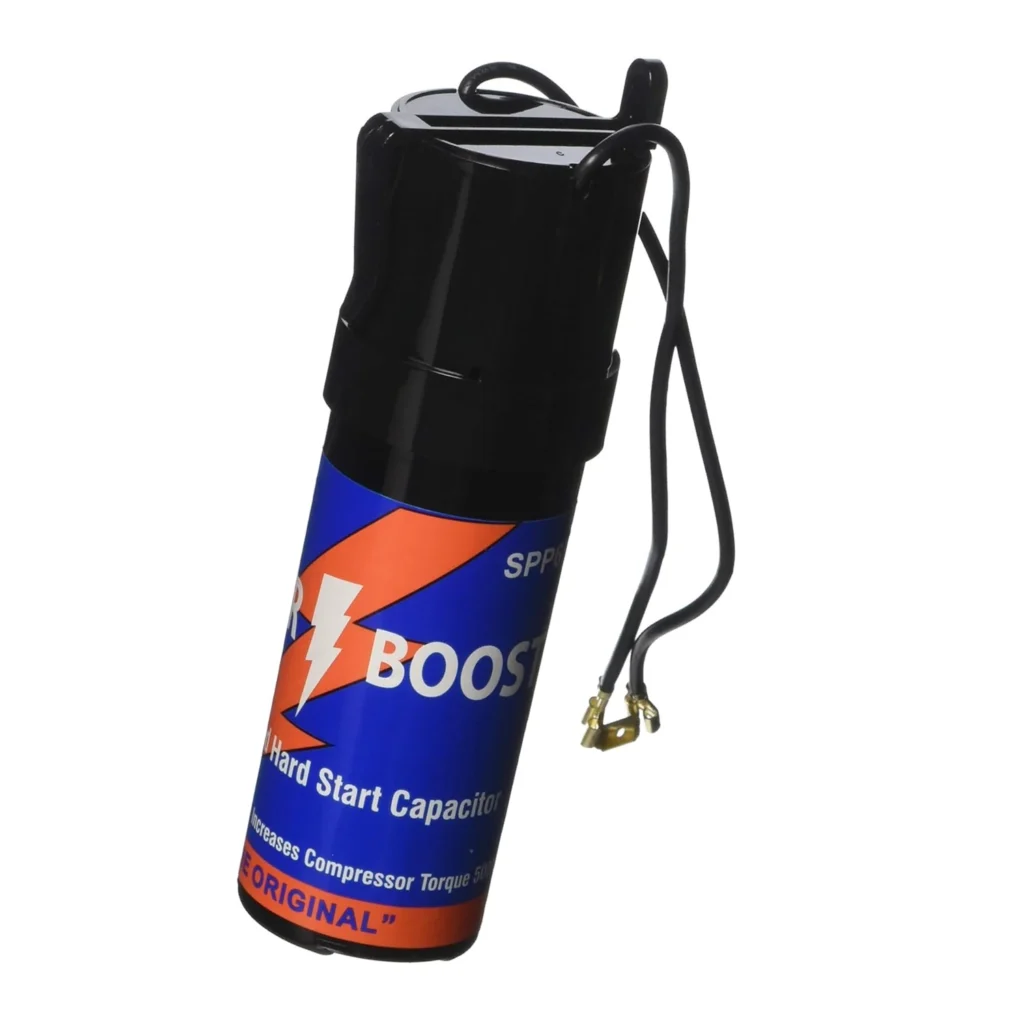
You flip the thermostat after a summer storm knocked out power, and nothing happens. The condenser sits silent in your backyard — no hum, no compressor kick. Nine times out of ten, when an AC unit refuses to start after a power surge or outage, you're dealing with a failed hard start kit or compressor starting issue.
This guide covers the SPP6 hard start kit — a universal replacement compatible with Carrier 24ABC636A003, Goodman GSX160361, Trane XR15, Rheem RA1430AJ1NA, and dozens of other residential AC condensers. We'll walk through the four most common failure points and exactly how to diagnose which one killed your startup circuit.
Quick Symptom Check
- Compressor hums but won't start — capacitor or relay failure
- Complete silence when thermostat calls for cooling — contactor or hard start kit
- Clicking sound every 3-5 seconds — compressor trying and failing to start
- Works intermittently after power cycling — weak start capacitor
- Breaker trips immediately — shorted start components or compressor
Cause #1: Failed Start Capacitor (65% of Cases)
The start capacitor inside your hard start kit gives the compressor the extra torque it needs to overcome initial resistance. When it fails — usually from age, heat, or voltage spikes — the compressor can't generate enough starting force.
How to diagnose: Turn off power at the disconnect. Remove the condenser panel. Look for a cylindrical capacitor (often black or silver) near the compressor. Check for these failure signs:
- Bulging or swollen case
- Oil or fluid leaking from terminals
- Burn marks on the casing
- Capacitance reading below rated value (requires multimeter with capacitance function)
The SPP6 kit includes a 6 MFD start capacitor rated for extreme temperature cycling. It replaces Carrier TJ90HS6, Goodman HS6, and equivalents across brands.
Difficulty: Easy
Cost: $20.99 for complete kit
Probability: 65%
Cause #2: Defective Potential Relay (20% of Cases)
The potential relay disconnects the start capacitor once the compressor reaches operating speed. When it sticks closed, the start capacitor stays in the circuit — causing the compressor to overheat and trip the breaker. When it sticks open, the capacitor never engages and the compressor won't start.
How to diagnose: With power off, remove the relay from its mounting bracket. Check the coil resistance between terminals 2 and 5 (should read 5000-8000 ohms on most relays). Check for continuity between terminals 1 and 2 with the relay at rest — should be open (infinite resistance).
If you hear rapid clicking when the unit tries to start, the relay is likely cycling on and off because it can't hold the circuit closed long enough for the compressor to reach speed.
Difficulty: Easy
Cost: Included in SPP6 kit
Probability: 20%
Cause #3: Wiring Connection Failure (10% of Cases)
Power surges can arc across terminal connections, creating carbon buildup that blocks proper electrical contact. This is especially common on the compressor's common and start terminals where the hard start kit connects.
How to diagnose: Remove power. Disconnect the hard start kit wiring from the compressor terminals. Inspect each terminal for:
- Black carbon scoring
- Loose spade connectors
- Corrosion (especially in coastal climates)
- Melted insulation on wires
Clean terminals with fine sandpaper and reconnect. If the terminal itself is damaged, you'll need to replace the compressor terminal block or call a tech — this requires EPA-certified refrigerant recovery.
Difficulty: Easy to moderate
Cost: Free if just cleaning
Probability: 10%
Cause #4: Compressor Mechanical Failure (5% of Cases)
If the compressor itself has seized due to lack of lubrication or internal damage, no hard start kit will help. This usually happens after years of struggling to start with a weak capacitor — the extra strain kills the compressor bearings.
How to diagnose: With power off and the hard start kit disconnected, use an ohmmeter to check compressor windings. Measure resistance between the three terminals:
- Common to Start: 3-6 ohms (varies by model)
- Common to Run: 1.5-3 ohms
- Start to Run: Should equal sum of above two readings
If any reading is infinite (open circuit) or zero (shorted), the compressor is dead. If readings are correct but the compressor won't turn by hand when you try to rotate the fan, the bearings are seized.
Difficulty: Diagnosis easy, repair requires licensed tech
Cost: $800-$2,500 for compressor replacement
Probability: 5%
Installing the SPP6 Hard Start Kit
The SPP6 replaces kits across virtually all residential brands — Carrier 35702, Goodman DST-6, Trane ERPP6, Rheem equivalents. It works on single-phase condensers from 1.5 to 5 tons.
Step-by-step:
- Kill power at the disconnect and main breaker
- Verify zero voltage with a multimeter
- Remove old hard start kit (typically mounted near compressor or on condenser panel)
- Note wire colors — usually black to Common, red to Start, sometimes white to Run
- Mount the SPP6 relay bracket using existing screw holes
- Connect capacitor leads to relay terminals per included diagram
- Connect relay wires to compressor terminals — match old configuration
- Secure all connections with wire nuts or crimp connectors
- Restore power and test
The entire swap takes under 15 minutes. The SPP6 includes the relay, start capacitor, and all mounting hardware.
When to Call a Pro
Call a licensed HVAC tech if:
- You're uncomfortable working with 240V electrical systems
- The compressor shows signs of mechanical failure
- You need refrigerant work (requires EPA certification)
- The condenser is still under warranty
- You've replaced the hard start kit and the problem persists
Hard start kit replacement is straightforward and doesn't involve refrigerant, but compressor work requires specialized equipment and licensing.
Frequently Asked Questions
Will a hard start kit work on any AC brand?
The SPP6 is a universal kit compatible with Carrier, Goodman, Trane, Rheem, Lennox, York, and most residential brands. It replaces TJ90HS6, DST-6, HS6, ERPP6, and equivalent part numbers. Match the tonnage rating — this kit handles 1.5 to 5-ton condensers. Check your compressor's start capacitor MFD rating; the SPP6 includes a 6 MFD capacitor suitable for most residential units.
Can I run my AC without a hard start kit?
Some older or smaller AC units (under 2 tons) don't use hard start kits — they rely on the run capacitor alone. But if your system came with one, don't bypass it. The hard start kit reduces strain on the compressor during startup, extending its life by years. Running without it increases amp draw during startup by 300-400%, which stresses the compressor windings and shortens lifespan.
How long does a hard start kit last?
Quality hard start kits like the SPP6 typically last 5-8 years. Failure is usually gradual — you'll notice longer startup times or occasional failed starts before complete failure. Power surges and extreme heat accelerate wear. If your AC is over 10 years old and the original hard start kit is still installed, consider replacing it preventatively during spring maintenance.
Diagnosed the problem?
SPP6 · In Stock · Fast shipping