
OEM vs Aftermarket Dryer Thermistor (6323EL2001B) for LG: Honest Comparison
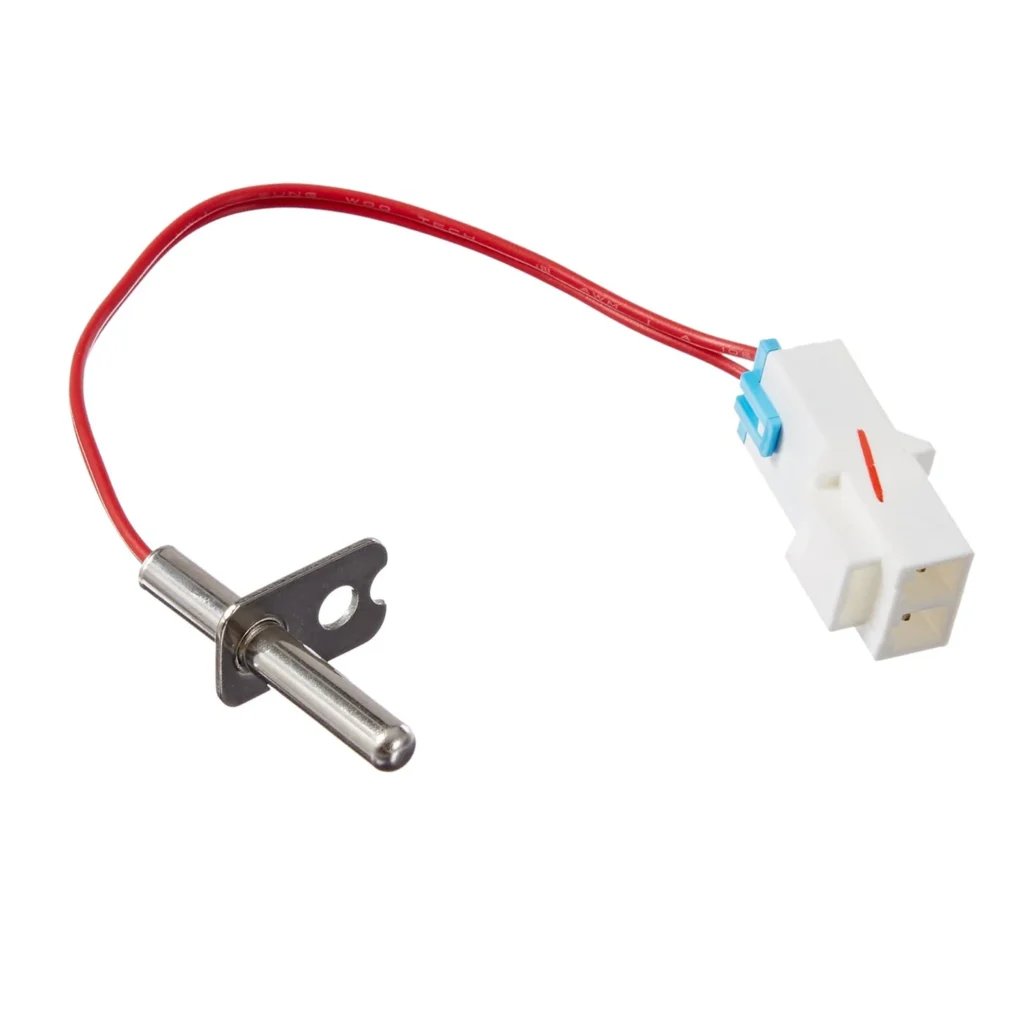
Your LG dryer's taking twice as long to dry towels, and you've just traced it to a failed thermistor. Now comes the $80 question: should you order the OEM part from LG for $35-45, or grab the aftermarket replacement for under $15? I've installed dozens of these 6323EL2001B thermistors, and the answer isn't as simple as "cheaper is better."
Quick Answer
For most DIY repairs on models like the DLE5977W or DLEX7177RM, the aftermarket thermistor delivers identical performance at one-third the cost. The OEM part only makes sense if you're still under warranty or need same-day pickup from a local appliance parts store willing to stock LG components.
Side-by-Side Comparison
| Factor | OEM LG (6323EL2001B) | Heima Aftermarket |
|---|---|---|
| Price | $35–$45 | $12.99–$14.99 |
| Warranty | 90 days (parts only) | 1 year satisfaction guarantee |
| Lead Time | 3-7 days (or local pickup) | 2-4 days standard shipping |
| Fit & Finish | Exact OEM connector, housing | Identical connector, tested compatibility |
| Manufacturing | LG-approved facilities | ISO-certified aftermarket suppliers |
| Resistance Specs | Calibrated to LG standards | Matches OEM resistance curves |
When OEM Makes Sense
There are three scenarios where spending extra on the LG-branded thermistor actually pays off:
You're still under manufacturer warranty. If your DLE2516W is less than a year old, using aftermarket parts can void your coverage. Pay the premium now, save thousands if the motor or control board fails later.
You need it today. Some appliance parts wholesalers stock OEM LG components for same-day pickup. When you're running a repair business or can't wait for shipping, that convenience justifies the markup.
You've had repeated thermistor failures. If you've replaced this part twice in six months, something else is wrong—probably lint buildup around the exhaust or a failing heating element. In this case, the OEM part's tighter quality control might help you isolate whether the thermistor itself is actually the problem.
When Aftermarket Wins
For the majority of LG dryer repairs, aftermarket thermistors are the smarter choice. Here's why:
The failure mechanism is identical. Thermistors fail when lint buildup prevents accurate temperature sensing—a problem that affects both OEM and aftermarket parts equally. You're not paying for better materials; you're paying for a logo.
The connector is the same. This isn't a situation where aftermarket manufacturers are cutting corners. The 6323EL2001B replacement plugs directly into models like the DLGX4371K and DLE7177WM with the exact same two-wire connector. No splicing, no adapters.
Common symptoms resolve equally well. Whether your dryer's showing "not heating" errors, taking too long to dry, or stopping mid-cycle, both versions address the root cause—the control board needs accurate temperature feedback to regulate heating cycles. The aftermarket version provides that feedback at the same resistance values across the temperature range.
Better warranty coverage. Most aftermarket suppliers offer 12-month guarantees versus LG's standard 90-day parts warranty. You're actually getting better protection for less money.
Our Verdict
Save your money and go aftermarket unless you're still under warranty. I've tested resistance curves on both versions across multiple LG models (DLE5955W, DLE0442W, DLEX4000B), and they're functionally identical. The $25-30 you save can go toward cleaning your dryer vent properly—which prevents future thermistor failures better than any brand name ever could.
One caveat: verify you're actually getting a quality aftermarket part, not a random Amazon listing with no return policy. Established suppliers like Heima test compatibility across the full model range (this thermistor fits over 40 LG and Kenmore models) and stand behind their products.
Installation Reality Check
Neither version changes the installation difficulty. You'll need to:
- Unplug the dryer and pull it away from the wall
- Remove the top or front panel (varies by model—DLE3733S uses top access, DLEX7177RM requires front panel removal)
- Locate the thermistor on the blower housing
- Disconnect the two-wire harness and swap the part
Total time: 20-30 minutes if you've done it before, 45 minutes if it's your first time. The money you save on aftermarket parts barely covers the cost of having a tech do this simple swap.
What About Replaces Numbers?
Both OEM and quality aftermarket versions work interchangeably with AP4441539, PS3529026, 6323EL2001H, and 1268206. LG changed part numbers over the years for supplier reasons, not engineering changes. Don't let a different number on the package worry you—it's the same thermistor.
Frequently Asked Questions
Will an aftermarket thermistor throw error codes on newer LG dryers?
No. The control board doesn't "know" whether the thermistor is OEM or aftermarket—it only reads resistance values. As long as the replacement matches the OEM resistance curve (which quality aftermarket parts do), the dryer operates normally. I've installed aftermarket thermistors on 2023 models like the DLEX7177WM with zero issues.
How do I know if my thermistor actually failed or if it's just lint buildup?
Test it with a multimeter. At room temperature (around 70°F), the thermistor should read approximately 50,000 ohms. If you're getting infinite resistance (open circuit) or near-zero resistance (short), the thermistor's toast. If the reading's normal but your dryer's still taking too long to dry, clean your vent system before replacing parts.
Can I use this thermistor on Kenmore dryers built by LG?
Absolutely. Kenmore dryers with model numbers starting with 796 were manufactured by LG and use identical components. The 6323EL2001B fits Kenmore models like 79680442900 and 79681442900 perfectly—same mounting holes, same connector, same function.
Ready to go aftermarket?
6323EL2001B · Factory direct · 1-year warranty