
LG Washer Overfilling or Won't Fill Water — 5 Causes & How to Fix
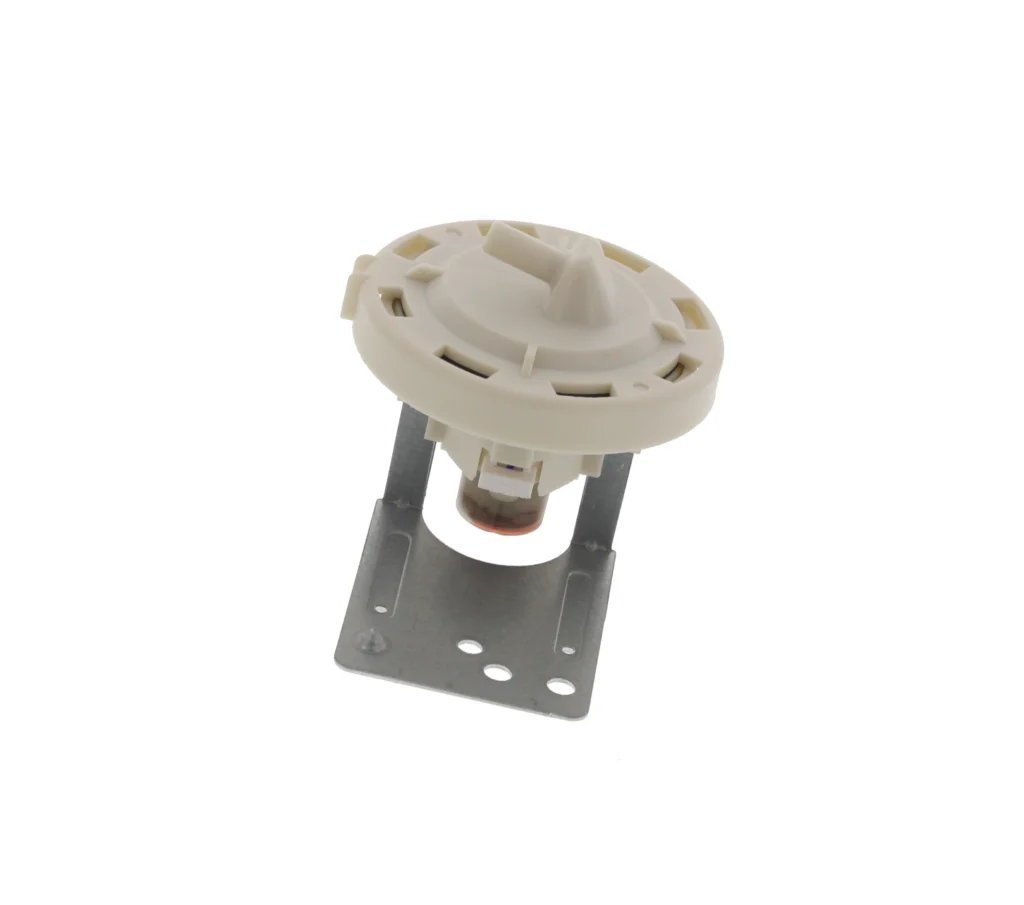
You start a load of laundry and walk away. Twenty minutes later, you come back to find water pooling on your laundry room floor — your LG washer turned into a miniature swimming pool. Or maybe it's the opposite problem: the drum sits bone-dry, the cycle stalled before it even started. Both scenarios point to the same culprit: your washer's water level pressure switch has stopped communicating properly with the control board.
This pressure switch (part 6601ER1006G) is what tells your washer when to stop filling. It monitors air pressure in a tube connected to the tub — as water rises, air pressure increases, and the switch signals "that's enough." When it fails, your washer either doesn't know when to stop or never gets the signal to start filling at all.
Quick Symptom Check
Before you start diagnosing, confirm what's actually happening:
- Continuous filling: Water keeps running even after the drum is full, potentially overflowing onto the floor
- No water entry: Cycle starts but drum remains completely dry, no water entering at all
- Inconsistent fills: Sometimes fills normally, other times overfills or underfills randomly
- Error codes: OE (drain error) or IE (water inlet error) displayed on control panel
- Cycle won't advance: Washer stuck in fill mode, timer not progressing
If you're seeing water level problems on models like the WM2077CW, WM2688HNM, or WM3470HVA, you're dealing with a common failure point across LG's front-loader lineup.
Cause #1: Failed Pressure Switch (Most Likely — 60% of Cases)
The pressure switch itself wears out. The internal diaphragm cracks, contacts corrode, or the switch mechanism sticks in one position. This is the most common failure because it's a mechanical part that cycles thousands of times.
How to diagnose: Unplug the washer and locate the pressure switch on the right side of the control panel area. It's a round component about 2 inches in diameter with a clear or white air tube attached and wire connectors on top. Disconnect the tube and blow gently into it — you should hear distinct clicks as the switch activates. No clicks? Dead switch. Also check for water inside the tube; if present, the switch likely failed and allowed water backflow.
Fix: Replace the pressure switch (6601ER1006G). Takes about 30 minutes. Cost: $25–$45 for the part.
Cause #2: Clogged or Kinked Pressure Tube (20% of Cases)
The air tube running from the switch down to the tub exterior gets blocked with detergent residue, lint, or physically kinked. When airflow is restricted, the switch can't accurately sense water level.
How to diagnose: Follow the tube from the pressure switch down to where it connects to the outer tub. Look for obvious kinks, especially if the washer was recently moved. Disconnect both ends and blow through — air should pass freely. If you feel resistance, the tube's clogged.
Fix: If kinked, carefully straighten it. If clogged, try flushing with warm water or replace the tube entirely (it's just vinyl tubing). Sometimes you can clear it by disconnecting and running water through backward. Takes 15–20 minutes.
Cause #3: Stuck Water Inlet Valve (10% of Cases)
The inlet valve that controls water flow can stick open (causing overfilling) or closed (preventing filling). Sediment from your water supply builds up in the valve screens, or the solenoid coils burn out.
How to diagnose: The inlet valve is where the fill hoses connect at the back. Turn off water supply, disconnect hoses, and check the screens for debris. With the washer unplugged, use a multimeter to test the solenoid coils — you should read 500–1500 ohms on each. Infinite resistance means failed coil.
Fix: Clean the screens if they're clogged. If the valve's stuck or solenoids test bad, replace the entire inlet valve assembly. Part runs $30–$60. Takes about 45 minutes including getting to the back connections.
Cause #4: Faulty Control Board Communication (7% of Cases)
Sometimes the pressure switch is fine, but the main control board isn't reading its signals correctly. This happens with corroded wire connections or failed board circuitry.
How to diagnose: Check the wire harness connecting the pressure switch to the control board. Look for burned, corroded, or loose terminals. Wiggle the connector while someone watches for error codes — if codes appear/disappear, it's a connection problem. Testing the board itself requires technical knowledge and a schematic.
Fix: Clean corroded connectors with electrical contact cleaner. If the board's genuinely failed, replacement costs $150–$300 and honestly might not be worth it on an older washer. Get a pro opinion first.
Cause #5: Air Trap or Outer Tub Connection Issue (3% of Cases)
Where the pressure tube connects to the outer tub, there's a small air chamber or trap. If this chamber cracks, fills with water, or the connection loosens, pressure sensing fails.
How to diagnose: You'll need to access the outer tub area (meaning front panel removal on most LG front-loaders). Check where the pressure tube connects for cracks, water leakage, or loose fit. The connection should be airtight.
Fix: Reseat the connection firmly. If the air trap chamber is cracked, you can sometimes seal it with silicone or replace that section of the outer tub (much bigger job). Most people replace the pressure switch first since it's easier to access.
When to Call a Pro
The pressure switch replacement is DIY-friendly if you're comfortable working with appliances. But call a technician if:
- You've replaced the switch and tube but still have water level problems
- You're seeing multiple error codes or the control panel is acting erratic
- Water damage has occurred and you need to assess internal components
- The washer is still under warranty (DIY repairs void most warranties)
- You're not comfortable working around electrical connections
A service call runs $100–$150 for diagnosis, plus parts and labor. Pressure switch replacement by a pro typically costs $150–$200 total.
Frequently Asked Questions
Will a bad pressure switch cause my LG washer to not drain?
Not directly. The pressure switch controls filling, not draining. However, if the washer overfills due to a bad switch, you might see an OE (drain error) because there's simply too much water for the pump to remove in the allotted time. The control board thinks there's a drain problem when it's actually a fill problem. Fix the overfilling issue and the drain error usually disappears.
Can I use 6601ER1006E instead of 6601ER1006G?
Yes, they're functionally identical. The "E" and "G" suffix changes indicate minor manufacturing revisions but they're interchangeable. This switch also replaces older part numbers 6600FA1704X, AP5253691, and PS3598722. All fit the same LG and Kenmore front-load washers from roughly 2005–2015.
Why does my washer overfill only sometimes?
Intermittent overfilling usually means the pressure switch is on its way out but hasn't completely failed yet. The internal contacts are corroded or sticky — they work sometimes, fail other times depending on position or temperature. You might also have a partially clogged pressure tube that restricts airflow just enough to cause occasional misreadings. Both problems will get progressively worse, so address them before you have a flood.
Diagnosed the problem?
6601ER1006G · In Stock · Fast shipping