
Whirlpool Refrigerator Too Warm or Freezer Not Defrosting — 5 Causes & How to Fix
You open the fridge at 6 AM to grab milk for coffee, and it's lukewarm. The ice cream you bought two days ago is soft. Meanwhile, your freezer's back wall looks like an igloo with frost buildup that's been growing for weeks. If your Whirlpool, Maytag, KitchenAid, or Kenmore refrigerator is running but not keeping food cold — and the freezer is simultaneously becoming an ice cave — you're likely dealing with a defrost system failure.
This isn't a cooling problem. It's a defrost problem. When frost builds up on the evaporator coils, it blocks airflow, which means cold air can't circulate properly. The freezer can't release cold air to the fridge section, so both compartments suffer. Here's how to diagnose and fix it.
Quick Symptom Check
- Fridge temperature rising above 40°F — food spoiling faster than normal
- Excessive frost or ice buildup on the back wall of the freezer
- Freezer still somewhat cold but fridge section warm
- Ice blocking the vents between freezer and refrigerator compartments
- Compressor running constantly but temperatures not dropping
Cause #1: Failed Adaptive Defrost Control Board (Most Likely — 40%)
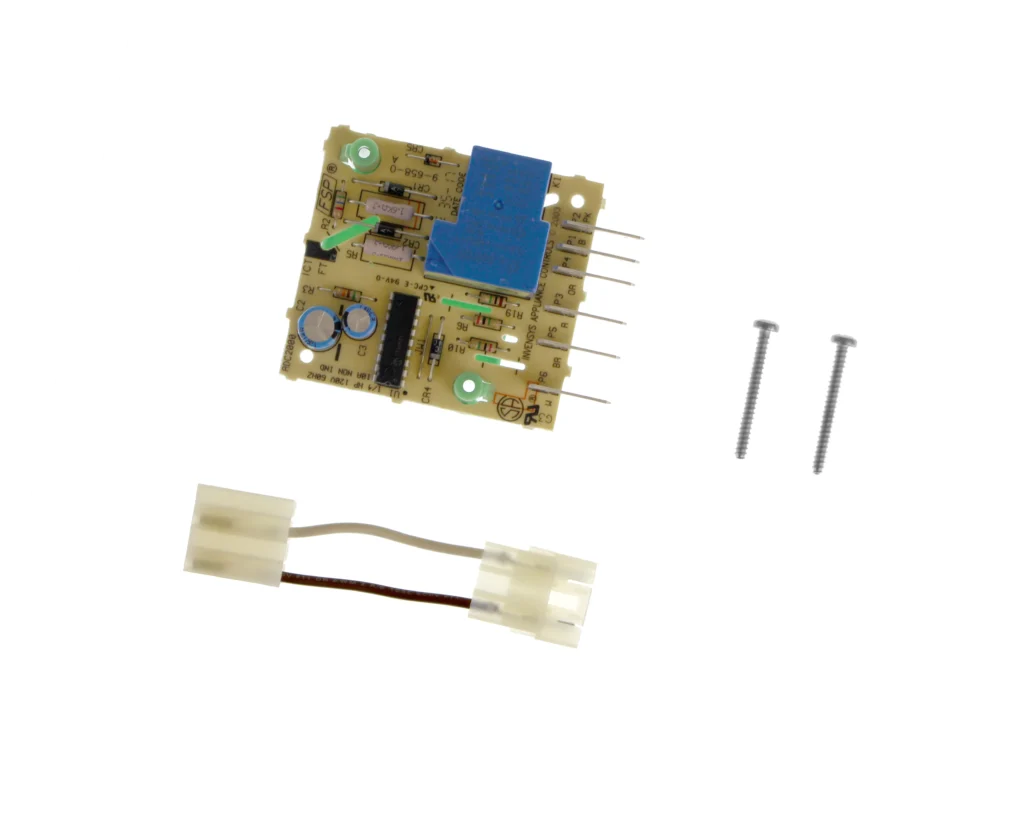
The adaptive defrost control board (part 4388931) is the brain behind your refrigerator's defrost cycle. It monitors compressor run time and door openings to calculate when the evaporator coils need defrosting. When this board fails, it stops initiating defrost cycles entirely — frost accumulates, airflow gets choked off, and your fridge warms up.
Diagnosis: If you haven't heard the defrost heater kick on in weeks, or if manually forcing a defrost cycle by unplugging the unit for 8 hours temporarily fixes the problem, the control board is your culprit. This board is located behind the fridge (not inside the compartments) — usually in the upper back or behind the kickplate.
Affected models: This is widespread across Whirlpool refrigerators from 2005-2015, including ED2KHAXYQ01, WRT316SFDW, WRT111SFDW, RT18BKXKQ series, and Kenmore models starting with 106 like 10662972901.
Fix difficulty: Moderate. You'll need to pull the fridge out, remove the back panel or kickplate, disconnect the wire harness, and swap the board. Takes about 45 minutes if you're methodical.
Cause #2: Defrost Heater Burned Out (25%)
Even if the control board is sending the signal, the defrost heater might not be responding. The heater is a long tube or glass element mounted directly on or under the evaporator coils. When it fails, ice never melts — even though the board is trying to trigger defrost cycles.
Diagnosis: Unplug the fridge, remove the freezer's back panel (inside the freezer), and locate the heater. Use a multimeter to test for continuity. A working heater should read 10-50 ohms. Infinite resistance means it's toast.
Why it fails: Repeated thermal cycling stresses the element. Eventually it cracks or the filament breaks. If you see visible cracks in a glass-tube heater, it's definitely dead.
Cause #3: Defrost Thermostat Stuck Closed (20%)
The defrost thermostat is a safety device clipped to the evaporator coils. It's supposed to open (break the circuit) when the coils reach around 40°F to prevent the heater from overheating. If it's stuck open, the heater never gets power even when the control board calls for defrost.
Diagnosis: With the fridge unplugged, test the thermostat with a multimeter at room temperature — it should show continuity (closed circuit). Place it in ice water; it should stay closed. If it's open at room temp, it's defective.
Cause #4: Defrost Timer Malfunction (10% — Older Models)
Some older Whirlpool and Kenmore models use a mechanical defrost timer instead of an adaptive control board. This timer advances the fridge through cooling and defrost cycles. If the motor inside the timer stops, the unit gets stuck in cooling mode and never defrosts.
Diagnosis: Locate the timer (usually behind the kickplate or inside the fridge near the temperature control). Manually advance it with a screwdriver in the dial slot. If the compressor shuts off and the defrost heater kicks on, the timer motor is dead.
Cause #5: Blocked or Frozen Drain Tube (5%)
Even with a working defrost system, if the drain tube at the bottom of the freezer is clogged with ice, meltwater backs up and re-freezes on the coils. This creates a frost problem that mimics a defrost failure.
Diagnosis: During a manual defrost, check if water pools at the bottom of the freezer instead of draining. Pour warm water down the drain tube opening (located under the evaporator coils). If it doesn't drain freely, it's blocked.
Fix: Use a turkey baster or small funnel to flush hot water through the tube. For stubborn clogs, carefully use a short length of flexible tubing or a pipe cleaner — don't use anything rigid that could puncture the tube.
When to Call a Pro
If you've replaced the adaptive defrost control board and the defrost heater but the problem persists, you might have a sealed system issue — low refrigerant or a failing compressor. These require EPA-certified technicians with specialized equipment. Also, if you're uncomfortable working with electrical components or pulling your fridge apart, a technician can diagnose this in 20 minutes with the right tools.
That said, the adaptive defrost control board (4388931) is the #1 fix for this symptom pattern. It's a straightforward swap with no refrigerant work involved.
Frequently Asked Questions
How long does it take for frost to build up after the defrost system fails?
It depends on humidity and door openings, but you'll typically see noticeable frost within 5-7 days and complete airflow blockage within 2-3 weeks. The fridge section warms up before the freezer because it depends entirely on air circulation from the freezer.
Can I just manually defrost the fridge every few weeks instead of fixing it?
You can, but you'll lose hundreds of dollars in spoiled food over time — and you'll be defrosting every 10-14 days. The control board costs $125.99 and fixes the problem permanently. Manual defrosting is a temporary bandage, not a solution.
Will replacing the control board erase my temperature settings?
No. Temperature settings on most Whirlpool models are stored separately in the user interface control or are simply dial positions. The adaptive defrost control board only manages defrost timing — it doesn't store user preferences.
Diagnosed the problem?
4388931 · In Stock · Fast shipping