
Whirlpool Washer Motor Coupling Parts — Models & Compatibility
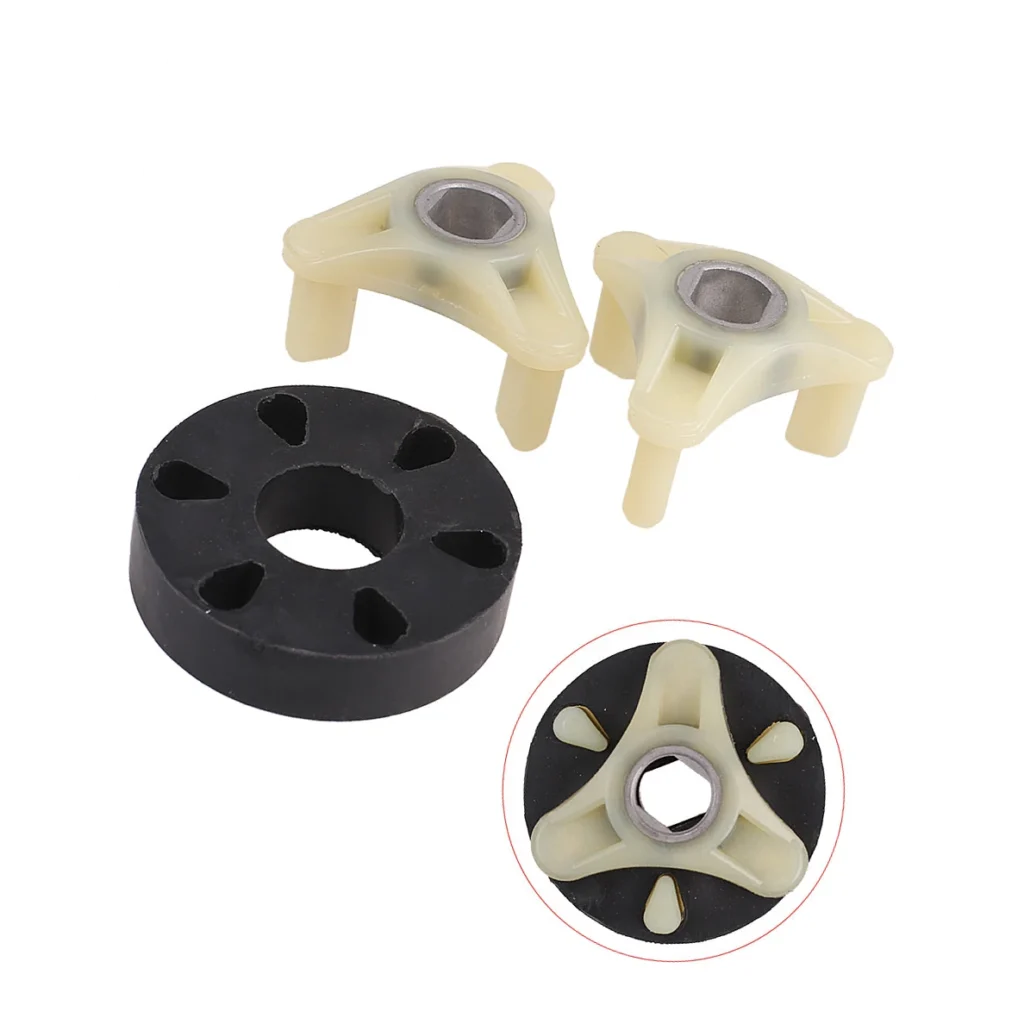
The motor coupling is the plastic bridge between your washer's motor and transmission. When it fails, you'll hear the motor running but the drum won't agitate or spin properly. This 285753A coupling fits over 500 Whirlpool, Kenmore, Maytag, KitchenAid, Amana, and Roper direct-drive washers — making it one of the most universal replacement parts in the Whirlpool family.
Is This the Right Part for Your Model?
Check your washer's model number tag — it's usually inside the door rim or behind the control panel. If your model starts with WTW, LSR, LSC, LTG, LTE, or 110 (Kenmore), there's a strong chance this coupling fits. You can verify compatibility by entering your full model number in our search tool above.
About This Replacement Part
The 285753A is a direct-drive motor coupling that handles the tremendous torque between the motor and transmission during wash and spin cycles. It's designed with three rubber grommets that absorb shock and eventually wear out — which is exactly what causes most coupling failures. When you notice your washer won't agitate, spins slowly, makes a burning smell during operation, or the motor runs but nothing moves, the coupling has likely sheared or worn through. This part replaces several older part numbers including AP3963893, 285753, 1195967, 3364003, and 285743, so if you're replacing an old coupling, this updated version will fit.
Common Symptoms That Point to Coupling Failure
Washer owners typically notice the motor coupling has failed when the machine won't agitate during the wash cycle, even though you can hear the motor running. The drum might spin slowly or not at all. Some report a burning smell coming from the washer cabinet — that's the rubber grommets overheating as they slip. Draining issues can also appear if the transmission isn't being driven properly. In extreme cases, you'll hear normal motor operation but see absolutely no drum movement.
What Makes This Coupling Fail
Overloading your washer is the number one killer of motor couplings. When you pack the drum too full, the coupling has to transfer excessive torque and the rubber components deteriorate faster. Unbalanced loads cause similar stress. The coupling is also a wear item — even with normal use, it'll eventually need replacement after several years of wash cycles. If your washer has been making grinding noises or struggling with heavy loads, the coupling was likely working overtime before it finally gave out.
Whirlpool Series Coverage
This coupling works across virtually all Whirlpool direct-drive top-load washer series from the past 20 years. That includes the Cabrio series (WTW models), traditional top-loaders (LSR, LSC), and commercial-grade Kenmore 110 series machines. Maytag Centennial washers use the same coupling design after Whirlpool acquired Maytag. KitchenAid and Amana washers built on the Whirlpool platform also use this exact part.
Installation Overview
Replacing the motor coupling requires accessing the area between the motor and transmission, which means you'll need to tip the washer back or lay it on its front. You'll disconnect the motor from the base, remove the old coupling (often it's already in pieces), and snap the new one into place on both the motor and transmission shafts. The three-piece design makes alignment straightforward. Most DIYers complete this repair in 30-45 minutes.
Why Choose the 285753A Over Generic Couplings
Generic aftermarket couplings use harder rubber compounds that don't absorb shock as well, leading to premature transmission wear and noisier operation. The 285753A uses the same rubber durometer spec as the original Whirlpool part, which means proper torque transfer and vibration dampening. You'll also notice the mounting tabs are precision-molded to fit the motor and transmission shafts without slop — generic versions often fit loose and slip under load.
Preventing Future Coupling Failures
Don't overload your washer. If you can't fit your hand between the top of the clothes and the drum lid, you've loaded too much. Balance your loads — put heavy items like towels with lighter items like t-shirts. If the washer starts making grinding noises or struggling to agitate, stop using it and inspect the coupling before it damages the transmission. Running a washer with a failing coupling can strip transmission gears, turning a $22 repair into a $200+ problem.
Can't find your model?
Enter your model number and we'll confirm the right part.