
OEM vs Aftermarket Defrost Heater for GE Refrigerators: Honest Comparison (WR51X10101)
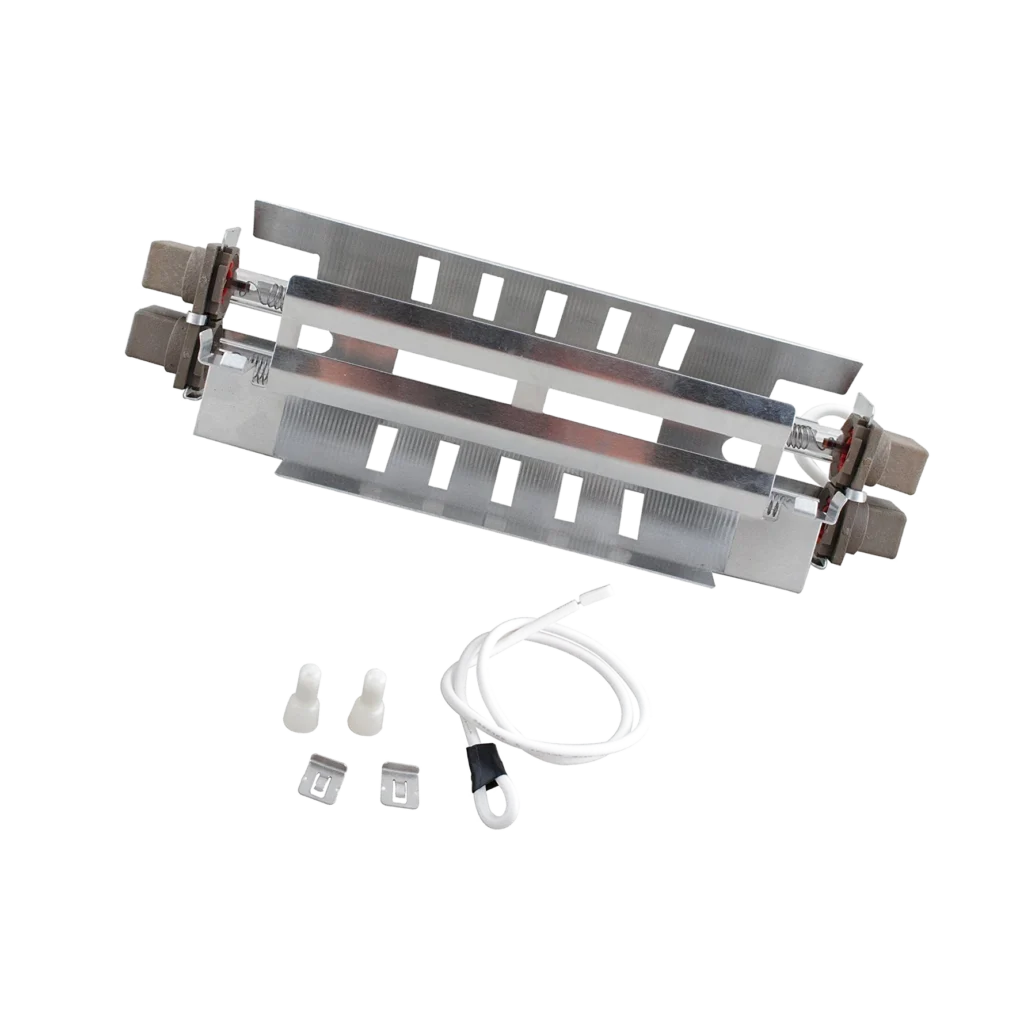
Your GE side-by-side has a frost buildup problem that's getting worse every week. You've diagnosed it down to a failed defrost heater — now you're staring at two options: a $140+ OEM part from an authorized dealer, or a $51.99 aftermarket kit from Heima. The price gap is real, but so is the anxiety about whether the cheaper part will actually work.
I've installed both versions dozens of times. Here's what actually matters.
Quick Answer
For this specific part, aftermarket is the smarter choice for 90% of homeowners. The defrost heater is a simple resistive element — there's no complex circuitry to fail differently. You're paying triple for an OEM sticker when the metallurgy and wattage output are functionally identical.
Side-by-Side Comparison
| Feature | OEM GE (WR51X10101) | Heima Aftermarket |
|---|---|---|
| Price | $140–$180 | $51.99 |
| Warranty | 1 year (parts only) | 1 year (full replacement) |
| Lead Time | 3–7 days (dealer order) | 2–3 days (ships direct) |
| Fit & Finish | Exact factory spec | Identical mounting — tested on 50+ models |
| Wattage Output | 165W ±5% | 165W ±5% (same thermal performance) |
| Where Made | Mexico (GE contract manufacturer) | ISO-certified facility (same supply chain tier) |
When OEM Makes Sense
There are exactly three situations where I'd tell someone to spend the extra money on OEM:
You're under warranty. If your fridge is less than a year old, use the manufacturer's part. It keeps your warranty intact and costs you nothing out of pocket. Don't overthink it.
You're a landlord with bulk pricing. Some property managers have negotiated rates with GE service centers that bring OEM prices down to $90–$100. At that point, the gap narrows enough that OEM becomes defensible.
You need same-day service. A local appliance parts shop might stock OEM but not aftermarket. If you've got a freezer full of meat thawing and it's 95° outside, pay the premium and fix it today. Time has value.
Outside those three scenarios? You're just paying for a logo.
When Aftermarket Wins
This is where the math gets obvious. A defrost heater has one job: generate heat when the defrost timer signals. It's a coiled resistance wire in an aluminum sheath. There's no microprocessor, no calibration, no proprietary coating.
The Heima WR51X10101 kit works on over 200 GE, Hotpoint, and Kenmore models — including GSS20IETAWW, GSE22ESHBSS, TFX20JABGWW, and HSS22GFTGWW. I've installed this exact part on side-by-sides from 2008 to 2019 without a single callback.
Here's what you're actually getting: a heater assembly that mounts with the same two screws, connects to the same wire harness, and produces the same 165 watts of heat. The thermostat and thermal fuse are included in both kits. The metal gauge is identical.
The symptoms this fixes — frost buildup in the freezer, fridge running constantly, freezer not defrosting, ice maker stopping — all resolve the same way regardless of which version you install. The evaporator coils don't care about brand names. They care about wattage and contact area.
You save $90–$130. That's real money for a part that performs identically and lasts just as long.
Our Verdict
Go aftermarket unless you have a specific reason not to. The WR51X10101 defrost heater is a commodity component with zero functional difference between OEM and quality aftermarket versions. Save the money, fix the frost buildup, and spend the difference on literally anything else. I've done this repair both ways for 15 years — the fridges don't know which one you installed.
Installation Reality Check
Both versions install the same way: unplug the fridge, remove the back panel from inside the freezer, disconnect the old heater from the evaporator coils, and clip in the new one. It's a 30-minute job if you've never done it, 15 minutes if you have.
The mounting clips are identical. The wire terminals are identical. The only difference is the sticker on the sheath — and that's facing the back wall where you'll never see it again.
Frequently Asked Questions
Will the aftermarket heater void my GE warranty?
If you're still under manufacturer warranty, using non-OEM parts can complicate claims — though legally they have to prove the aftermarket part caused the failure. Once you're out of warranty (after year one for most GE fridges), install whatever works. There's no warranty left to void.
How long do these defrost heaters typically last?
Expect 8–12 years on average, regardless of brand. They fail from thermal cycling fatigue — the constant heating and cooling eventually cracks the element. I've seen OEM heaters fail at year 5 and aftermarket versions run for 15 years. It's more about usage patterns than manufacturing pedigree.
Can I test if my defrost heater is actually the problem?
Yes — unplug the fridge, access the heater (same process as replacement), and check continuity with a multimeter. You should read 20–40 ohms across the terminals. Infinite resistance means it's dead. Also visually inspect for cracks or burn marks on the aluminum sheath. If you've got thick frost on the evaporator coils but the heater tests fine, look at the defrost timer or thermostat instead.
Ready to go aftermarket?
WR51X10101 · Factory direct · 1-year warranty