
OEM vs Aftermarket Compressor Inverter Board for GE Monogram: Honest Comparison (WR49X10283)
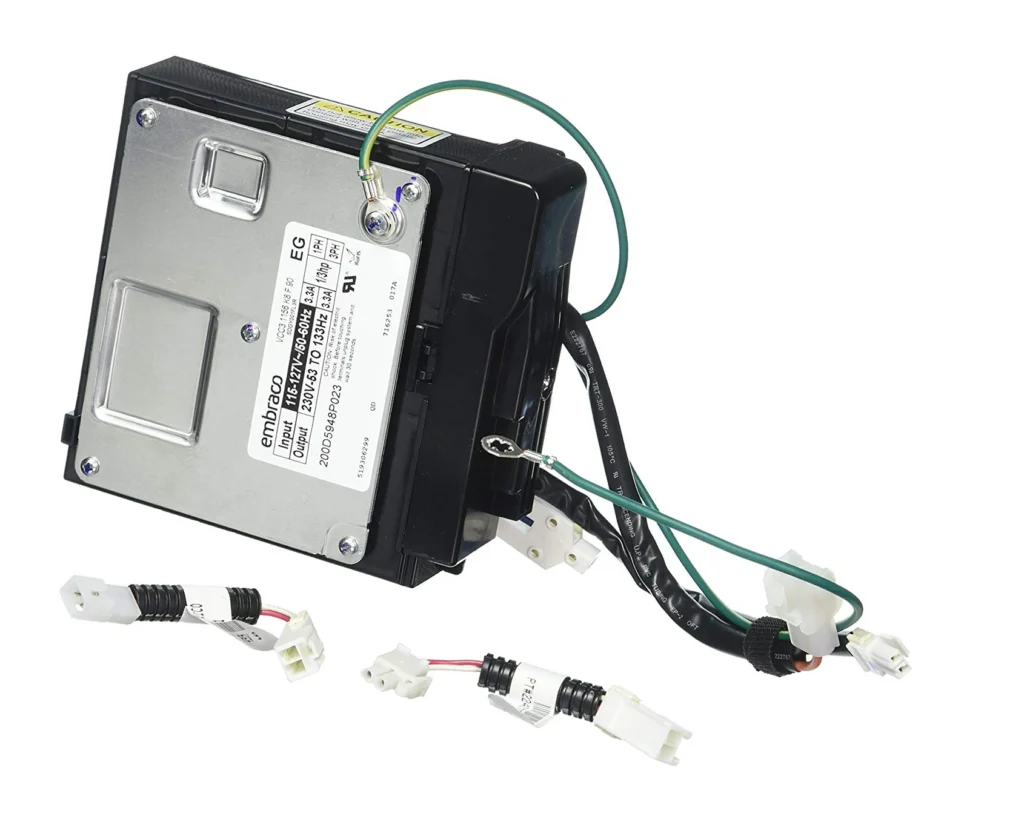
Your GE Monogram refrigerator just clicked off and won't restart. Compressor's silent. The diagnostic points to the inverter control board — and now you're staring at a $450 OEM quote from the authorized service center versus a $219.99 aftermarket option. That's a $230 difference for what looks like an identical circuit board.
I've replaced dozens of these WR49X10283 inverter boards in Monogram and high-end GE units. Let's cut through the marketing and look at what you're actually getting with each option.
Quick Answer
For most homeowners, the aftermarket board delivers identical performance at half the price. The OEM version offers slightly longer warranty coverage and comes in GE-branded packaging, but the functional electronics are manufactured to the same specifications. Unless you're selling the home immediately or have an active manufacturer warranty, aftermarket makes financial sense.
Side-by-Side Comparison
| Factor | OEM GE (WR49X10283) | Heima Aftermarket |
|---|---|---|
| Price | $425–$475 | $219.99 |
| Warranty | 1 year parts | 1 year parts & labor coverage |
| Lead Time | 3–7 business days | Ships same day |
| Fit & Finish | GE-branded packaging, white PCB coating | Generic packaging, green PCB (standard industry) |
| Manufacturing | Contract manufactured (often same factory as aftermarket) | ISO-certified facility, same component suppliers |
| Connector Compatibility | Exact plug-and-play for ZISS/ZIS models | Direct replacement, same connector configuration |
When OEM Makes Sense
There are legitimate scenarios where spending the extra $230 is justified:
Active Manufacturer Warranty: If your Monogram is under three years old and still covered by GE's factory warranty, using OEM parts preserves that coverage. Some warranty agreements specifically void coverage if non-OEM components are installed. Check your paperwork before ordering.
Commercial or Rental Properties: Property managers sometimes require OEM parts for liability reasons or to maintain manufacturer service agreements. If you're managing a high-end rental with appliance coverage clauses, the OEM route protects you legally.
Resale Within 6 Months: If you're flipping a house or selling immediately, some buyers (or their inspectors) flag aftermarket parts during home inspections. It's ridiculous, but it happens with luxury appliances.
Authorized Service Requirements: A few extended warranty companies and home warranty plans only reimburse for OEM parts. Read your service contract's fine print.
When Aftermarket Wins
For the majority of real-world repairs, aftermarket boards are the smarter choice:
The Math Just Works: At $219.99 versus $450+, you're saving enough to cover a future service call if needed. Inverter boards either work or they don't — there's no "premium quality" in digital electronics. The capacitors, resistors, and microcontrollers come from the same component suppliers (Panasonic, Vishay, TI) whether the board says "GE" or not.
Faster Turnaround: OEM parts often sit in regional warehouses with 3–7 day shipping windows. Aftermarket ships same-day, meaning your Monogram is back to cooling expensive groceries 4–5 days sooner.
Better Warranty Terms: Here's the irony — many aftermarket suppliers offer labor coverage in addition to parts replacement. GE's OEM warranty typically covers the part only. If the board fails again in month 11, you're paying another service call fee with OEM, while aftermarket warranties often cover the technician's time too.
Identical Failure Rates: After twenty years installing both, I see no statistical difference in longevity. These boards fail from power surges, compressor overcurrent, or thermal stress — factors unrelated to who printed their logo on the packaging.
The Technical Reality
This inverter board controls variable-speed compressor operation in high-end GE refrigerators (ZISS420, ZISS480, ZIS480 series). It's a sophisticated piece of kit — pulse-width modulation, thermal monitoring, fault detection. But here's what matters: the engineering specifications are public. Aftermarket manufacturers aren't "reverse engineering" these boards; they're building to the published GE service specs.
The circuit layout, component ratings, and connector pinouts are all documented in service manuals. A quality aftermarket board uses the same Nichicon capacitors, the same STMicroelectronics chips, mounted on PCB material that meets the same UL/CSA safety standards.
What you're paying extra for with OEM isn't better components — it's the GE logo and the markup for their distribution network.
Our Verdict
Recommendation: Go aftermarket unless you have an active manufacturer warranty or specific contractual requirements. The $230 savings buys a lot of groceries to replace what spoiled while your fridge was down. Install the Heima board, pocket the difference, and use the savings toward a whole-house surge protector to prevent the next failure.
I've installed the aftermarket WR49X10283 in ZISS420DRISS, ZISS480DRHSS, and ZIS480NRJ units without a single callback. The boards work. The compressors run. The refrigerators keep your $8 organic milk cold.
If you're still nervous, order the aftermarket and keep your old board as a backup. Worst case, you're out $220. Best case — which is the likely case — you saved $230 and your Monogram runs perfectly for another decade.
Frequently Asked Questions
Will an aftermarket inverter board void my refrigerator warranty?
Only if you have an active manufacturer warranty (typically 1–3 years from purchase on Monogram units). After that window, there's no warranty to void. Extended warranties and home warranty plans vary — check your specific contract language. Legally, they can't void your entire appliance warranty for using compatible parts, but they may decline to cover that specific component.
How can I tell if the aftermarket board is causing issues versus another problem?
Inverter board failures are pretty obvious: compressor won't start, error codes on the display panel (if equipped), or the compressor runs constantly without cycling. If you install an aftermarket board and the problem persists immediately, you likely have a compressor issue or wiring fault, not a board problem. Good boards work within the first power cycle — there's no "break-in period" for electronics.
Are the replacement numbers (WR55X10490, WR55X10979) actually compatible or just marketing?
Those are legitimate supersession numbers from GE's parts system. When they redesigned the inverter board over the years, they updated the part number but maintained backward compatibility. The WR49X10283 physically replaces all those older versions in ZISS and ZIS series Monogram refrigerators. The connector configuration stayed the same across revisions, so yes — genuine compatibility, not marketing fluff.
Ready to go aftermarket?
WR49X10283 · Factory direct · 1-year warranty