
OEM vs Aftermarket GE Selector Knob for Washer Dryers: Honest Comparison (WH1X2721)
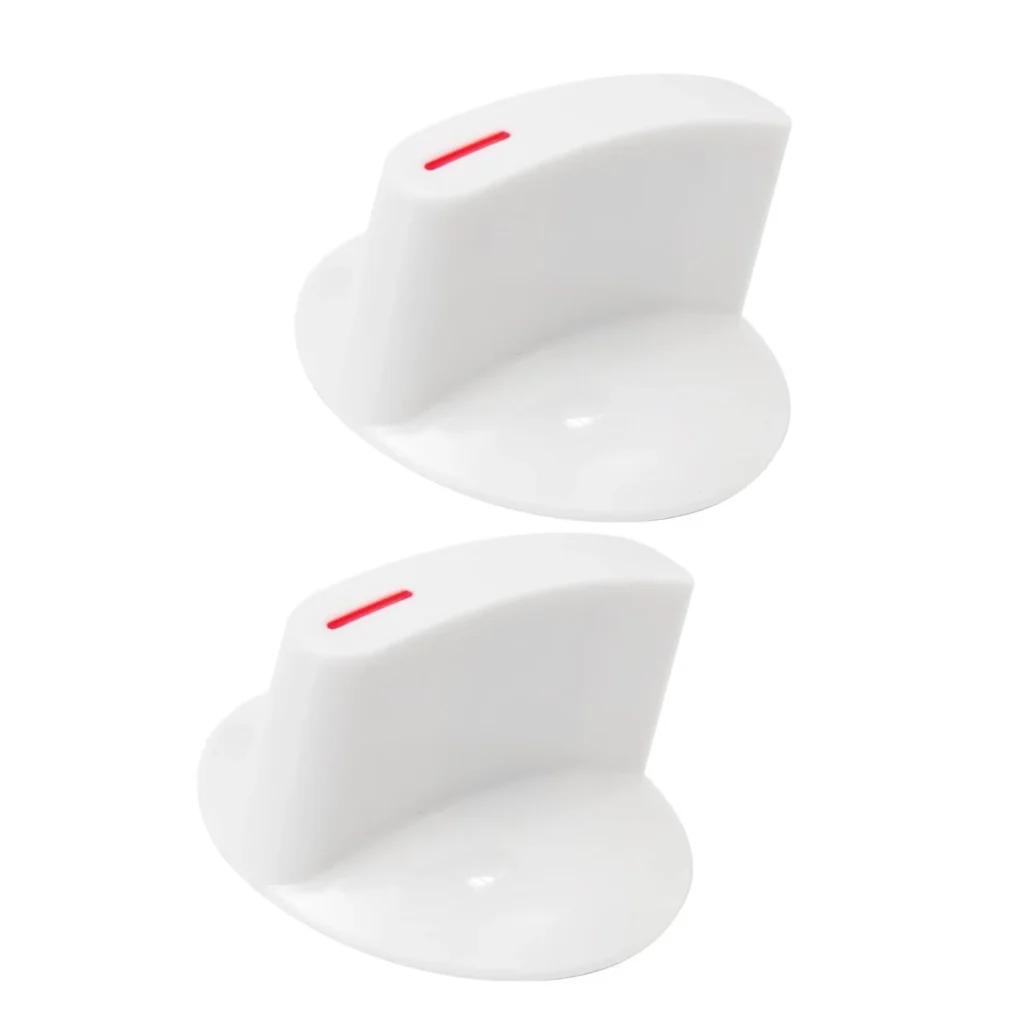
You're standing in front of your GE washer dryer combo with a broken selector knob in your hand. The cycle dial just spins freely, won't click into place, or the plastic retaining clip finally gave up after years of use. Now you're staring at a $42 OEM knob from an authorized parts distributor versus an $10.99 aftermarket replacement. That's a $31 difference for what looks like the exact same piece of plastic.
Let's cut through the marketing and look at what you're actually getting with each option.
Quick Answer
For the WH1X2721 selector knob, aftermarket is the smarter choice for 95% of repairs. You're getting functionally identical plastic construction with the same clip mechanism for less than a quarter of the OEM price. The only time OEM makes sense is if you're fixing a machine still under manufacturer warranty or flipping high-end units where provenance matters.
Side-by-Side Comparison
| Factor | OEM GE (WH1X2721) | Heima Aftermarket |
|---|---|---|
| Price | $38–$45 | $10.99 |
| Warranty | 90 days (GE standard) | 1 year parts guarantee |
| Lead Time | 3–7 days from authorized dealer | Ships same/next business day |
| Fit & Finish | Factory spec, GE logo embossed | Identical dimensions, no logo |
| Material | ABS plastic, metal clip | ABS plastic, metal clip |
| Manufacturing | Contracted overseas (likely China) | Overseas with QC inspection |
When OEM Makes Sense
Your machine is under warranty. If you've got coverage from GE, don't void it over a $10 part. Use the OEM knob and let the warranty handle the labor too.
You're a property manager with documentation requirements. Some commercial warranty programs require OEM parts for coverage to remain valid. Check your lease agreements before ordering.
Resale optics matter. Flipping a nearly-new GE combo? That embossed GE logo on the knob adds perceived value to buyers who think original = better. It's psychological, but it's real in the resale market.
You need the exact shade match. GE has changed their white/gray plastics slightly over the years. If you're obsessive about color matching on a visible part, OEM guarantees the current production shade.
When Aftermarket Wins
It's your personal machine. You're fixing your own washer dryer combo at home. Nobody's checking for logos, and you just need the knob to click into wash/rinse/spin positions reliably. The aftermarket WH1X2721 does exactly that.
You're batch-repairing rental units. Got four GE combos in a rental property? Spending $44 each on OEM knobs means $176. Aftermarket brings that to $44 total. Same functionality, better budget management.
The original failed from normal use. That plastic clip breaks because of design, not manufacturing quality. If your DBXR453 series or WJSR2080 series knob cracked after 6-8 years, that's standard wear. The OEM replacement will do the same thing in another 6-8 years. Why pay 4X for identical lifespan?
You want it this week. OEM parts often ship from regional warehouses with slower fulfillment. Aftermarket typically ships faster because inventory moves through fewer hands.
Real talk: This is a selector knob. It's injection-molded ABS plastic with a spring-loaded metal clip. There's no circuit board, no calibration, no tolerance stacking. The aftermarket version uses the same D-shaft fitment (7mm flat), the same clip retention design, and works on the same 200+ GE/Hotpoint/RCA models. You're not sacrificing reliability — you're refusing to pay a 300% brand tax.
What Actually Fails on This Part
The WH1X2721 typically fails in two ways. The plastic body cracks around the clip mounting point after years of turning force and temperature cycling. The metal clip itself loses tension and no longer grips the D-shaft tightly, causing the knob to spin freely. Both failures happen because of design limits, not material quality differences between OEM and aftermarket.
Some machines develop a "won't start" symptom when the knob wears. It looks like the cycle is selected, but the internal switch isn't making full contact because the knob sits 2mm too far forward. That's clip failure. Both OEM and aftermarket use the same clip gauge — the aftermarket isn't weaker.
Installation Reality Check
This is a clip-on part. You pull the old knob straight off (might need to wiggle it), then push the new one onto the D-shaft until the clip clicks. If the clip doesn't engage, you've got shaft damage, not a parts problem. Takes 30 seconds. No tools needed unless you're prying a really stuck old knob off.
Compatible models include the WJSR2080, WPSQ3120, WVSR1060, WWA8900, DDE8200, DDE7900, DBXR453, and DBLR333 series — along with 200+ others. Check your model tag against the full compatibility list, but if your old knob has the same D-shaft profile, this fits.
Our Verdict
Buy the aftermarket WH1X2721 unless you've got a specific warranty or documentation reason to go OEM. You'll save $30+, get it faster, and have identical performance. This isn't a thermal fuse or a motor bearing where quality variance matters — it's a plastic knob with a clip. Spend your money on parts where it actually affects reliability.
Frequently Asked Questions
Will the aftermarket knob fit my DBXR453ET3WW exactly like the original?
Yes. The WH1X2721 uses a standardized D-shaft fitting (7mm with one flat side) that's been consistent across GE washer dryer combos since the early 2000s. The clip mechanism and shaft diameter are identical between OEM and aftermarket versions. If your model is listed in the compatibility data, fitment is guaranteed.
Does the aftermarket version have the same click detents for cycle positions?
The knob itself doesn't create the click detents — that's the internal rotary switch inside the control panel. The knob just transfers your turning force to that switch. Both OEM and aftermarket knobs have the same D-shaft engagement and will feel identical when selecting cycles. If you're not getting detent clicks, the switch itself is worn, not the knob.
Why did my original GE knob crack after only 6 years?
ABS plastic becomes brittle with repeated heating and cooling cycles, especially near metal inserts like the retention clip. Add in the rotational stress from thousands of cycle selections, and the mounting boss cracks. This isn't a quality control issue — it's material science. The OEM replacement will have the same 6-8 year lifespan because it's the same material and design. Neither version is engineered for 20-year service life.
Ready to go aftermarket?
WH1X2721 · Factory direct · 1-year warranty