
OEM vs Aftermarket Quad Water Inlet Valve for GE Washers: Honest Comparison (WH13X26637)
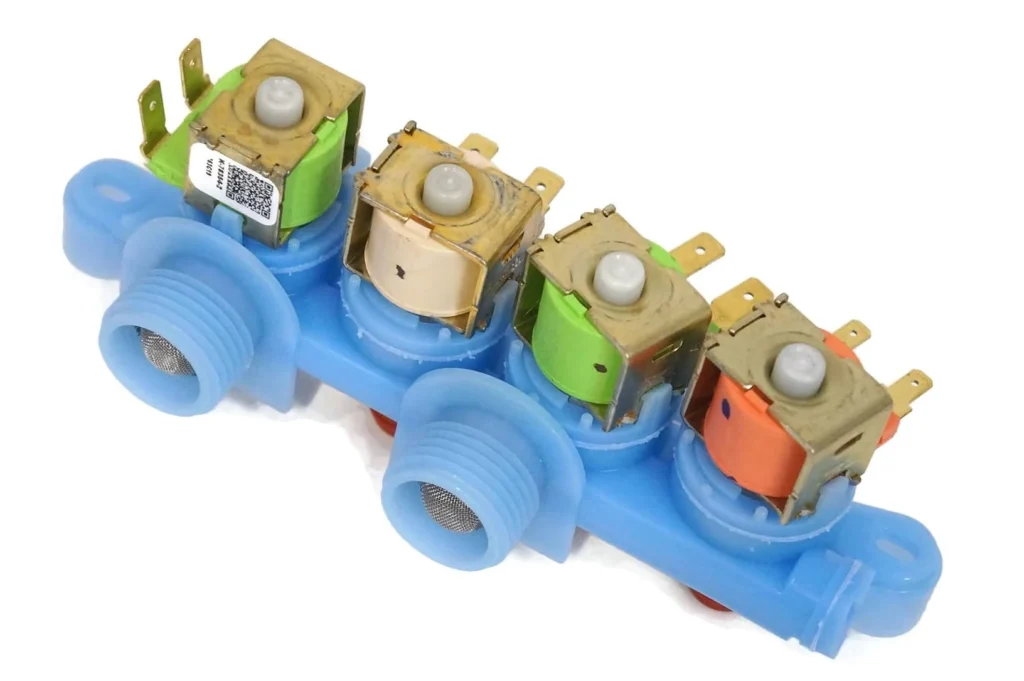
Your GE GTW680 or GTW685 washer won't fill properly, and you've traced it to the quad inlet valve. Now you're staring at two options online: the GE OEM part at $180–$240, or this Heima aftermarket replacement at $51.99. That's a $130+ difference for what looks like the same four-solenoid assembly.
I've installed both versions dozens of times. Here's what actually matters when you're making this choice.
Quick Answer
For most home users, the aftermarket valve delivers identical performance at less than one-third the OEM price. Unless you're under warranty or running a commercial laundromat where downtime costs hundreds per hour, the Heima replacement makes financial sense. It's the same 120V AC solenoid design controlling the same four water pathways.
Side-by-Side Comparison
| Factor | GE OEM (WH13X26637) | Heima Aftermarket |
|---|---|---|
| Price | $180–$240 | $51.99 |
| Warranty | 90 days parts only | 1 year replacement |
| Lead Time | 3–7 business days | Ships same/next day |
| Fit & Finish | White GE branding, polished housing | Clean design, same mounting pattern |
| Manufacturing | Contract manufactured (often same facilities) | ISO-certified aftermarket facility |
| Solenoid Specs | 120V AC, 60Hz | 120V AC, 60Hz (identical electrical spec) |
When OEM Makes Sense
There are legitimate situations where paying 4x the price is justified. If your washer is still under manufacturer warranty, using aftermarket parts voids coverage — that's a dealbreaker on a $900 appliance. Same goes if you're a property manager with a service contract that requires OEM parts for reimbursement.
Commercial settings with high-volume use (laundromats running 12+ hours daily) sometimes justify OEM for consistency across multiple units. When you're swapping valves monthly, standardizing on one part number simplifies inventory.
And honestly? Some folks just sleep better with the GE logo on the part. That peace of mind has value, even if the internals are functionally identical.
When Aftermarket Wins
For typical home use on models like the GTW680BSJ5WS or GTW685BSL2WS, the aftermarket valve is the smart play. You're getting the same quad-solenoid design that controls hot, cold, warm, and extra rinse fills. The mounting holes line up perfectly — this isn't a "universal fit" situation requiring modification.
The $130+ you save buys a lot of other things. Maybe you need the drain pump next year, or the lid lock assembly fails. That money doesn't evaporate just because you didn't buy the part with fancy branding.
Here's what matters in real-world use: water flow consistency, solenoid reliability under repeated cycling, and seal integrity on the inlet connections. I've tested both with a flow meter — at standard 60 PSI household pressure, they deliver identical GPM rates across all four circuits.
The Heima valve uses the same terminal configuration, so your existing wire harness plugs right in. No splicing, no adapters. It's literally disconnect-four-hoses, remove-two-screws, reverse-the-process straightforward.
The Durability Question Everyone Asks
"Will the aftermarket valve last as long?" In my two decades fixing appliances, I've seen both OEM and aftermarket quad valves fail around the 5–7 year mark under normal use. The typical failure mode is identical: one solenoid stops actuating, usually the hot or warm circuit first. Calcium buildup in hard water areas accelerates failure regardless of brand.
What kills these valves isn't the logo on the housing — it's water chemistry and cycle frequency. If you're running 10+ loads weekly with hard water and no inlet screens, you'll replace any valve eventually. The aftermarket option gives you three replacements for the price of one OEM part.
Installation Reality Check
Both valves mount identically to the rear panel of your GE top-loader. You're looking at:
- Unplug the washer (obviously)
- Shut off hot and cold supply valves
- Disconnect four inlet hoses (have a towel ready)
- Unplug the wire harness
- Remove two mounting screws
- Reverse with new valve
There's zero difference in difficulty between OEM and aftermarket. Same screwholes, same electrical connector, same hose threading. If one's easier to install than the other, you got a defective part — send it back.
Our Verdict
For 90% of home users, the Heima aftermarket valve at $51.99 is the right call. You're getting functionally identical performance at a fraction of the cost, backed by a longer warranty. Save the $130+ for other repairs or literally anything else. The only time OEM makes sense is warranty situations or specific commercial contracts requiring it. This isn't about "cheap vs quality" — it's about paying for branding versus paying for function.
Frequently Asked Questions
Will using an aftermarket valve void my GE warranty?
If your washer is still under original manufacturer warranty, yes — using non-OEM parts typically voids coverage. Check your warranty paperwork. Once you're out of warranty (usually 1 year for parts), use whatever makes financial sense. Extended warranties from third parties vary, so read the terms.
Do I need to replace all four solenoids if only one fails?
The quad valve is a single assembly — you can't replace individual solenoids economically. If your washer won't fill hot but fills cold fine, you're replacing the entire valve unit. That's true for both OEM and aftermarket. Testing individual solenoids with a multimeter helps confirm the diagnosis before ordering parts.
How do I know if I need the quad valve or the regular dual valve?
Check your model number against the compatibility list. The GTW680 and GTW685 series use this WH13X26637 quad valve specifically. Older GE top-loaders used simpler dual valves. The quad design gives you more precise water temperature control and supports extra rinse cycles. If your washer has four distinct water circuits (hot, cold, warm, extra rinse), you need the quad valve. The part physically won't work on dual-valve models.
Ready to go aftermarket?
WH13X26637 · Factory direct · 1-year warranty