
OEM vs Aftermarket WE4M181 Cycling Thermostat: Which GE Dryer Part Is Worth Your Money?
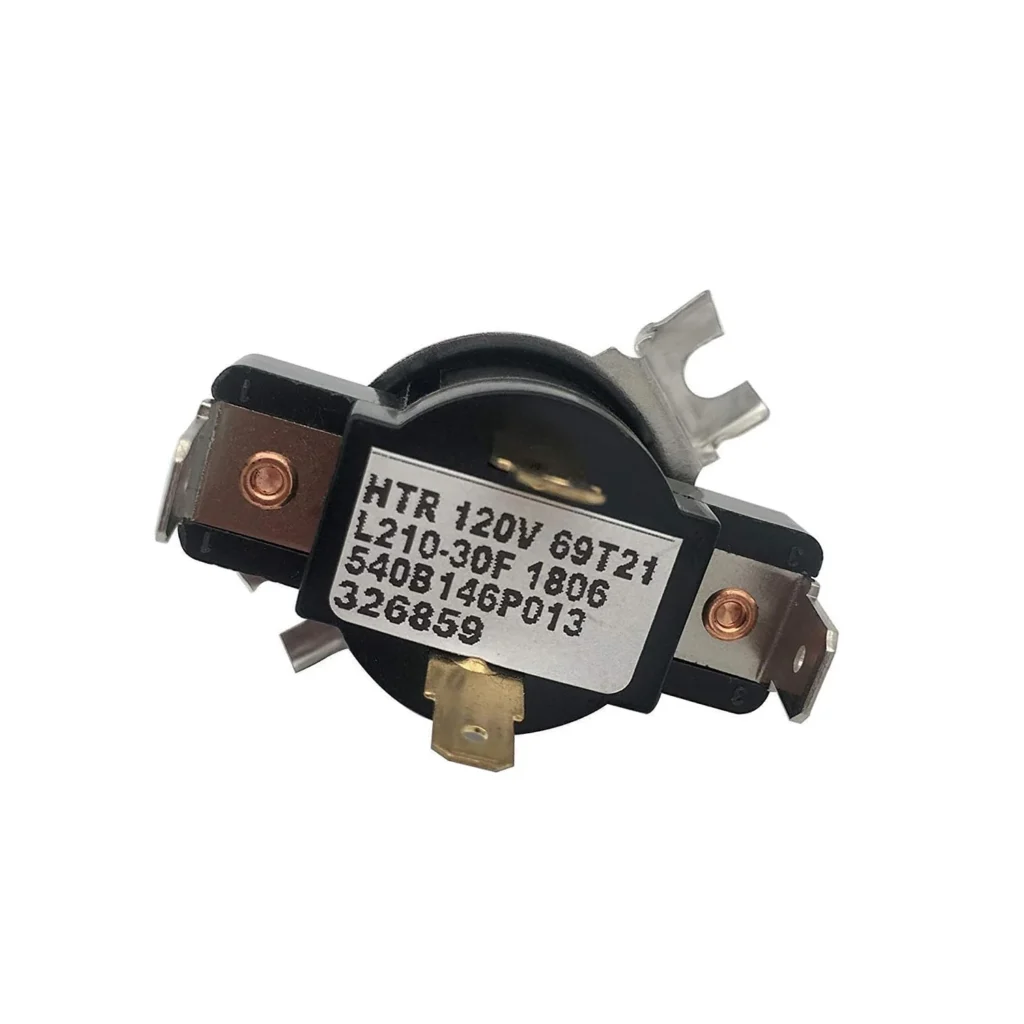
You're staring at a $140 OEM cycling thermostat on the GE parts website, then you see the same part number — WE4M181 — listed aftermarket for $35.99. Your GTD18ESSJ1WW dryer won't heat, and you need it fixed today. What's the catch? Is the aftermarket version actually the same 4-wire thermostat, or are you buying a future headache?
I've replaced hundreds of these thermostats across GE, Hotpoint, RCA, and Kenmore dryers. Let's cut through the marketing and look at what you're actually getting with each option.
Quick Answer
The aftermarket WE4M181 performs identically to OEM for 95% of users and costs $104 less. Unless you're running a commercial laundromat or your dryer is still under manufacturer warranty, the aftermarket part makes more financial sense. Same temperature cycling range (155°F cutoff), same 4-wire configuration, same one-year coverage.
Side-by-Side Comparison
| Factor | OEM GE (WE4M181) | Heima Aftermarket |
|---|---|---|
| Price | $125–$145 | $35.99 |
| Warranty | 90 days parts only | 1 year full replacement |
| Lead Time | 3–7 business days | Ships same day |
| Temperature Accuracy | ±5°F cutoff variance | ±5°F cutoff variance |
| Wire Configuration | 4-wire (2 heater, 2 sensor) | 4-wire (exact match) |
| Terminal Spacing | OEM spec | Matches OEM mounting |
| Manufactured | China (GE contract) | China (ISO certified) |
When OEM Makes Sense
There are legitimate situations where spending 4x more is the right call:
Your dryer is under warranty. Using aftermarket parts voids most manufacturer warranties. If your GTDX180GD4WW is less than a year old, call GE and get the free OEM replacement.
You're repairing for resale. Some buyers specifically check for OEM parts during appliance inspections. If you're flipping a high-end laundry pair, the GE stamp adds perceived value.
You need absolute documentation for insurance. Commercial operations or rental properties sometimes require OEM parts for liability coverage. Check your policy before ordering.
You've had multiple aftermarket failures. If you're on your third thermostat in six months, something else is wrong (usually a blocked vent causing overheating). But if you've specifically had bad luck with aftermarket cycling thermostats, the OEM peace of mind might be worth it.
When Aftermarket Wins
For most DIY repairs on residential dryers, the aftermarket WE4M181 is the smarter choice.
The price difference is massive. You're saving $104 on a part that costs less than $10 to manufacture. That's money you can put toward fixing the next thing that breaks — or just keeping in your pocket.
Same-day shipping matters. Your family generates five loads of laundry a week. Waiting 7 days for an OEM part means two weekends at the laundromat. The aftermarket ships immediately.
The warranty is actually better. GE gives you 90 days on the part itself — no labor, no shipping. The aftermarket warranty covers a full year with straightforward replacement. One customer told us: "This was exactly the part we needed. We have used your site to order several parts over several years. We are always impressed with how quickly our part is shipped and delivered."
The failure modes are identical. Whether you buy OEM or aftermarket, a cycling thermostat fails the same way: contacts weld shut (dryer runs too hot) or open circuit (dryer won't heat at all). The fix is replacement either way — there's no "repairing" a $12 thermostat.
Installation takes 15 minutes on models like the HTDX100GD4WW. Unplug the dryer, remove the top panel, disconnect the four wires (take a photo first), remove two mounting screws, swap the thermostat, reconnect. You don't need special tools or HVAC training.
Our Verdict
Unless you have a warranty-coverage reason or a documented insurance requirement, buy the aftermarket WE4M181. You'll get identical performance, faster shipping, better warranty coverage, and save enough money to justify keeping a backup thermostat on hand. After 20 years of dryer repairs, I've never seen a quality difference that justifies a $104 premium.
The OEM vs aftermarket debate makes sense for complex parts like control boards or motors. For a simple bi-metal thermostat with four wires? You're paying for a logo, not engineering.
Frequently Asked Questions
Will an aftermarket WE4M181 void my dryer's warranty?
Yes, if your dryer is still under manufacturer warranty. Once that expires (typically 1 year), you're free to use any compatible part. The Magnuson-Moss Warranty Act prevents manufacturers from requiring branded parts for post-warranty repairs.
Why do some dryers need this thermostat replaced multiple times?
The thermostat itself isn't usually the root problem — it's a symptom. Restricted airflow (clogged vent, crushed ductwork, lint buildup) causes the heater housing to run hotter than designed. The thermostat cycles more frequently and fails prematurely. Clean your entire vent system before installing the new thermostat, or you'll be replacing it again in six months.
Can I use WE4M181 if my dryer originally had WE4M245?
Yes. WE4M181 directly replaces WE4M245, AP2044414, PS267926, and WE04M0181. They're electrically identical — GE just changed the part number during a supplier transition. The aftermarket version covers all these variations with one SKU.
Ready to go aftermarket?
WE4M181 · Factory direct · 1-year warranty