
OEM vs Aftermarket Bake Element for GE Ovens: Honest Comparison (WB44X5082)
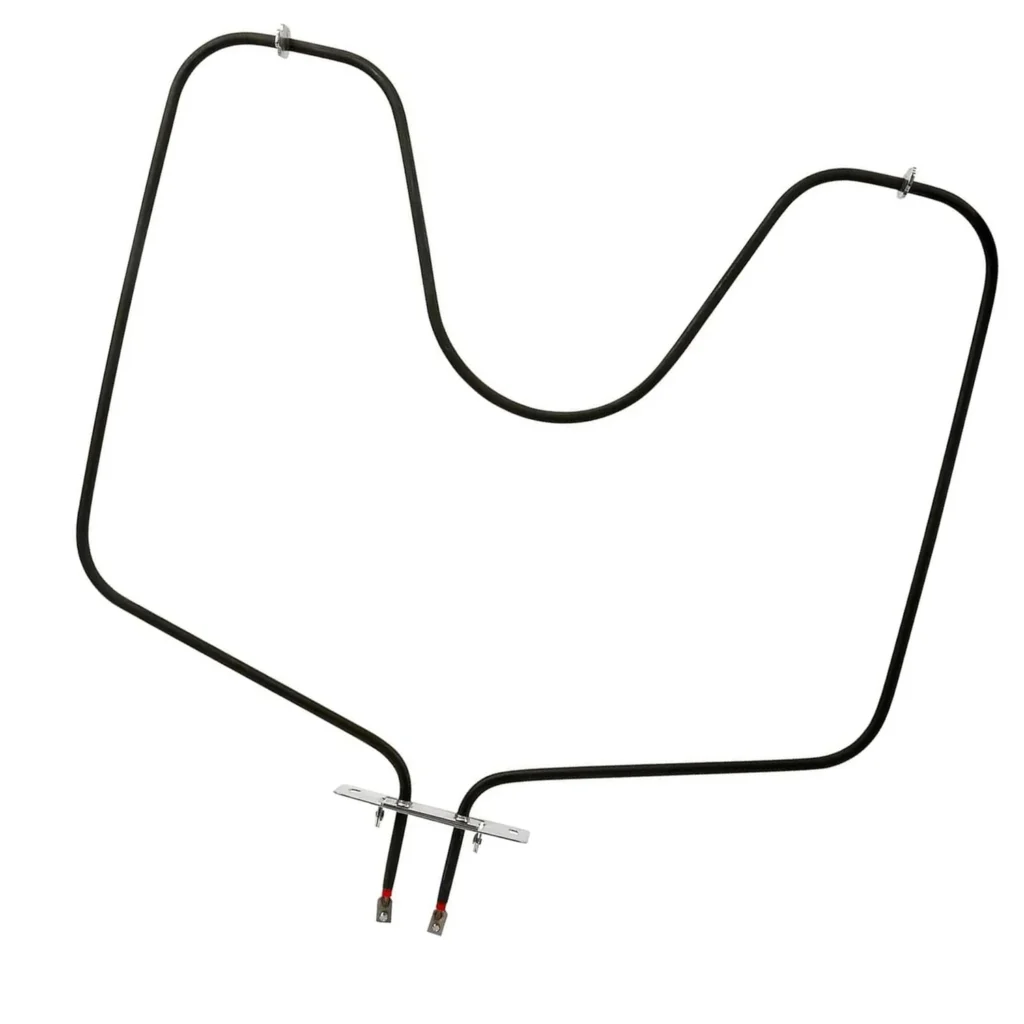
Your GE oven's not heating past 200°F, and you've traced it to a failed bake element. Now you're staring at two options: drop $180–$250 on the OEM part from an appliance store, or grab an aftermarket replacement for $47.99. The price gap is real, but so are your concerns about fit and longevity.
Let's cut through the marketing and compare what you're actually getting with each option for the WB44X5082 bake element.
Quick Answer
For most home repairs, the aftermarket WB44X5082 delivers identical performance at one-fourth the OEM price. The coil wire is the same gauge, the mounting tabs fit the same holes, and it heats to the same 500°F. Unless you're running a commercial kitchen or need same-day pickup from a local parts counter, aftermarket wins on value.
Side-by-Side Comparison
| Factor | OEM GE (WB44X5082) | Heima Aftermarket |
|---|---|---|
| Price | $180–$250 | $47.99 |
| Warranty | 90 days–1 year (varies by seller) | 1 year manufacturer warranty |
| Lead Time | Same-day (appliance stores) or 3–5 days (online) | 2–5 business days shipping |
| Fit & Finish | Factory-exact mount holes, GE branding | Identical mount pattern, no branding |
| Manufacturing | Often contracted overseas, GE-spec'd | ISO-certified factory, same specs |
| Wire Gauge | 12-gauge nichrome coil | 12-gauge nichrome coil |
When OEM Makes Sense
There are legitimate scenarios where paying four times more is justified:
Warranty-covered repairs. If your range is still under GE's factory warranty or an extended service plan, they'll only honor claims using OEM parts. Using aftermarket voids coverage.
Same-day emergency. Your oven dies Thanksgiving morning, and the local appliance parts warehouse stocks OEM. The $150 premium beats ordering takeout for 20 people.
Rental or flip properties. Some property management companies require OEM documentation for liability reasons. Check your maintenance agreement before ordering.
Resale value concerns. If you're selling a high-end home in the next six months and buyers request appliance service records, OEM receipts look marginally better. Emphasis on marginally—most buyers won't care.
When Aftermarket Wins
For 90% of homeowners, aftermarket is the smarter play:
The engineering is identical. Bake elements are simple: nichrome wire coiled through a steel sheath, rated for 240V and 2500–3000 watts. There's no proprietary GE magic here. The WB44X5082 aftermarket uses the same wire gauge, same mounting tab spacing (13.5 inches), and same terminal connectors as OEM.
You're saving $130–$200 per repair. Install this yourself in 20 minutes (two screws, two wire terminals), and you've saved enough for a quality infrared thermometer and a case of beer. Over the 12–15 year lifespan of a range, you'll likely replace the bake element twice. That's $260–$400 in your pocket.
Failure rates are comparable. The leading cause of bake element failure isn't manufacturing defects—it's thermal cycling and oven spills causing hotspots. A $250 OEM element dies from a pie boilover just as fast as a $48 aftermarket one.
Compatibility is proven. This element fits over 40 GE, Hotpoint, RCA, and Kenmore models including JBP21GV2, JBS03N2, JBP26GR2AD, JBP90AS2, and JSP27 series ranges. The cross-reference numbers (AP2031084, WB44X5061, WB44X5072, WB44X5085) confirm years of verified fitment data.
Our Verdict
Unless you're in a warranty situation or need same-day pickup, buy aftermarket. The $47.99 WB44X5082 from Heima heats identically to OEM, fits the same mount holes, and carries a full one-year warranty. Save the $150+ difference for actual upgrades—a quality oven thermometer, new racks, or that convection fan repair you've been putting off. The "OEM premium" on commodity heating elements is marketing, not metallurgy.
Frequently Asked Questions
Will an aftermarket bake element void my range's warranty?
If your range is still under GE's original warranty (typically one year from purchase), yes—using non-OEM parts can void coverage on related components. Check your warranty paperwork. If you're past the factory warranty period, you're free to use any compatible part without penalty.
How can I tell if the aftermarket element is actually the same quality?
Check the wattage rating (should be 2500W or 3000W, matching your old element), wire gauge (12-gauge nichrome), and voltage (240V). The terminal connectors should be the same spade style. If those specs match and the mount holes line up, the elements are functionally identical. Quality aftermarket suppliers test fitment on actual appliances before listing compatibility.
Do OEM elements last longer than aftermarket?
No measurable difference. Bake element lifespan depends on usage patterns and cooking habits, not the logo stamped on the sheath. Both OEM and quality aftermarket elements typically last 5–8 years in average home use. Elements fail from repeated thermal expansion/contraction and physical damage from spills, not from manufacturing variance between suppliers.
Ready to go aftermarket?
WB44X5082 · Factory direct · 1-year warranty