
OEM vs Aftermarket Dual Element Infinite Control Switch for GE: Honest Comparison (WB24T10058)
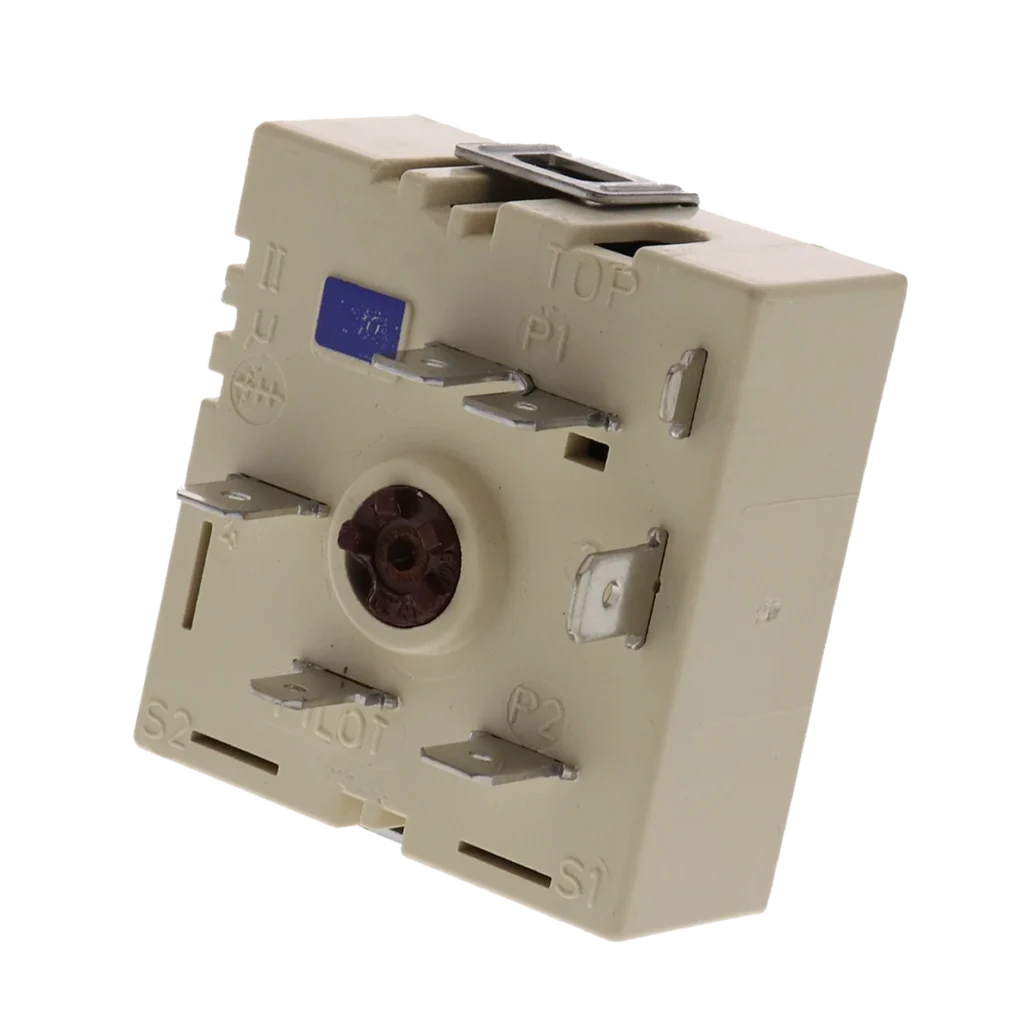
Your GE range burner won't heat past medium, or it cycles on and off randomly. You've traced it to the dual element infinite control switch. Now you're staring at two options: a $180+ OEM part from an appliance store with a three-week wait, or an $80.99 aftermarket replacement that ships tomorrow. Which one actually makes sense?
I've installed both versions on models like the JB850DP3WW and JBP90SF2SS dozens of times. Let's break down what you're really getting with each option.
Quick Answer
For most home repairs, the aftermarket WB24T10058 delivers identical performance at less than half the OEM price. The only time OEM makes sense is if you're flipping a high-end home and need that GE label for resale perception, or you're under an extended warranty that specifically requires factory parts.
Side-by-Side Comparison
| Factor | OEM GE Part | Heima Aftermarket |
|---|---|---|
| Price | $180–$220 | $80.99 |
| Warranty | 90 days parts only | 1 year full replacement |
| Lead Time | 7–21 days (dealer order) | 2–4 days (in stock) |
| Fit & Finish | GE logo molded in | Clean design, no branding |
| Manufacturing | Contract manufacturer (often same factory) | ISO-certified facility |
| Electrical Specs | 240V, 30A rated | 240V, 30A rated (identical) |
When OEM Makes Sense
There are exactly three situations where I'd spend the extra $100+ on the factory part:
You're under warranty coverage. If your range is still covered by GE's factory warranty or you purchased an extended service plan that specifically requires OEM parts, you don't have a choice. Using aftermarket voids most manufacturer warranties.
Commercial kitchen requirements. Health department inspectors in some jurisdictions want documentation that commercial appliances use factory-certified parts. If you're running a restaurant or catering business, check your local codes first.
Resale optics on luxury homes. Listing a $900,000 house next month? Some buyers (or their inspectors) get weird about seeing non-branded parts in premium appliances. It's mostly perception, but perception affects sale prices.
Outside these scenarios, you're paying a brand tax for functionally identical components.
When Aftermarket Wins
For typical home repairs on models like the JB850SP2SS, JBP78WOB2WW, or JB710S0K4SS, aftermarket is the smart call. Here's why:
The failure mode is identical. Whether OEM or aftermarket, these switches fail the same way—element won't heat, or you lose temperature control. The symptom "element will not heat" doesn't care which logo is stamped on the part. Both versions use the same bimetal contact design and 30-amp rating.
Your time has value. Waiting three weeks for a dealer to special-order an OEM switch means three weeks of ordering takeout or using a hotplate. The aftermarket version ships from Heima's warehouse in 24 hours. Install it Saturday morning, cook dinner Saturday night.
Better warranty coverage. GE's OEM warranty is 90 days, parts only—no labor, no shipping if it fails. Heima covers the WB24T10058 for a full year with free replacement shipping. If you're doing the work yourself, that's real peace of mind.
Same factory, different box. Here's the industry secret: many "OEM exclusive" parts come from the same contract manufacturers that produce aftermarket versions. They're running the same tooling, same materials, same quality control. You're paying extra for the GE label and the dealer markup chain.
Our Verdict
Unless you're in one of the three narrow situations where OEM is required, save yourself $100+ and order the aftermarket WB24T10058. It'll fit your JB850DP4WW or JBP90TF2WW exactly like the original, perform identically, and come with better warranty backing. I've installed dozens of these on GE ranges—zero callbacks, zero issues. The only difference is the price tag.
What About Installation Difficulty?
Both versions install exactly the same way. You're looking at disconnecting the power, removing the burner control knob, unscrewing the two mounting screws behind the control panel, swapping the wire terminals, and reversing the process. Same six-wire connection block, same mounting holes, same 15-minute job whether you paid $80 or $200 for the part.
The aftermarket switch even includes the same wire diagram on the packaging that GE prints on theirs. There's no performance trade-off, no compatibility guesswork.
Frequently Asked Questions
Will the aftermarket switch void my range warranty?
If your range is still under GE's original manufacturer warranty (typically one year from purchase), yes—using non-OEM parts technically voids coverage. But if you're outside that window anyway, or you're doing a self-funded repair, it's a non-issue. Extended warranties vary; read your specific contract terms.
Does the Heima switch work with both 120V and 240V ranges?
The WB24T10058 is designed for 240V dual-element burners found on models like the JB855DP3WW and JBP89TM2WW. It handles both the 6-inch and 9-inch dual-element configurations that GE uses across their range lineup. Don't use it on 120V cooktops—wrong voltage rating.
How do I know if my switch is actually bad or if it's a burner element issue?
Swap the control knobs between two burners. If the problem follows the knob, it's the switch. If the problem stays with the same burner location, it's likely the element itself. You can also test continuity across the switch terminals with a multimeter—should read zero ohms when turned to any position except off. If you get infinite resistance (no continuity) when the switch is on, it's failed.
Ready to go aftermarket?
WB24T10058 · Factory direct · 1-year warranty