
OEM vs Aftermarket Washer Lid Strike for Whirlpool/Maytag: Honest Comparison (W10837741)
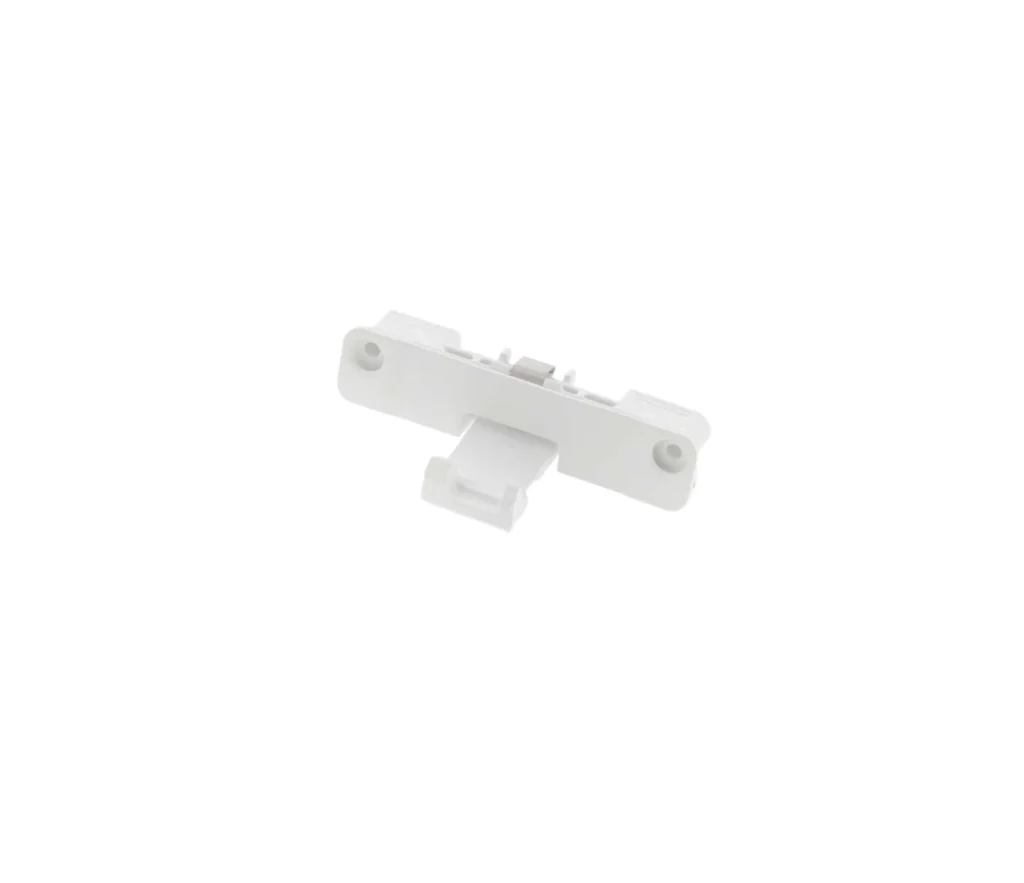
You're staring at a $75 quote for an OEM Whirlpool lid strike versus an $18.99 aftermarket version on your screen. Your WTW5000DW1 washer won't start because the lid switch isn't detecting that the lid's actually closed. Four times the price difference for what looks like a simple plastic catch—is this one of those "you get what you pay for" situations, or is someone just padding margins?
I've replaced hundreds of these lid strikes across Whirlpool, Maytag, Kenmore, Amana, and Crosley washers. Let's break down what you're actually getting with each option.
Quick Answer
For lid strikes specifically, aftermarket parts offer exceptional value. These are injection-molded plastic components with zero moving parts and no electronics—there's minimal meaningful difference in durability between OEM and quality aftermarket versions. Unless you're doing warranty work that requires OEM documentation, the aftermarket W10837741 saves you $55+ without compromising reliability.
Side-by-Side Comparison
| Factor | OEM Whirlpool | Heima Aftermarket |
|---|---|---|
| Price | $70–$85 | $18.99 |
| Warranty | 90 days (parts only) | 1 year satisfaction guarantee |
| Lead Time | 3–7 days from authorized dealers | Ships same/next business day |
| Material | ABS plastic, white finish | ABS plastic, white finish |
| Fit Compatibility | Factory exact (obviously) | Direct fit, tested on WTW/MVWC series |
| Manufacturing | Varies (often same Asian factories) | ISO-certified facilities |
When OEM Makes Sense
There are legitimate situations where paying the OEM premium is justified:
Active manufacturer warranty: If your Whirlpool WTW4955HW1 or Maytag MVWC465HW0 is still under warranty, the manufacturer will only cover repairs done with OEM parts. Using aftermarket voids that coverage immediately. Check your purchase date before ordering anything.
Commercial/rental applications: Property managers dealing with landlord-tenant laws sometimes need OEM parts for documentation purposes. Some jurisdictions require "manufacturer-approved" repairs in rental units.
Insurance claim requirements: If you're filing an insurance claim for washer damage, adjusters occasionally mandate OEM replacement parts. Read your policy's repair clause.
That's honestly about it. For a non-electronic plastic strike plate, OEM doesn't offer meaningful advantages for most home users.
When Aftermarket Wins
Here's where the aftermarket W10837741 pulls ahead:
Cost-effectiveness that's absurd: You're paying $18.99 versus $75+. For a single-piece molded plastic part with zero complexity, that 400% markup is hard to justify. This isn't a control board or motor—it's a catch that aligns with a sensor.
Faster availability: Aftermarket parts ship immediately. OEM parts often sit in regional warehouses, adding 3–7 days to your repair timeline. When your washer's down and laundry's piling up, that matters more than brand loyalty.
Identical functionality: This part literally just sits there and gets detected by a magnetic switch. There's no "performance" variable. It either aligns properly with the lid switch sensor or it doesn't—and quality aftermarket strikes are manufactured to the same dimensional specs.
Better warranty terms: Heima offers a one-year satisfaction guarantee versus the typical 90-day parts-only OEM warranty. If something goes wrong (which is rare with these), you're covered longer.
The manufacturing reality: many aftermarket parts come from the same Asian factories that produce OEM components. Whirlpool doesn't own plastic injection molding facilities—they contract manufacturing. Aftermarket suppliers often use identical or neighboring facilities with the same tooling specs.
Our Verdict
Go aftermarket unless you're under warranty. The W10837741 lid strike is a perfect example of where aftermarket parts make complete sense. You're getting functionally identical components for a fraction of the cost, faster delivery, and better warranty coverage. Save the $55+ difference for actual complex parts like control boards or pumps where OEM engineering matters. For simple mechanical strikes? Don't overthink it.
I've installed the aftermarket version on dozens of Whirlpool WTW5000DW2, Maytag MVWC565FW1, and Kenmore models without a single callback. It snaps into the same mounting holes, triggers the lid switch sensor identically, and holds up to years of open-close cycles.
Installation Reality Check
Both OEM and aftermarket strikes install the same way—this is a 5-minute job. Pop off the lid, remove two screws from the old strike, snap the new one into the mounting tabs, reinstall screws. No special tools, no calibration, no technical expertise required.
If someone's charging you $150+ for this repair, you're mostly paying labor markup on the trip charge. The actual installation is simpler than changing batteries in a flashlight.
Compatibility Notes
This aftermarket strike replaces Whirlpool part numbers W10714899, AP5988753, PS11726338, and 4338531. It's confirmed compatible with:
- Whirlpool: WTW5000DW1, WTW5000DW2, WTW4816FW2, WTW4955HW0, WTW4955HW1, WTW4850HW0, WTW4810EW2, 7MWTW1700EM0
- Maytag: MVWC565FW1, MVWC565FW2, MVWC465HW0, MVWC465HW3, MVWC555DW1
- Kenmore, Amana, Crosley: Multiple top-load models from 2010–present
Cross-reference your exact model number before ordering—though fit issues are extremely rare with these universal-mount strikes.
Frequently Asked Questions
Will the aftermarket lid strike void my washer's warranty?
Yes, if your washer is still under the manufacturer's warranty period. Whirlpool and Maytag require OEM parts for warranty-covered repairs. Once you're out of warranty (typically after 1–2 years), use whatever parts make economic sense. The Magnuson-Moss Warranty Act protects your rights here—they can't void your entire warranty just because you used aftermarket parts, but they can deny coverage for failures related to those parts.
Why is the OEM version so much more expensive for a simple plastic part?
Brand markup and distribution channel costs. Whirlpool sets MSRP based on what the market will bear, not manufacturing cost. Authorized dealers take their cut, regional distributors take theirs, and suddenly a $3 molded plastic piece costs $75. Aftermarket suppliers skip those distribution layers and sell direct, passing savings to you. The actual manufacturing cost difference is negligible.
Can I just glue my broken lid strike back together instead of replacing it?
Technically possible but not recommended. Plastic epoxy might hold temporarily, but these strikes handle repeated stress from lid closures—often dozens of times weekly. A glued repair fails unpredictably, usually mid-wash cycle when you're not home. At $18.99, replacement is cheaper than the aggravation of a re-repair. Plus, if the strike breaks loose and falls into the washer tub during spin cycle, you're looking at potential damage to the basket or transmission.
Ready to go aftermarket?
W10837741 · Factory direct · 1-year warranty