
OEM vs Aftermarket Water Inlet Valve for Whirlpool: Honest Comparison (W10599356)
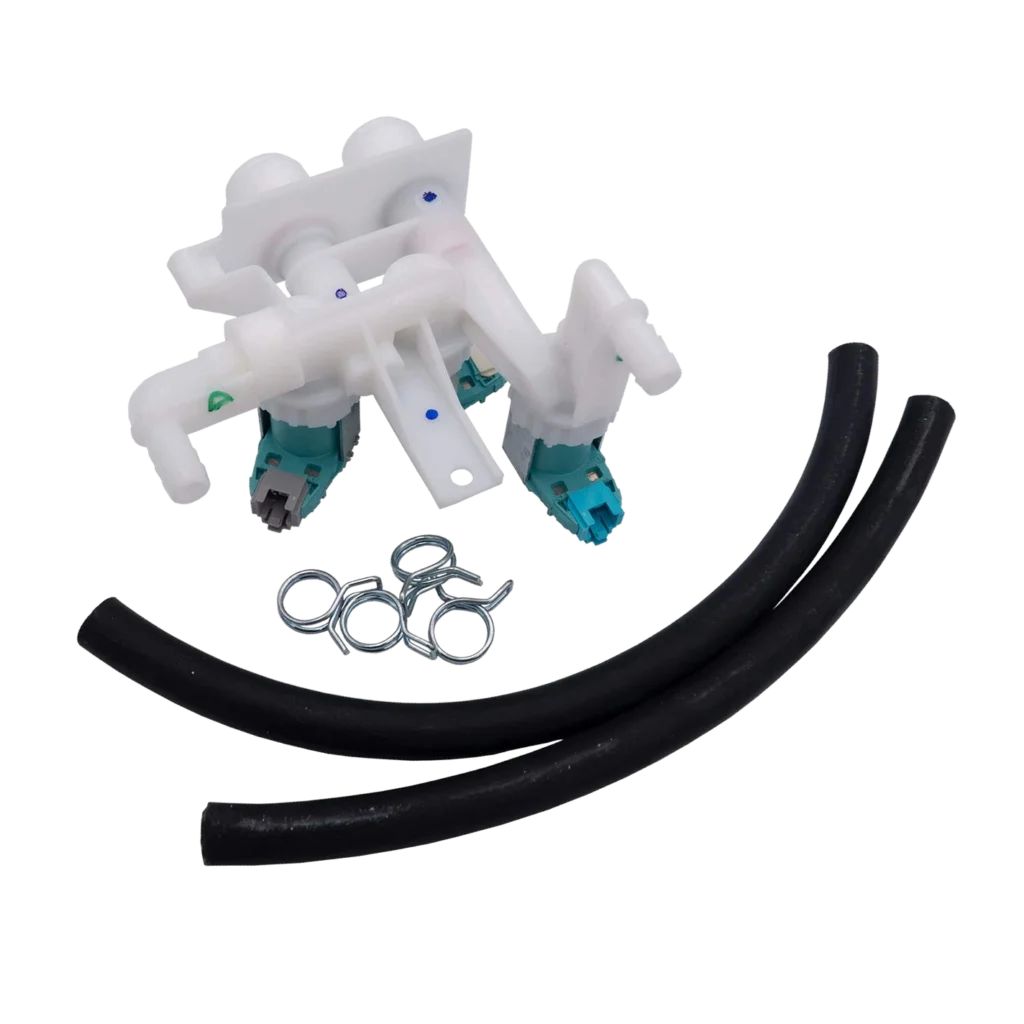
Your Whirlpool front-loader won't stop filling. Maybe it's throwing an F8 E1 error, or worse — water's trickling into the drum even when the machine's off. You've diagnosed the problem: it's the W10599356 water inlet valve. Now you're staring at two price tags that couldn't be more different.
OEM through Whirlpool's parts network? Somewhere between $180–$220 depending on your supplier. Aftermarket? This exact same valve sits at $147.99. That's a $50+ difference for what looks like identical hardware. So what's the real story?
Quick Answer
For the W10599356 water inlet valve, aftermarket is the smarter choice for 90% of repair scenarios. You're getting the same two-solenoid design, same mounting configuration, same hose connections — just without Whirlpool's markup. Unless you're under warranty or need same-day pickup from a local appliance parts store, save your money.
Side-by-Side Comparison
| Factor | OEM Whirlpool | Heima Aftermarket |
|---|---|---|
| Price | $180–$220 | $147.99 |
| Warranty | 90 days (typical) | 1 year |
| Lead Time | 1–3 days local pickup, 5–7 days shipped | 2–5 business days shipped |
| Fit & Finish | Whirlpool factory spec | Manufactured to OEM dimensions, plastic housing may vary slightly in color |
| Manufacturing | Contracted (often same factories as aftermarket) | ISO-certified facilities, same solenoid specs |
| Compatible Models | WFW70HEBW series, WFW80HEBC series, dozens more | Identical compatibility — replaces AP5692067, PS8689091, W10509710 |
When OEM Makes Sense
Let's be fair about when you'd actually want the Whirlpool-branded part:
You're still under manufacturer warranty. Using aftermarket parts can void what's left of your coverage. If your washer's less than a year old, file the warranty claim and let Whirlpool eat the cost.
You need it today. Local appliance parts stores usually stock OEM valves. If your family's generating laundry faster than you can hand-wash it, that same-day pickup option has real value. Just know you're paying $50–70 for convenience.
You're flipping the appliance. Some buyers feel better seeing "genuine Whirlpool parts" on a receipt when they're purchasing a used washer. It's perception, not performance — but perception sells.
That's about it. The OEM valve doesn't last longer, doesn't fit better, and certainly doesn't perform better. One user who contacted Heima noted: "Started troubleshooting issues and doing some online research. Discovered possible inlet valve malfunction. Discovered your website and called to speak with someone for part number and model clarification. Sales representative was awesome!" They went aftermarket. Smart move.
When Aftermarket Wins
Here's where the aftermarket valve at $147.99 makes perfect sense — which is basically every other scenario:
You're paying out of pocket. This is straightforward math. The valve will fix your continuous filling issue, your F8 E1 error, or that annoying water-entering-when-off problem for $50+ less. Both valves have the same two solenoids controlling hot and cold water flow. Both mount with the same bracket. Both connect to the same hose fittings.
You want better warranty coverage. Most OEM parts through parts suppliers carry 90-day coverage. Aftermarket from Heima? One full year. That's four times the protection period.
You're doing the install yourself. And you should — this repair typically takes 30–60 minutes with basic tools. As one DIYer reported: "Changed inlet valve and replaced door hinge. A lot of screws to remove front door panel to allow access to remove hinge. As with all hoses that have been connected for a long time not easy to remove them from water inlet/soap tub."
The trickiest part? Those old hose connections can be stubborn. Have pliers and an adjustable wrench ready. The valve itself swaps out easily once you've accessed it.
You're fixing a known weak point. The W10599356 fails the same way regardless of brand name on the label. Mineral deposits clog the screens, solenoids wear out, rubber seals degrade. One tech's note: "Replaced water inlet unit." Short, simple — because the diagnosis and fix are straightforward.
Our Verdict
Save the $50–70 and go aftermarket unless you're under warranty or need same-day pickup. The Heima valve delivers identical function with better warranty coverage. Use the savings to grab a pack of replacement inlet screens — they're cheap insurance against mineral buildup causing your next failure.
This isn't a complicated part. Two solenoids, a manifold, some hose barbs. Manufacturing tolerances are tight across the industry because water pressure doesn't care about brand loyalty. If the aftermarket valve fits your WFW70HEBW0 or WFW80HEBC2 (or any of the dozens of compatible models), it'll work exactly like the OEM version.
One caveat: if you're squeamish about repairs, factor in potential service call costs. Some techs charge more for customer-supplied parts or won't warranty their labor on aftermarket components. Know your repair person's policy before ordering.
Frequently Asked Questions
Will an aftermarket valve void my Whirlpool warranty?
If your washer is still under manufacturer warranty, yes — using non-OEM parts can void coverage. However, once you're past that warranty period (typically one year), you're free to use whatever parts make financial sense. The Magnuson-Moss Warranty Act prevents manufacturers from requiring OEM parts for routine maintenance and repairs on out-of-warranty appliances.
Why does the water inlet valve fail on Whirlpool front-loaders?
The valve fails due to mineral buildup, worn solenoids, or degraded rubber seals. Hard water accelerates the process — calcium deposits clog the internal screens, forcing solenoids to work harder until they stick open or fail entirely. Symptoms include continuous filling, overfilling, F8 E1 errors, or water entering the tub when the washer's powered off. Average lifespan is 5–8 years depending on water quality and usage frequency.
Do I need a plumber to replace this valve?
No. This is a straightforward DIY repair if you're comfortable with basic tools. You'll need nut drivers, pliers, a socket set, an adjustable wrench, and screwdrivers. The main challenge is accessing the valve — you'll remove the top panel or front panel depending on your model. Expect 30–60 minutes for the job. Just remember to unplug the washer and shut off the water supply before starting. The old hose connections can be tight; don't force them or you'll crack the plastic fittings.
Ready to go aftermarket?
W10599356 · Factory direct · 1-year warranty