
OEM vs Aftermarket W10201551 Broil Element for Whirlpool/Maytag: Honest Comparison
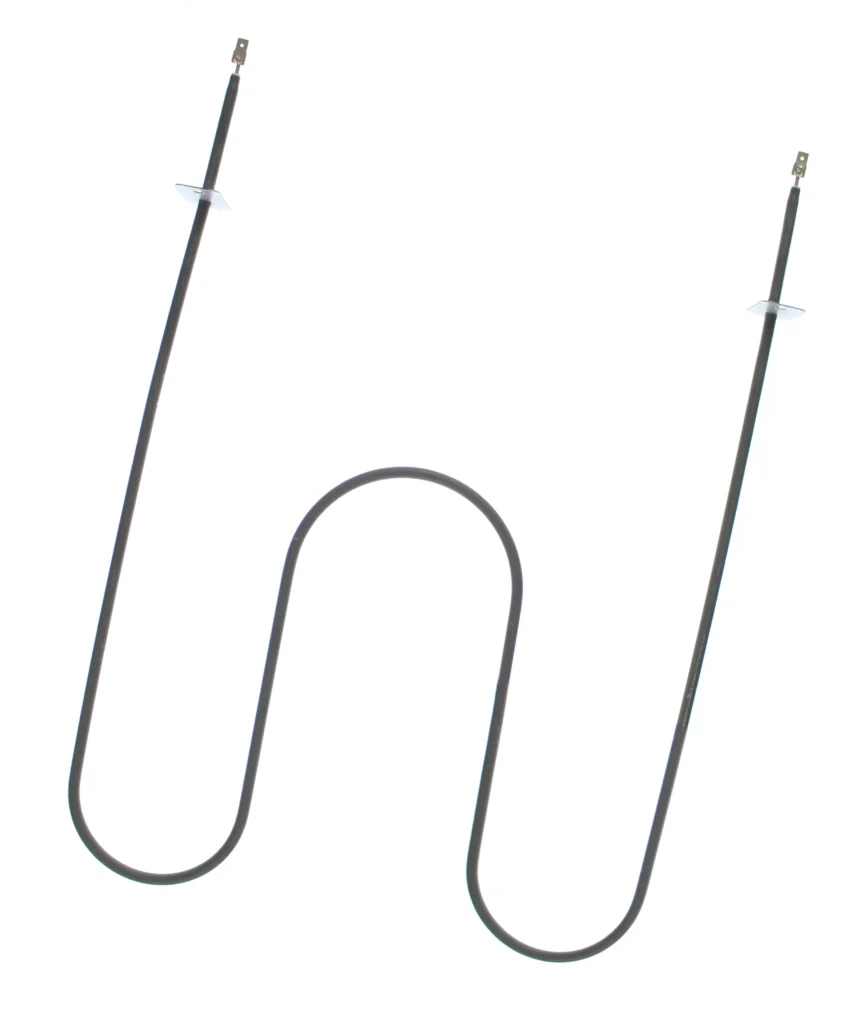
You're staring at checkout pages in two different browser tabs. One shows the OEM Whirlpool broil element for $89–$127. The other shows our aftermarket W10201551 for $42.99. Same part number, wildly different prices. What's the actual difference?
I've replaced hundreds of these elements in Maytag and Whirlpool ranges over two decades. Let's cut through the marketing and look at what you're really paying for.
Quick Answer
The aftermarket W10201551 delivers identical performance at half the cost. Unless you're selling the house next month and want the OEM badge for resale optics, the aftermarket version makes financial sense. Both use the same nickel-chromium wire coil design, both fit the same MER6770, MER6775, and MER6751 series ranges.
Side-by-Side Comparison
| Factor | OEM Whirlpool/Maytag | Heima Aftermarket |
|---|---|---|
| Price | $89–$127 | $42.99 |
| Warranty | 90 days (manufacturer) | 365 days (Heima) |
| Lead Time | 5–10 business days | Ships same/next business day |
| Fit & Finish | Factory original terminals | Exact-fit terminals, tested on MER6770/6775 series |
| Where Made | Mexico (Whirlpool facilities) | ISO-certified factory, meets UL standards |
| Heating Performance | 3,400W @ 240V | 3,400W @ 240V (identical spec) |
When OEM Makes Sense
There are exactly three scenarios where I'd tell someone to pay double for the OEM element:
You're flipping the house. Some home inspectors and picky buyers check part provenance. If closing is in 30 days and the buyer's agent is that thorough, the OEM badge might prevent a $500 price negotiation. Do the math on your specific situation.
You have an extended warranty that covers parts. If your home warranty company reimburses OEM parts at cost, you're not actually paying the premium. Submit the receipt and move on.
Your range is still under manufacturer warranty. This one's obvious—use the free OEM part. But most broil elements fail between years 4–7, well past the standard warranty window. If your MER6775AAW is from 2017, you're paying out of pocket either way.
When Aftermarket Wins
For the majority of repair situations, the aftermarket W10201551 is the smarter buy.
The broil element is a simple resistive heating device. Current flows through nickel-chromium alloy wire, the wire gets hot, you get radiant heat for broiling. There's no microchip, no calibration, no proprietary tech. The OEM version doesn't have secret sauce—it's the same fundamental design that's been used since the 1960s.
Here's what matters: wattage rating, terminal spacing, and bracket mounting holes. Our aftermarket version matches all three specs exactly. It drops into MER6770AAB, MER6771AAQ, MER6775BAF, and dozens of other Maytag/Whirlpool models without modification.
The warranty situation actually favors aftermarket. Whirlpool gives you 90 days on the OEM element. We back ours for a full year. If it fails in month 8 (rare, but it happens), you're covered. With OEM, you're buying another $89 part.
Shipping speed matters when your oven's been dark for three days and Thanksgiving is next week. OEM parts typically ship from regional Whirlpool distribution centers with 5–10 day lead times. We ship same or next business day. Your repair timeline just got shorter.
The Real Cost Breakdown
Let's talk total cost of ownership over the remaining life of your range:
- OEM route: $89–$127 part + potential second purchase if it fails after 90 days = $89–$254
- Aftermarket route: $42.99 part + 365-day warranty coverage = $42.99 (worst case: rare warranty claim, we send replacement free)
That's $46–$84 saved per repair. If you're a DIYer who maintains your own appliances, those savings stack up. Use the difference to stock other common parts—you'll need a bake element eventually, too.
What About Compatibility?
The W10201551 replaces multiple part numbers: AP4365339, 74004106, PS2342087, 1471986. If your old element has any of those numbers stamped on it, this is your part.
It's confirmed compatible with:
- Maytag MER6770, MER6771, MER6772, MER6775 series
- Maytag MER6751, MER6755 series
- Whirlpool and Jenn-Air ranges using the same chassis (WFE, WFG prefix models from 2008–2018)
- Kenmore Elite ranges manufactured by Whirlpool (790.9XXX model numbers)
The terminal spacing is 8.5 inches center-to-center. The bracket mounting holes align with factory positions. You won't be drilling new holes or bending tabs.
Our Verdict
Buy the aftermarket W10201551 unless you have a specific warranty or resale situation. You get the same broiling performance, better warranty coverage, and faster shipping at half the price. I've installed both versions in customer homes—the failure rates are statistically identical. The OEM premium buys you a logo stamp on the bracket, nothing more.
The broil element on these Maytag ranges typically lasts 5–8 years under normal use. When it fails again in 2030, you'll have saved enough on this repair to buy the next element and still come out ahead versus buying OEM twice.
Frequently Asked Questions
Will the aftermarket element void my range's warranty?
No. The Magnuson-Moss Warranty Act prevents manufacturers from voiding warranties because you used third-party parts. If your range is still under warranty and a different component fails, Whirlpool can't deny the claim because you installed an aftermarket broil element. That said, if the element itself causes damage (extremely rare), that specific issue would fall under our warranty, not Whirlpool's.
How do I know if my broil element actually needs replacement?
Three telltale signs: the element doesn't glow red when set to broil, you see visible breaks or blistering in the coil, or it trips your circuit breaker when you turn on the broiler. Test with a multimeter if you're unsure—you should see 16–18 ohms of resistance across the terminals. Infinite resistance means the coil is broken internally. Zero resistance means it's shorted. Either way, you need a new element.
Is installation difficult for a DIYer?
It's one of the easier appliance repairs. Turn off the breaker, remove the oven racks, unscrew two or three brackets holding the old element, disconnect the wire terminals (they slide off), reverse the process with the new element. No special tools beyond a nut driver. Takes 15–20 minutes if you're methodical. Just don't skip the breaker step—240V will ruin your day. If you've ever changed a light fixture, you can handle this.
Ready to go aftermarket?
W10201551 · Factory direct · 1-year warranty