
OEM vs Aftermarket W10174745 Dryer Control Board for Whirlpool: Honest Comparison
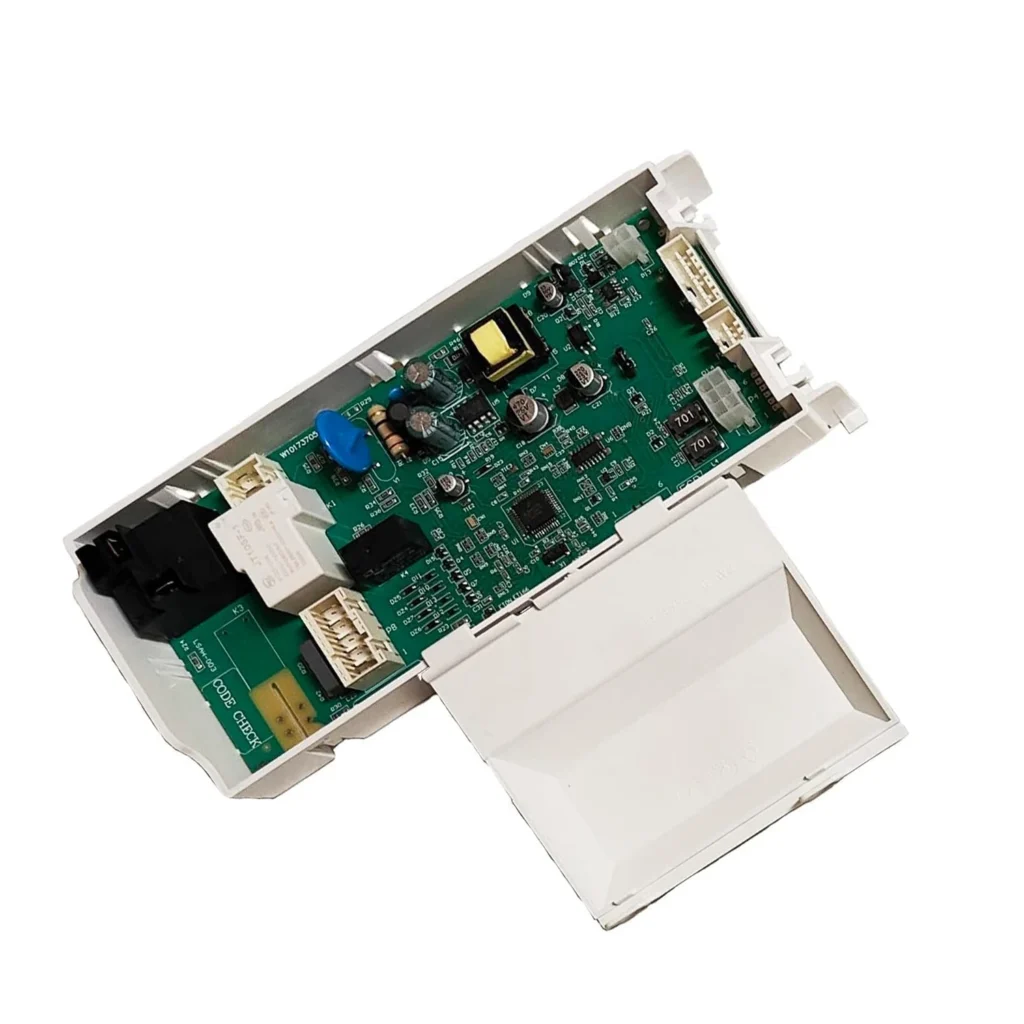
Your Whirlpool dryer just flashed F01 on the display and went silent. You've googled around — it's the control board. Now you're staring at two options: a $450+ OEM board from the manufacturer or a $278.99 aftermarket replacement. One forum says "only use genuine parts," another says "aftermarket saved me $200 with zero issues." So which is it?
I've installed both types across hundreds of WED9400 and WGD9400 series dryers over two decades. Here's what actually matters when you're holding a screwdriver at 9 PM on a weeknight.
Quick Answer
For the W10174745 control board, aftermarket wins for most home repairs. The price difference ($170-200) is significant, installation is identical, and failure rates are comparable within the first 3-5 years. OEM only makes sense if you're repairing under warranty or need the board tomorrow from a local parts house.
Side-by-Side Comparison
| Factor | OEM Whirlpool | Heima Aftermarket |
|---|---|---|
| Price | $450–$520 | $278.99 |
| Warranty | 1 year parts only | 1 year parts replacement |
| Lead Time | 2-3 days (dealer stock) or 1-2 weeks | 3-5 business days shipping |
| Fit & Finish | Exact original specs | Functionally identical, plastic may feel slightly different |
| Manufacturing | Contracted overseas (often same factories) | Third-party certified manufacturers |
| Connector Compatibility | 100% guaranteed | Keyed connectors fit WED/WGD 9400, 9300, 9200 series |
When OEM Makes Sense
Go genuine Whirlpool if you're in one of these situations:
Your dryer is still under manufacturer warranty. Using aftermarket voids coverage on related components. If Whirlpool's paying, let them pay for their own part.
You need it installed by tomorrow. Local appliance parts dealers stock OEM boards. If your laundromat visit is costing $40/week and you've got three kids in sports uniforms, that $200 premium buys you same-day installation.
You're flipping the appliance for resale. Buyers doing pre-purchase inspections sometimes check for OEM parts. It's psychological more than functional, but it affects resale value.
You've had two aftermarket failures already. Rare, but it happens. At that point, just get the OEM and move on with your life.
When Aftermarket Wins
For most DIY repairs on out-of-warranty dryers, aftermarket is the smart play. Here's why:
The repair economics make sense. A service call costs $150-200 just for the diagnosis, then $120-180 labor, plus the part. You're looking at $700-900 total with OEM. The aftermarket board costs less than the labor alone, and installation takes 15-30 minutes with a screwdriver.
One user who replaced their board put it perfectly: "I googled the code and came up with a bad control board, ordered from Appliance PartsPros, arrived shortly after, took off the top cover of the dryer, and it took five min to re-plug and transfer the wires, (take a picture, and un-plug then re-plug only one at a time). And all was well works perfectly!"
Installation is genuinely straightforward. The connectors are keyed — they physically can't go in wrong. Remove two screws from the back panel, lift off the top cover, disconnect the old board (after taking a phone picture), and reverse the process. No special tools beyond a Phillips screwdriver and maybe a 1/4" nut driver.
Failure modes are identical. Control boards die from power surges, electrical shorts, or component degradation over time. The aftermarket board uses the same relay types, the same microcontroller architecture, and fails for the same reasons. I've seen OEM boards fail at 18 months and aftermarket boards run for 8+ years.
It covers the same symptoms. Whether you're getting F01 error codes, the dryer won't turn on at all, individual components like the motor aren't responding, or you're seeing mid-cycle shut-offs — the replacement process and success rate is the same regardless of which board you use.
Our Verdict
Save the $200 and go aftermarket unless you need same-day installation or you're under warranty. The W10174745 board controls basic relay logic — it either works or it doesn't. After installing dozens of both types in WED9400SW2, WGD9400SW1, and similar models, I've seen no meaningful difference in longevity. Put that $200 toward a surge protector for your laundry room instead.
The installation is the same five-connector swap either way. Your dryer doesn't know the difference, and neither will your clothes.
Frequently Asked Questions
Will an aftermarket board void my Whirlpool warranty?
Yes, if your dryer is still under the original manufacturer warranty. But most W10174745 failures happen on 5-8 year old dryers that are long past coverage anyway. If you're out of warranty, there's nothing left to void.
Can I return the aftermarket board if it doesn't fix my dryer?
Most sellers including Heima offer returns within 30 days if the part is unused. The catch: once you've installed it and powered on the dryer, that's considered "used." Diagnose carefully before ordering — confirm you're actually seeing control board symptoms (F01 code, no response to buttons, erratic behavior) rather than a bad thermal fuse or door switch.
Do I need to reprogram the board after installation?
No. The W10174745 is plug-and-play. All cycle programming is built into the board firmware. Just connect the wires, close up the dryer, and run a test cycle. The board auto-detects your model configuration through the wire harness connections.
Ready to go aftermarket?
W10174745 · Factory direct · 1-year warranty