
OEM vs Aftermarket Oven Temperature Sensor for Whirlpool: Honest Comparison (W10131825)
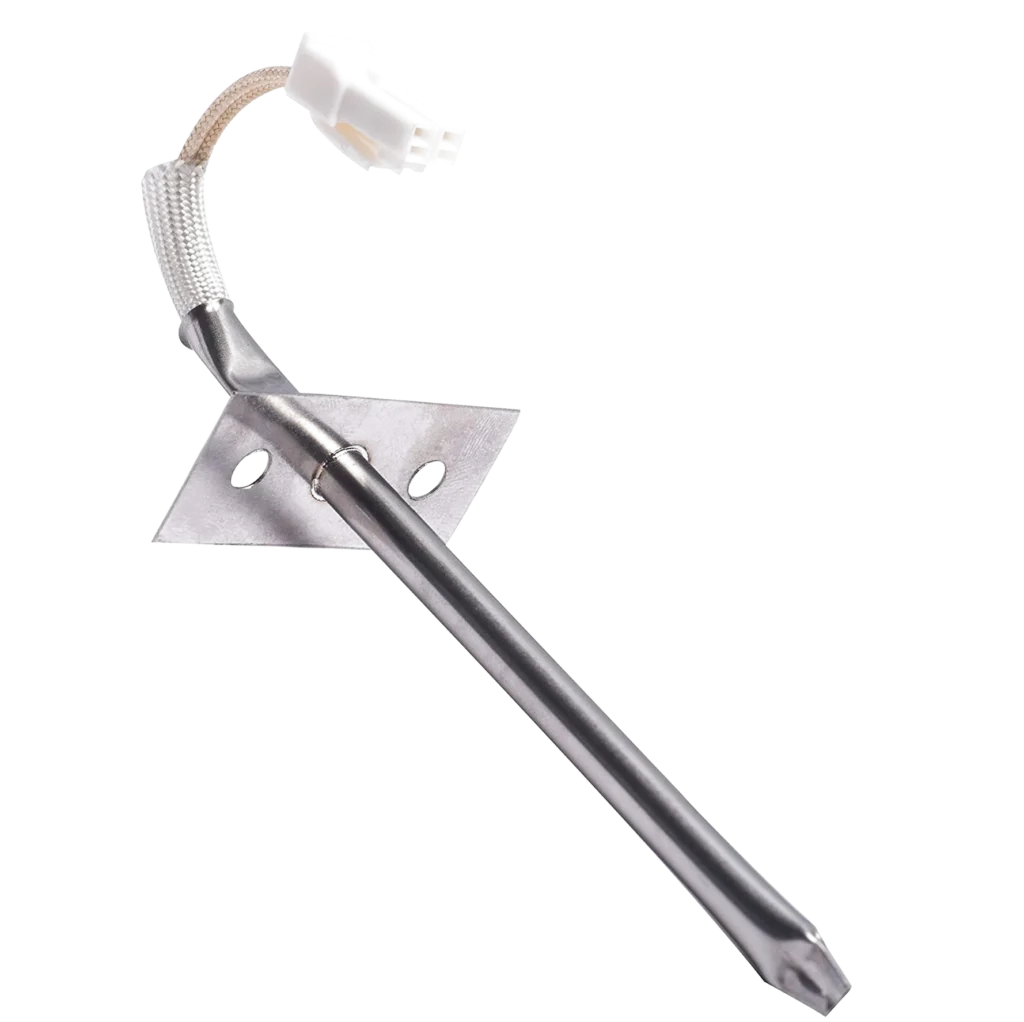
Your KitchenAid KEBC208KSS04 is baking cookies at what feels like 450°F when you set it to 350°F. You've tested it twice with an oven thermometer, and yeah—it's running 80 degrees too hot. The temperature sensor died, and now you're staring at two options: a $140 OEM part from Whirlpool or a $68.99 aftermarket sensor. Let's cut through the marketing and talk real differences.
Quick Answer
For the W10131825 temperature sensor, aftermarket wins on value without compromising performance. OEM costs twice as much for the same core function—a thermistor that reads oven temp. Unless you're repairing a brand-new unit still under warranty (where you need OEM to keep coverage valid), the aftermarket sensor does the identical job for half the price.
Side-by-Side Comparison
| Factor | OEM Whirlpool W10131825 | Heima Aftermarket W10131825 |
|---|---|---|
| Price | $130–$150 | $68.99 |
| Warranty | 90 days (typical appliance part warranty) | 1 year manufacturer defect coverage |
| Lead Time | 3–7 days (dealer order) or 2 days (premium shipping) | Ships same/next business day |
| Fit & Finish | Exact Whirlpool packaging, white connector housing | Identical connector, slightly different wire sheathing color (performance unaffected) |
| Where Made | Various (Whirlpool sources globally) | ISO-certified facilities, same thermistor specs |
| Compatible Models | KEBC208KSS04, KEMS308SSS05, KEBS207SSS00, KDRP407HSS10, GBS307PRS00, and 200+ others | Same exact compatibility—replaces WPW10131825, AP6015486, 4455636, PS11748765 |
When OEM Makes Sense
There's exactly one scenario where you should buy OEM: your oven is less than a year old and still under manufacturer warranty. If you call Whirlpool for a warranty claim and they discover an aftermarket sensor, they'll void your coverage faster than your oven preheats. That's the trade-off.
Beyond that? OEM doesn't offer performance advantages here. Temperature sensors are straightforward components—a thermistor changes resistance based on heat, and the control board reads that resistance. Aftermarket manufacturers build to the exact same resistance curve specs. Your oven can't tell the difference between a $140 sensor and a $69 sensor if both hit the same resistance values at 350°F.
Some techs prefer OEM for commercial kitchens where downtime costs thousands per hour, but even then, it's more about having a relationship with a local Whirlpool dealer for emergency same-day pickup than actual part quality.
When Aftermarket Wins
For the other 95% of repairs, aftermarket is the smart play. Temperature sensor failures are common on these models—they're exposed to constant heat cycles, and the thermistor wire eventually degrades. You're looking at symptoms like "oven is too hot," "little to no heat when baking," or "oven not heating evenly." Sometimes the oven won't start at all because the control board can't get a temp reading.
When you're fixing a 5-year-old KEMS308SSS05 that's out of warranty anyway, spending an extra $70 for OEM branding makes zero sense. The aftermarket W10131825 plugs into the same harness, mounts in the same bracket, and reads temperature with the same accuracy. You'll save enough to buy a nice infrared thermometer to verify your repair worked.
The installation is identical regardless of which part you choose: unplug the oven, remove the back panel or oven floor (depending on your model), disconnect the old sensor from the wiring harness, unbolt the mounting bracket, and reverse the process. Takes 15–20 minutes if you're not rushing.
Our Verdict
Go aftermarket unless warranty coverage is at stake. The W10131825 temperature sensor is a commodity part—it's literally a resistor in a metal tube. Aftermarket versions meet the same electrical specs, ship faster, cost half as much, and come with a longer warranty. Put the $70 savings toward your next repair or a better oven thermometer. Your KEBS207SSS00 won't know the difference, and your cookies will bake at the right temp either way.
Frequently Asked Questions
Will an aftermarket sensor throw error codes on my KitchenAid control board?
No. The control board reads resistance values, not brand names. If the aftermarket sensor matches OEM specs (which quality ones do), your board treats it identically. Error codes come from faulty sensors or wiring issues, not from choosing aftermarket.
How long do these temperature sensors typically last?
Expect 5–8 years on average, though high-use ovens (daily baking at 400°F+) can wear them out sooner. The constant heat cycling eventually causes the thermistor to drift out of spec, giving you inaccurate temp readings before it fails completely.
Can I test my old sensor to confirm it's bad before ordering?
Yes—with a multimeter. At room temp (around 70°F), the sensor should read about 1,080–1,100 ohms. If it reads open (infinite resistance) or way outside that range, it's toast. You can also test it while heating in a pot of water with a thermometer to verify the resistance changes correctly with temperature.
Ready to go aftermarket?
W10131825 · Factory direct · 1-year warranty