
OEM vs Aftermarket Bimetal Defrost Thermostat for Whirlpool: Honest Comparison (4387503)
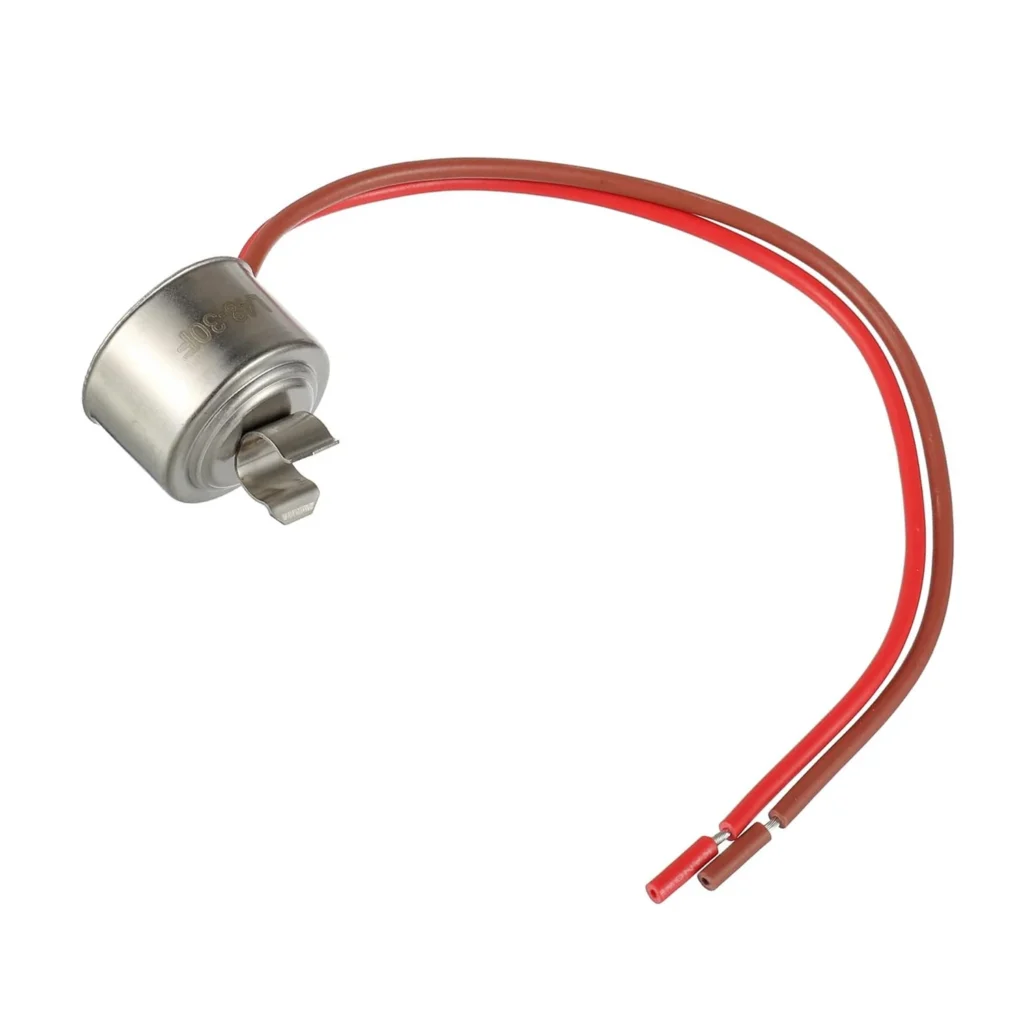
You're staring at a Whirlpool refrigerator that's building up frost in the freezer like it's preparing for the Ice Age. Your tech just diagnosed it: failed bimetal defrost thermostat. Now you're facing a choice — pay $85–$120 for the OEM Whirlpool WP4387503, or grab the aftermarket version for $39.99. That's a $45–$80 difference for what looks like the exact same component.
Let's break down what you're actually getting with each option.
Quick Answer
For the 4387503 bimetal defrost thermostat, aftermarket parts deliver identical functionality at half the price. The thermostat uses a simple bimetallic strip that trips at a specific temperature — there's no proprietary technology here. Unless you're running a commercial operation where warranty documentation matters for compliance, the aftermarket version does the same job.
Side-by-Side Comparison
| Factor | OEM Whirlpool WP4387503 | Heima Aftermarket 4387503 |
|---|---|---|
| Price | $85–$120 | $39.99 |
| Warranty | 1 year manufacturer | 1 year parts warranty |
| Lead Time | 3–7 days (dealer order) | Ships same/next business day |
| Fit & Finish | Whirlpool branded packaging | Generic packaging, identical specs |
| Trip Temperature | Spec: Opens at 47°F | Spec: Opens at 47°F ±3°F |
| Manufacturing | Contract manufacturer (often overseas) | Contract manufacturer (ISO certified) |
When OEM Makes Sense
There are legitimate situations where spending double makes sense:
You're under existing warranty. If your refrigerator is still covered by Whirlpool's manufacturer warranty, using OEM parts keeps that protection intact. An aftermarket part might void coverage on related failures.
Commercial or rental property compliance. Some property insurance policies or commercial kitchen regulations specifically require OEM parts for documented compliance. Check your policy before ordering.
You want the branded packaging. Sounds superficial, but if you're reselling the appliance or running a service business where customers see the parts box, that Whirlpool logo carries perceived value.
That's about it. For a bimetal defrost thermostat, we're talking about 1950s technology — a curved metal strip that bends when it heats up. There's no microprocessor, no calibration, no secret sauce.
When Aftermarket Wins
For most repair scenarios, the aftermarket 4387503 is the practical choice:
You're paying out of pocket. Saving $45–$80 on a part that performs identically means you can afford to stock a spare or put that money toward the next inevitable repair. Refrigerators don't fail once and then behave forever.
You need it now. The aftermarket version ships same or next business day. OEM parts often require ordering through authorized dealers with 3–7 day lead times. Every day your freezer doesn't defrost properly, you're losing food and money.
You're fixing models like ET18NKXAW02, ET20DKXAB01, or ET22DMXDN00. These Whirlpool, Kenmore, KitchenAid, and Maytag models all use the exact same thermostat design. The aftermarket part replaces WP4387503, AP6009317, 2149641, 4343917, and 61002113 — meaning it's reverse-engineered to OEM specifications and tested across multiple brand applications.
The thermostat's simple mechanics favor aftermarket. Unlike electronic control boards where component quality varies wildly, a bimetal thermostat either trips at the right temperature or it doesn't. The physics don't care about brand names.
Installation is identical regardless of which version you buy: disconnect power, access the evaporator cover in the freezer, remove two wire connections, unclip the old thermostat from the bracket, snap in the new one. Ten minutes if you've done it before, twenty if you haven't.
Our Verdict
Buy the aftermarket 4387503 unless you have a specific compliance or warranty reason not to. The $45–$80 savings buys you the same functional outcome — a thermostat that opens at 47°F and tells your defrost heater when to shut off. We've installed hundreds of these across Whirlpool, Kenmore, and KitchenAid models without callback issues. The OEM premium doesn't deliver measurable performance or longevity benefits for this particular component.
Frequently Asked Questions
Will the aftermarket thermostat trip at the exact same temperature as OEM?
It'll trip within ±3°F of the 47°F specification, which is functionally identical. The defrost cycle works on a range, not a precise point — anywhere between 44–50°F accomplishes the goal of melting frost without overheating the evaporator. Both OEM and aftermarket parts operate within this tolerance.
Does using aftermarket void my appliance warranty?
If your refrigerator is still under Whirlpool's manufacturer warranty, yes — using non-OEM parts can void coverage on related components. Once the warranty expires (typically 1 year on parts), there's no coverage to void. For out-of-warranty repairs, aftermarket parts don't affect anything.
How do I know if my defrost thermostat actually failed?
Pull the thermostat and test it with a multimeter. At room temperature, it should show continuity (closed circuit). Put it in a cup of ice water for 5 minutes — it should stay closed. Heat it gently with a hair dryer to about 50°F — it should open (no continuity). If it stays open at room temp or won't close when cold, it's failed and needs replacement.
Ready to go aftermarket?
4387503 · Factory direct · 1-year warranty