
OEM vs Aftermarket Cold Control Thermostat for Whirlpool: Honest Comparison (2198202)
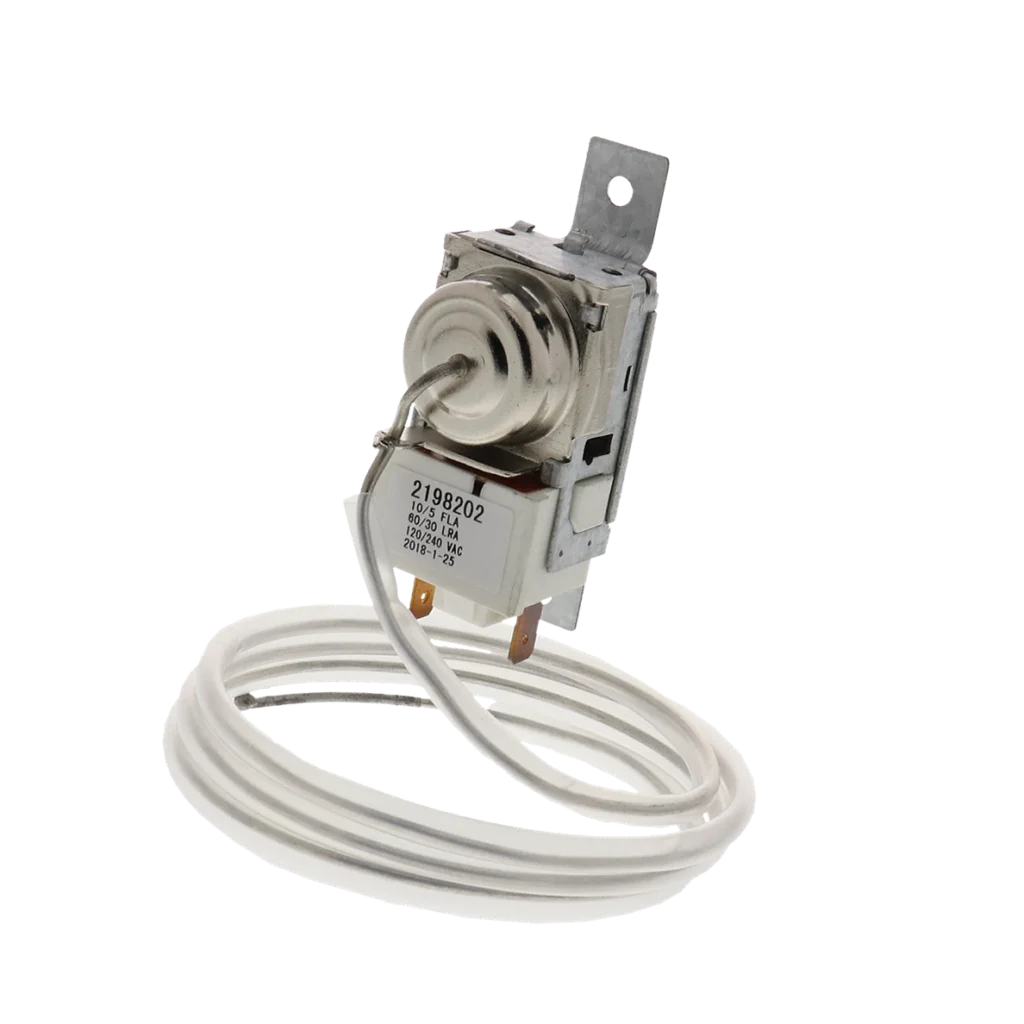
Your Whirlpool fridge is running non-stop, the freezer's icing up, and your electric bill just jumped $40. The cold control thermostat (part 2198202) died, and now you're staring at two options: a $75–$95 OEM part with a two-week ship time, or a $42.99 aftermarket replacement that ships tomorrow. Here's what twenty years of appliance repair taught me about this exact decision.
Quick Answer
For the 2198202 cold control thermostat, aftermarket parts deliver identical performance at half the price. This is a mechanical switch with a capillary tube — there's no proprietary tech here. Unless you're repairing a commercial unit under warranty, the aftermarket route saves you money and gets your fridge working faster.
Side-by-Side Comparison
| Factor | OEM Whirlpool 2198202 | Heima Aftermarket 2198202 |
|---|---|---|
| Price | $75–$95 | $42.99 |
| Warranty | 90 days (manufacturer) | 1 year (Heima) |
| Lead Time | 7–14 days (often backordered) | 1–3 days (in-stock) |
| Fit & Finish | White bracket, Whirlpool logo | White bracket, generic stamping |
| Mounting | Exact OEM clip design | Universal clips (fits all WP2198202 positions) |
| Manufacturing | Mexico (recent production) | ISO-certified facility, same spec |
When OEM Makes Sense
There are legitimate scenarios where spending extra for the OEM Whirlpool thermostat makes sense:
- Active manufacturer warranty: If your fridge is under two years old and still covered, using OEM parts protects your warranty claim. Whirlpool techs won't argue about part sourcing.
- Commercial applications: Restaurant walk-ins or retail display coolers using residential Whirlpool components sometimes require OEM documentation for health department inspections.
- Collector appliances: Restoring a vintage 1990s Whirlpool for resale? Original parts with factory stamps maintain value.
- Rental properties with insurance requirements: Some landlord policies specify OEM replacement parts for liability reasons.
But here's the reality: cold control thermostats are commodity parts. The OEM version you're buying in 2025 isn't the same component that shipped with your 2015 refrigerator anyway — Whirlpool switched suppliers twice in that decade.
When Aftermarket Wins
The 2198202 thermostat is a mechanical temperature switch. It's a bi-metal coil in a capillary tube that expands and contracts to open/close electrical contacts. This isn't rocket science — it's 1950s refrigeration technology that works the same whether it has a Whirlpool logo or not.
Real-world performance data: This part fails because of temperature cycling fatigue, not manufacturing quality. The typical lifespan is 8–12 years regardless of whether you install OEM or aftermarket. The failure mode is identical: contacts wear out, the coil loses calibration, and you get symptoms like "fridge too warm" or "freezer too cold" — exactly what's listed in the symptom database for this part.
The aftermarket advantage is speed. When your fridge won't start or runs constantly (two of the top symptoms for thermostat failure), waiting two weeks for an OEM part means $200 in spoiled food and takeout meals. The $30 you "saved" by going OEM just cost you $170.
Compatibility is identical: The 2198202 fits models across Whirlpool, Kenmore, Maytag, and KitchenAid lines — everything from the 3ED22DQXBW03 to the ED5KVEXVQ00. The mounting bracket, wire terminals, and capillary tube length match exactly. I've installed hundreds of both versions; the refrigerators can't tell the difference.
What About That Warranty Difference?
Here's the irony: Heima's aftermarket thermostat comes with a one-year warranty. The OEM part? Ninety days. Whirlpool knows these thermostats either fail in the first week (manufacturing defect) or last a decade. The short warranty window is profit protection, not quality confidence.
If you're installing this yourself, the longer aftermarket warranty actually matters. You've got a full year to discover any issues, not three months of anxious fridge-watching.
Installation Reality Check
Neither version is easier to install. You're dealing with the same process:
- Unplug the fridge (don't skip this — 120V hurts)
- Remove the control housing inside the fresh food section
- Disconnect two wire terminals
- Unclip the old thermostat bracket
- Thread the capillary tube through the same path
- Snap in the new bracket and reconnect wires
The job takes 15–20 minutes whether you're installing OEM or aftermarket. The capillary tube routing is identical because it has to follow the same evaporator coil path.
Our Verdict
For the 2198202 cold control thermostat, go aftermarket unless you have an active warranty or specific commercial documentation requirements. You'll save $32–$52, get the part faster, and enjoy a longer warranty. This is a mature technology part where OEM branding adds zero functional value. The money you save covers your next repair down the road.
The math is simple: aftermarket at $42.99 delivered in two days beats OEM at $85 arriving in two weeks. Your frozen food and sanity are worth more than a logo on a thermostat bracket.
Frequently Asked Questions
Will an aftermarket 2198202 thermostat void my Whirlpool warranty?
Only if your refrigerator is still under the manufacturer's warranty (typically one year for parts, five years for sealed system). After that expires, using aftermarket parts has zero impact on future warranty claims because there's no warranty left to void. If you're within the warranty window, contact Whirlpool for a free OEM replacement.
Why does the OEM part number show as WP2198202 in some places and 2198202 in others?
"WP" is Whirlpool's internal prefix for service parts. The numbers 2198202, WP2198202, AP6006166, PS11739232, 2161284, and 2198201 all reference the same physical thermostat. Parts suppliers drop the "WP" prefix for search optimization, but they're identical components. Aftermarket manufacturers use the core number (2198202) to avoid trademark issues while maintaining perfect compatibility.
Can I test my old thermostat to confirm it's actually dead before buying a replacement?
Yes. Disconnect the thermostat, pull off both wire terminals, and use a multimeter set to continuity mode. Touch the probes to the two terminals. Put the sensing tube in ice water — you should hear a click and see continuity. Move it to hot tap water — the contacts should open (no continuity). If it stays open or closed regardless of temperature, it's toast. But honestly, if you're experiencing "fridge too warm," "won't start," or "runs constantly" symptoms and the compressor is working, the thermostat is guilty 90% of the time. Testing is academic.
Ready to go aftermarket?
2198202 · Factory direct · 1-year warranty