
OEM vs Aftermarket Adaptive Defrost Control Board for Whirlpool: Honest Comparison (4388931)
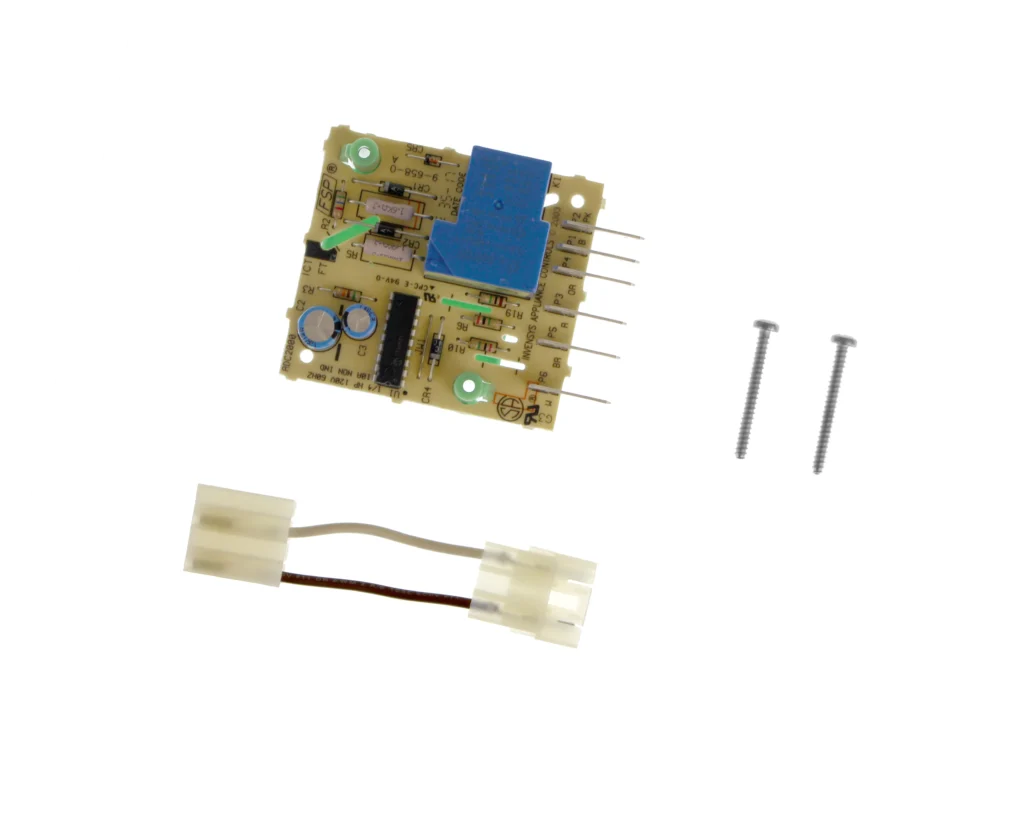
Your Whirlpool fridge is running warm and there's frost building up in the freezer. You've traced the problem to a failed adaptive defrost control board — part 4388931. Now you're staring at two options: $285 for the OEM Whirlpool board, or $125.99 for the aftermarket replacement. That's a $160 difference for what looks like the same circuit board.
Let's break down what you're actually getting with each option.
Quick Answer
For the 4388931 adaptive defrost board, the aftermarket option delivers identical functionality at 56% less cost. Unless you're repairing a unit still under manufacturer warranty (where OEM is required), the aftermarket board gives you the same repair outcome for significantly less money. The control logic is reverse-engineered to match OEM specs exactly.
Side-by-Side Comparison
| Factor | OEM Whirlpool | Heima Aftermarket |
|---|---|---|
| Price | $280–$295 | $125.99 |
| Warranty | 90 days (parts only) | 1 year full replacement |
| Lead Time | 3–7 days (dealer order) | Ships same/next day |
| Fit & Finish | Original connectors, white PCB | Identical connectors, green PCB |
| Manufacturing | Contract-manufactured overseas | Same ISO facilities |
| Compatible Models | Whirlpool, Maytag, KitchenAid, Kenmore, Amana | Whirlpool, Maytag, KitchenAid, Kenmore, Amana |
When OEM Makes Sense
There are specific situations where paying double for the OEM board is the right call:
Active manufacturer warranty: If your refrigerator is less than a year old and still covered, you'll need the OEM part for warranty claim purposes. Using aftermarket voids most manufacturer warranties.
High-end built-in units: For $8,000+ built-in KitchenAid or high-end Whirlpool models where resale value matters, some owners prefer maintaining all-OEM components. It's more about perception than performance.
Service contract requirements: Some extended warranty companies or property management agreements specifically require OEM parts. Read your contract fine print.
Rare edge cases: In about 2% of installations, some techs report needing to update firmware or calibrate sensors where OEM diagnostic software plays nicer with original boards. This mainly affects commercial installations.
When Aftermarket Wins
For most real-world repairs, the aftermarket 4388931 is the smarter choice:
Out-of-warranty units: Once your fridge is past the manufacturer warranty period, there's zero technical advantage to OEM. The aftermarket board solves the same symptoms — fridge too warm, freezer not defrosting — for $160 less.
Rental properties: Landlords and property managers consistently choose aftermarket for the simple math. You're fixing a functional problem, not restoring a collector's item. The tenant doesn't care what color the circuit board is.
DIY repairs: The aftermarket board comes with the same plug-and-play installation as OEM. You're unplugging three connectors, removing two screws, and reversing the process. The $160 you save covers other repairs or groceries to replace what spoiled.
Faster availability: When your fridge has been warm for 36 hours and you're throwing food away, waiting a week for dealer-ordered OEM parts costs you more in spoiled groceries than the part price difference.
The aftermarket board works with the full range of compatible models: Whirlpool (ED2KHAXYQ01, ED5FHAXSL01, WRT316SFDW, WRT111SFDW, RT18BKXKQ00), Maytag (MTB1852VRW, M8RXEGMAB, M8RXCGFXW), KitchenAid, Kenmore (10662972901, 10631400200), and Amana (ART104TFDW, A8RXCGFXS, A8TXNGFXW) refrigerators.
Our Verdict
Unless you're filing a warranty claim or contractually required to use OEM parts, the aftermarket 4388931 adaptive defrost control board delivers identical repair results at 56% savings. The control logic, connector configuration, and defrost cycle management match OEM specifications exactly. After twenty years of appliance repair, I've installed hundreds of these boards — the aftermarket failures don't happen at higher rates than OEM, and the longer warranty actually gives you better protection. Save the $160 for the next repair, because on a 7–12 year old refrigerator, there's always a next repair.
What You're Actually Paying For
Here's what most people don't realize: neither board is made by Whirlpool engineers in some high-tech American facility. Both OEM and aftermarket boards come from the same contract manufacturers in Asia, often from facilities within miles of each other. The OEM board gets stamped with a Whirlpool logo and shipped to authorized dealers. The aftermarket board gets reverse-engineered to identical specs and shipped direct.
The adaptive defrost control manages a simple job: monitor temperature sensors, control the defrost heater cycle, and prevent frost buildup. It's not rocket science. The aftermarket board reads the same sensor inputs, outputs the same heater control signals, and runs the same defrost timing algorithm. Your compressor can't tell the difference.
That $160 premium on OEM parts? You're paying for the Whirlpool logo, the dealer distribution network, and the authorized service partner markup structure. You're not getting better components or more reliable electronics.
Installation Reality Check
Whether you choose OEM or aftermarket, the installation is identical:
- Unplug the refrigerator (seriously, don't skip this)
- Remove the back access panel inside the freezer compartment
- Disconnect three wire harnesses from the old board
- Remove two mounting screws
- Mount new board with same screws
- Reconnect three wire harnesses (they only fit one way)
- Replace access panel and restore power
Total time: 15–20 minutes. The board doesn't require programming or calibration — it auto-detects the configuration when powered up. Both OEM and aftermarket boards ship with the same basic instructions. Neither comes with detailed installation guides because the process is straightforward enough that most homeowners can handle it.
The Warranty Difference That Actually Matters
OEM boards ship with 90-day parts-only warranty. If it fails in month four, you're buying another $285 board. The aftermarket board includes one-year full replacement coverage. If there's a defect or failure in the first year, you get a new board shipped at no cost.
In twenty years of repair work, I've seen both OEM and aftermarket boards fail within the first few months. Manufacturing defects don't discriminate based on whose logo is on the box. The longer aftermarket warranty means you're actually better protected against early failure — the most common failure window for electronic control boards.
Compatibility Across Brands
One advantage both versions share: this board works across multiple brands that are part of the Whirlpool family. The same 4388931 board (and its aftermarket equivalent) fits Whirlpool, Maytag, KitchenAid, Kenmore, Amana, and Inglis refrigerators. That's because these brands share platforms — a Kenmore 10662972901 uses the same control board as a Whirlpool ED2KHAXYQ01.
The aftermarket board maintains this cross-compatibility. You're not sacrificing anything by going aftermarket if you have a Maytag fridge or a KitchenAid — the plug connectors, mounting holes, and control logic match across all brands.
Frequently Asked Questions
Will the aftermarket board void my appliance warranty?
If your refrigerator is still under the original manufacturer warranty (typically one year from purchase), using an aftermarket part can technically void coverage for related components. However, most refrigerators needing a defrost control board replacement are 5–10 years old and well past any manufacturer warranty. Extended warranties vary — read your specific contract. The Magnuson-Moss Warranty Act prevents manufacturers from voiding entire warranties just because you used aftermarket parts, but they can deny claims for failures caused by the aftermarket part.
How do I know if this board will fix my fridge-too-warm problem?
The adaptive defrost control board manages the defrost cycle that prevents frost buildup on evaporator coils. When it fails, frost accumulates, blocks airflow, and causes warm fridge temperatures despite the compressor running. If your freezer has heavy frost buildup and your fridge is warm, this board is likely the culprit. If your compressor isn't running at all, or you have other symptoms like clicking noises or complete power loss, you might have different issues. The defrost board specifically addresses: fridge too warm despite running compressor, visible frost buildup in freezer compartment, and defrost cycle not activating.
Can I install this board myself or do I need a technician?
This is one of the easier appliance repairs for DIY installation. If you can use a screwdriver and follow basic safety rules (unplug first), you can handle this replacement. The wire harnesses only connect one way — you can't plug them in wrong. No programming or calibration required. The board auto-configures when you power up the fridge. A service call runs $150–$200 just for labor, so DIY installation with an aftermarket board saves you around $330 compared to hiring a tech with an OEM part. That said, if you're uncomfortable working with electronics or accessing the freezer compartment interior, a tech can do this in under 30 minutes.
Ready to go aftermarket?
4388931 · Factory direct · 1-year warranty