
OEM vs Aftermarket Lid Switch for LG Washers: Honest Comparison (EBF61215202)
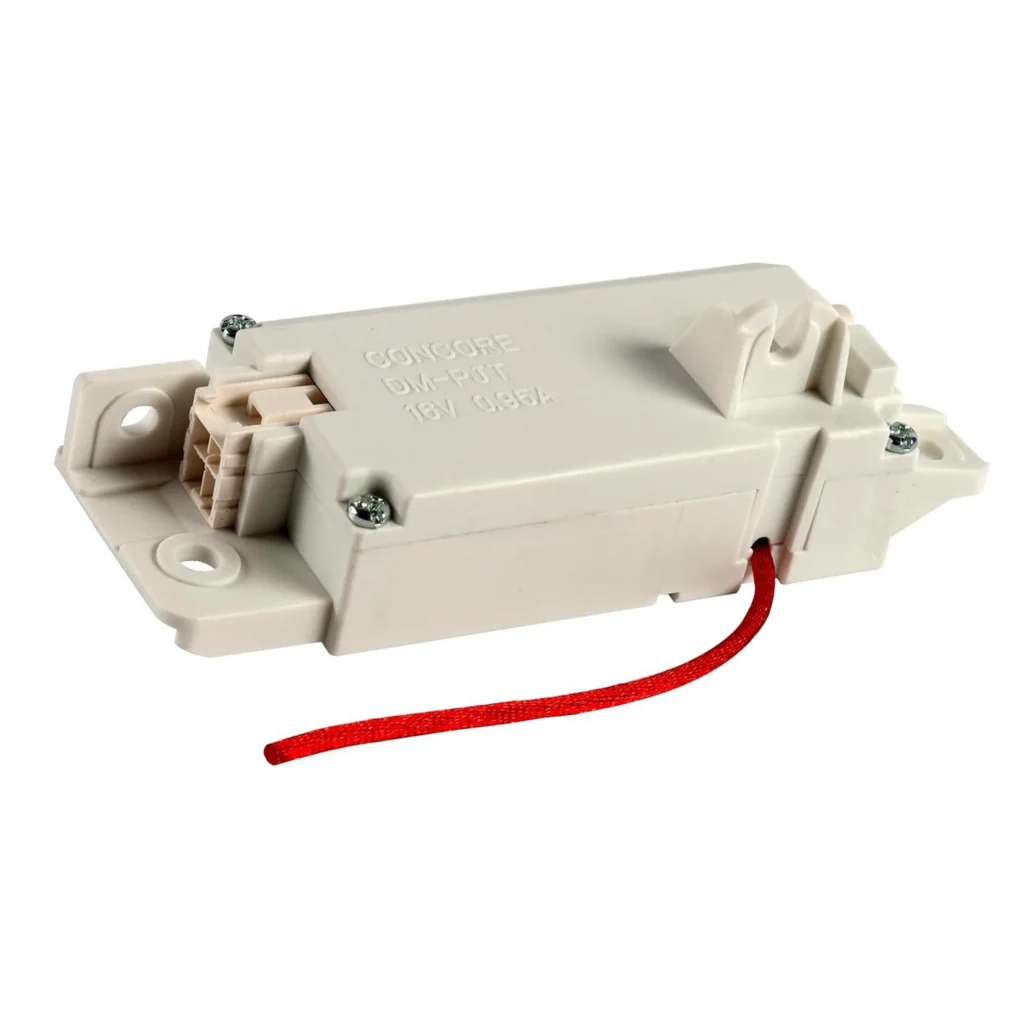
You're staring at two browser tabs. One shows the LG OEM lid switch for $148. The other shows our aftermarket EBF61215202 for $90.99. Your WT1201CW won't spin because it thinks the lid's open, and you're wondering if saving fifty-eight bucks means you'll be doing this repair again in six months.
Let's cut through the noise.
Quick Answer
For lid switches on LG top-loaders, the aftermarket route makes sense for 90% of repairs. The OEM part uses the same basic hall-effect sensor design, and you're mainly paying extra for the LG logo molded into the plastic housing. Unless you're fixing a machine still under extended warranty, save your money — the failure mode is identical regardless of brand.
Side-by-Side Comparison
| Factor | OEM LG (EBF61215202) | Heima Aftermarket |
|---|---|---|
| Price | $138–$165 | $90.99 |
| Warranty | 90 days (LG parts) | 365 days |
| Lead Time | 3–7 days (dealer order) | Ships same/next day |
| Fit & Finish | LG branding, white housing | Generic housing, identical connectors |
| Manufacturing | Contract factory (varies) | Contract factory (same region) |
| Compatible Models | WT-series top-loaders | WT1001CW through WT4801CW, Kenmore 796-series |
When OEM Makes Sense
There are exactly two scenarios where I'd reach for the OEM switch instead of aftermarket:
You're a repair shop doing warranty work. If you're billing LG directly or the customer has a service contract, use OEM. The paperwork requires it, and you're not eating the cost difference anyway.
You've got a commercial laundromat machine. The WT4801CW and similar commercial units cycle 8–12 loads daily. In high-cycle environments, the slightly beefier OEM connector boot might — might — give you an extra year before moisture intrusion causes problems. That's a maybe, not a guarantee.
That's it. Those are the only two cases where the premium makes practical sense.
When Aftermarket Wins
For residential repairs, aftermarket is the smart play. Here's why:
The sensor technology is identical. Both use a magnetic hall-effect sensor that detects when the lid magnet is within range. There's no proprietary LG magic here — it's a simple on/off switch triggered by magnetic proximity. The $58 price difference buys you... a logo.
Installation is identical. Same two-wire connector, same three mounting tabs, same 10-minute swap on models like the WT1201CW or WT1501CW. You disconnect the old switch, snap the new one into the frame rail, reconnect the harness. There's no special calibration or programming.
The warranty is actually better. Our aftermarket switch carries a full year warranty versus LG's 90-day parts warranty. If it fails — which is rare with either version — you're covered longer with the cheaper part.
You get it faster. LG parts go through dealer networks with 3–7 day lead times. Aftermarket ships same day in most cases. When your washer's been sitting full of wet clothes for three days, speed matters.
Real-world context: The typical lid switch on an LG top-loader fails after 6–9 years or 1,200–1,800 wash cycles. Failure mode is almost always the same — the hall sensor stops detecting the magnet, so the washer thinks the lid's perpetually open and won't spin. This happens at the same rate with OEM and aftermarket parts because the root cause is usually moisture intrusion around the connector, not the sensor itself dying.
Our Verdict
Buy the aftermarket EBF61215202 for $90.99 unless you're doing warranty work or running a laundromat. The performance is identical, the warranty is longer, and you'll have your washer running again tomorrow instead of next week. Use the $58 savings to stock up on washer cleaner tablets — preventing moisture buildup does more for switch longevity than any brand name ever will.
What About Compatibility?
This switch works across LG's entire WT-series top-loader lineup from 2008–2016, plus the rebadged Kenmore 796-series models. That includes everything from the compact WT1001CW through the jumbo WT4801CW. If your model number starts with WT and has four digits, you're good.
The part also replaces several older LG numbers: AP5597170, PS3644957, 2667077, and TAW35818286. If a repair guide lists any of those, this aftermarket switch is the direct swap.
Frequently Asked Questions
Will the aftermarket switch work with LG's SmartThinQ app features?
Yes. The lid switch is a simple safety interlock — it has nothing to do with the Wi-Fi board or app connectivity. The washer's control board only cares whether the switch circuit is open or closed. Aftermarket works identically for smart features.
How long does the aftermarket switch typically last?
In normal residential use (5–8 loads per week), expect 7–10 years. That's comparable to OEM. The common failure point is moisture getting into the connector, which happens at the same rate regardless of which brand name is on the housing. Keep the washer area ventilated and you'll maximize either switch's lifespan.
Can I test if my current switch is actually bad before ordering?
Absolutely. Unplug the washer, remove the top panel, and locate the switch on the right front frame rail. With the lid closed, use a multimeter to check continuity across the two switch terminals — you should see a closed circuit (near-zero ohms). Open the lid and retest — it should show open circuit (infinite resistance). If it stays open with the lid closed, the switch is toast. This works for diagnosing both OEM and aftermarket switches.
Ready to go aftermarket?
EBF61215202 · Factory direct · 1-year warranty