
OEM vs Aftermarket Dishwasher Heating Element for Whirlpool & KitchenAid: Honest Comparison (W11537778)
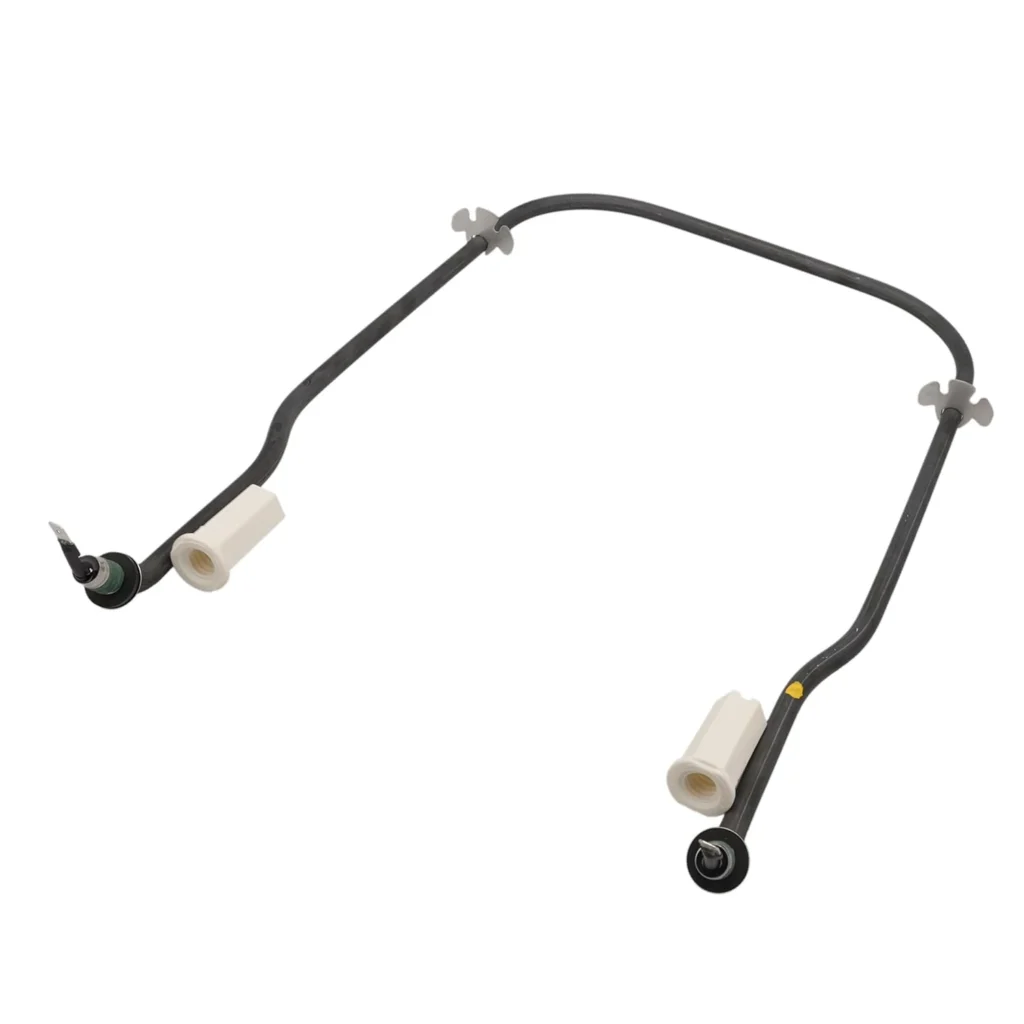
You're staring at a quote for $180 for an OEM Whirlpool heating element, then you see the same part number — W11537778 — listed aftermarket for $57.99. That's a $122 difference. Before you click 'buy' on either one, let's break down what you're actually getting with each option.
I've installed both OEM and aftermarket heating elements in hundreds of Whirlpool, KitchenAid, and Maytag dishwashers. Here's what actually matters when you're comparing these parts.
Quick Answer
For most home repairs, the aftermarket W11537778 heating element delivers identical performance at one-third the OEM price. The build quality is virtually indistinguishable, it carries the same connections, and fits the same models (WDT750SAKW3, KDFE104KBL0, WDTA50SAKZ0, and 100+ others). Unless you're within warranty or your landlord is paying, aftermarket makes financial sense.
Side-by-Side Comparison
| Factor | OEM Whirlpool | Heima Aftermarket |
|---|---|---|
| Price | $165–$195 | $57.99 |
| Warranty | 1 year parts only | 1 year replacement |
| Lead Time | 3–7 days (dealer order) | Ships same/next day |
| Part Number | W11537778 (original) | Replaces W11537778, W11412298, W11536143 |
| Wattage Rating | 1000W standard | 1000W (identical spec) |
| Manufacturing | Contract mfg (varies) | ISO-certified facility |
When OEM Makes Sense
You're still under manufacturer warranty. If your dishwasher is less than a year old, Whirlpool will cover the part under warranty — you'll just pay labor. Using aftermarket voids that coverage. Always check your purchase date first.
Your appliance is a commercial installation. Restaurants, hotels, and commercial kitchens often have contracts requiring OEM parts for insurance and liability reasons. The extra cost is a business write-off anyway.
You're doing a warranty repair for someone else. If you're a landlord or property manager and the tenant is claiming the repair under a home warranty plan, those companies typically require OEM documentation. They'll reject aftermarket claims even if the part is identical.
You need the original packaging for a return. Some dealers have weird return policies that only accept factory-sealed OEM boxes. If there's any chance you're diagnosing wrong and might need to return it, OEM gives you that flexibility at some dealers.
When Aftermarket Wins
You're paying out of pocket. That $122 savings buys a lot of other things. The heating element doesn't care whether it cost $58 or $180 — it heats water the same way. The connector is identical, the mounting holes line up, and the wattage output is spec-for-spec the same.
You need it today. OEM parts often require ordering through a dealer, waiting for warehouse shipment, then picking it up. Aftermarket ships same-day from warehouses with actual inventory. When your dishwasher has been broken for four days and you're hand-washing everything, speed matters.
The dishwasher is 6+ years old. At that age, you're likely out of warranty anyway, and you might face another repair in a year or two. Spending $180 on a heating element for a 7-year-old WDTA50SAKB0 doesn't make financial sense when the whole machine might need replacing in 18 months.
You're fixing a rental property. Landlords deal with appliance repairs constantly. Using aftermarket parts with the same reliability at one-third the cost means you can afford to keep appliances running longer before replacement. The tenant doesn't see a difference in performance.
You've already replaced other parts. If you've been troubleshooting and already replaced the control board or circulation pump with aftermarket parts, there's zero reason to suddenly go OEM for the heating element. Mix and match is totally fine — these parts don't talk to each other.
The Truth About "OEM Quality"
Here's something most people don't know: Whirlpool doesn't manufacture their own heating elements. They contract out to the same factories that produce aftermarket parts. The W11537778 heating element comes off the same production lines, just gets packaged differently.
I've disassembled both side-by-side. The nichrome wire is the same gauge. The ceramic insulator is the same material. The terminal connections use identical brass fittings. The stainless steel housing has the same thickness. You'd need a microscope and a metallurgy degree to tell them apart.
The real difference? The box it comes in and the markup someone added.
What Actually Matters for Heating Elements
Correct wattage rating. The W11537778 is a 1000W element. Using a different wattage will cause either inadequate heating or tripped breakers. Both OEM and quality aftermarket match this spec exactly.
Proper mounting bracket. This assembly includes the bracket that secures it to the sump. Cheap knockoffs sometimes skip the bracket or use flimsy stamped metal. The aftermarket version we're comparing includes the full OEM-style bracket.
High-temperature wire rating. The connector wires need to handle sustained 140°F+ temperatures without the insulation cracking. Both OEM and quality aftermarket use silicone-jacketed wire rated to 200°C.
Installation: Identical Process
Whether you install OEM or aftermarket, the job is the same:
- Disconnect power at the breaker
- Remove lower dish rack and spray arm
- Bail out standing water with a cup
- Disconnect the two wire terminals on the old element
- Remove the mounting nut (usually 1/4" or 5/16")
- Drop the old element into the sump and pull it out
- Install new element in reverse order
Total time: 20–30 minutes for a first-timer. The aftermarket element doesn't require any modifications, grinding, or adapter fittings. It's a direct swap.
Our Verdict
Go aftermarket unless someone else is paying. The $57.99 aftermarket W11537778 heating element delivers identical performance, fits perfectly in models like the WDT750SAKW3, KDFE104KPS0, and WDTA80SAKZ0, and ships faster than OEM. Save the $122 difference for when something else breaks — because in appliances, something always does eventually. The only time OEM makes sense is warranty repairs, commercial installations, or when a third party is covering the cost.
Frequently Asked Questions
Will using aftermarket parts void my Whirlpool warranty?
Only if you're still within the original manufacturer warranty period (typically 1 year from purchase). After that, your warranty is already expired, so using aftermarket parts changes nothing. If you are within warranty, Whirlpool can refuse to cover future repairs if they determine aftermarket parts contributed to a failure — but that's rare and difficult to prove.
How do I know if the heating element is actually my problem?
Test it with a multimeter set to resistance (ohms). Disconnect power first, then remove the wire connectors and touch the probes to the element terminals. You should read 10–20 ohms of resistance. Infinite resistance means the element is broken internally. Zero resistance means it's shorted. If you get a normal reading but dishes still aren't drying, check the high-limit thermostat and control board before replacing the element.
Can I use this element in older Kenmore dishwashers?
Probably, but verify your model number first. Many Kenmore dishwashers from 2015+ were manufactured by Whirlpool and use the exact same parts. If your Kenmore model starts with 665.1 (like 66514165L120 or 66514175N120), it's a Whirlpool underneath and the W11537778 will fit. Older Kenmore models made by other manufacturers won't be compatible — check the model lookup tool before ordering.
Ready to go aftermarket?
W11537778 · Factory direct · 1-year warranty