
OEM vs Aftermarket W10130913 Drain Pump for Whirlpool: Honest Breakdown (What $200 Actually Gets You)
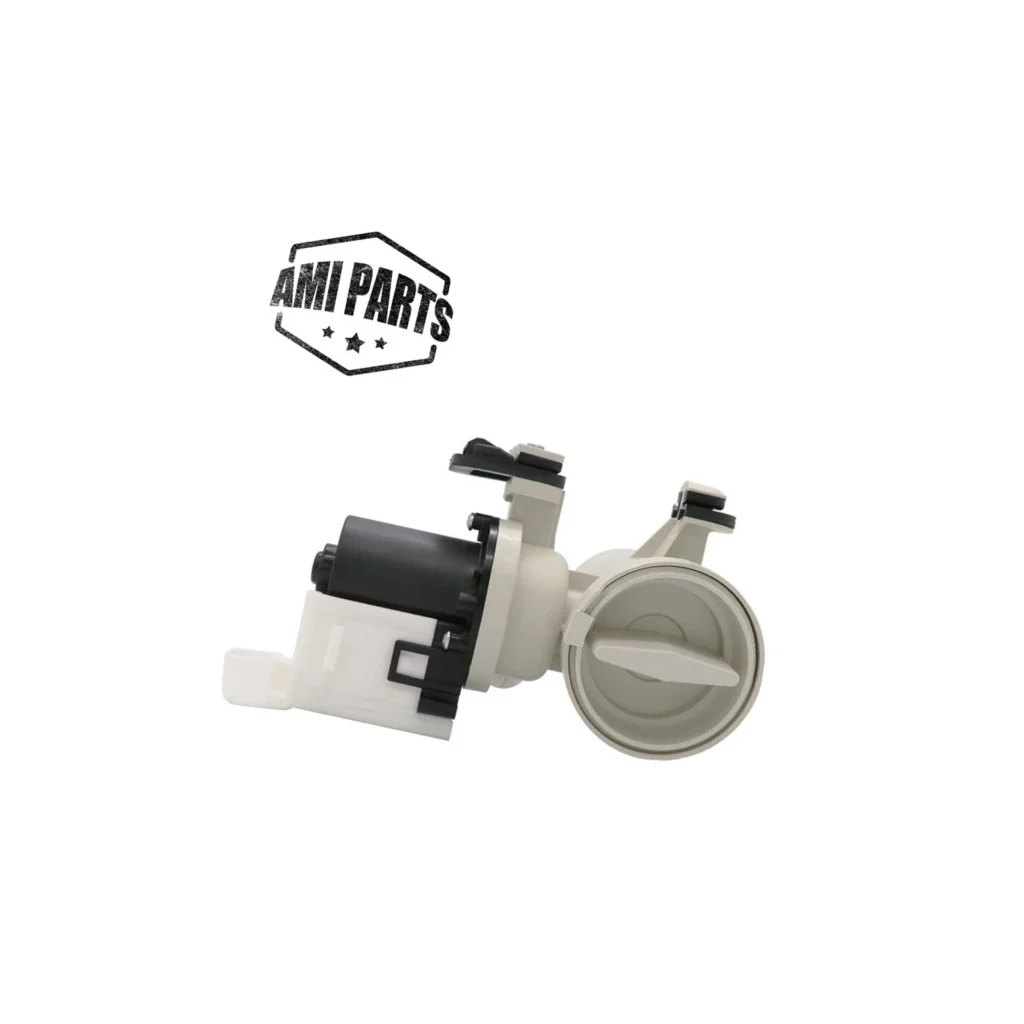
Your Whirlpool WFW8400TW is mid-cycle, humming away but the water's just sitting there — not draining. You've diagnosed it down to the pump (part W10130913), and now you're staring at two options: OEM from Whirlpool at $180–$250 depending on who's selling it, or our aftermarket at $92.99. That's a $90–$160 difference for what looks like the exact same part.
Let's cut through the marketing and talk real differences.
Quick Answer
For a drain pump on a washer that's 5+ years old, the aftermarket W10130913 makes financial sense — it's functionally identical, fits the same mounting points, and costs half as much. Save OEM money for main control boards or sealed systems where electronics matter more. The pump motor doesn't care about the logo on the housing.
Side-by-Side Comparison
| Factor | OEM Whirlpool | Heima Aftermarket |
|---|---|---|
| Price | $180–$250 | $92.99 |
| Warranty | 90 days (typical dealer) | 1 year parts replacement |
| Lead Time | 3–7 days (dealer order) | Ships same/next business day |
| Fit & Finish | Exact Whirlpool tooling | Matches OEM specs, minor cosmetic differences |
| Manufacturing | Contract-manufactured (often same factories) | Contract-manufactured to OEM drawings |
| Part Numbers | W10130913, WPW10730972 | Replaces all: W10730972, 8540024, W10117829, AP6023956 |
When OEM Makes Sense
There are legitimate cases where spending double is worth it:
You're under warranty or have a service contract. If Whirlpool's paying, obviously go OEM. Don't complicate your claim with aftermarket parts.
You're flipping the appliance for resale. Some buyers get weird about "all original parts" even though it makes zero functional difference on a wear item like a pump.
Your service tech only stocks OEM. If you're paying $150/hour labor and the tech's already there with an OEM pump in the van, the convenience might outweigh the $90 savings — especially if you'd lose another half-day waiting for shipping.
It's a brand-new high-end model. On a $1,800 washer that's 18 months old, some people just feel better keeping everything factory. I get it, even if the math doesn't support it.
When Aftermarket Wins
Most real-world scenarios favor aftermarket for this particular part:
The pump is a wear item, not a precision component. It's a motor with an impeller. There's no calibration, no programming, no sensors to sync. It either moves water or it doesn't. The $92.99 version does the exact same job — 3,450 RPM spinning an impeller through the same outlet diameter.
You're DIY-repairing an older washer. If your WFW8300SW is 7 years old and you're doing the work yourself, spending $250 on an OEM pump starts to approach "maybe just replace the whole washer" territory. The aftermarket keeps repair costs reasonable.
You need it faster. OEM usually means ordering through a dealer or waiting for Whirlpool's distribution. We ship same or next business day — your washer's back running while the OEM part is still in transit.
"Correct part works great. Customer service guy was great getting it sorted out. Been better to get it right the first time." — Verified purchaser who had an initial shipping mix-up (we fixed it within days)
That quote's honest — yes, occasionally logistics mess up. But when they do, we handle it fast, and the part itself performs identically once installed.
The Dirty Secret About "OEM Quality"
Here's what most people don't realize: Whirlpool doesn't manufacture this pump in some magical American factory with superior standards. They contract it out — often to the exact same overseas facilities that produce aftermarket versions. The difference is Whirlpool's logo on the label and their markup.
The pump housing is injection-molded plastic. The motor is a standard induction design. The impeller is the same thermoplastic. Tolerances are identical because they're built to the same engineering drawings (which become public domain once patents expire).
Where OEM does matter: main control boards with proprietary firmware, sealed refrigeration systems, anything with tight calibration requirements. A drain pump? It's a commodity part dressed up with premium pricing.
What You're Actually Paying For
OEM: Brand reassurance, dealer network support, slightly faster warranty claims if you're near a service center.
Aftermarket: The part itself without the brand tax, longer warranty period (1 year vs 90 days), faster shipping, half the cost.
The pump doesn't care which box it came in. Your washer model WFW8400TW02 has the same bolt holes, same electrical connector, same outlet diameter whether you install OEM or aftermarket. The only difference is what you paid.
Our Verdict
For W10130913 drain pump replacement on any Whirlpool, Maytag, Kenmore, Amana, or Inglis front-load washer out of warranty, buy aftermarket and pocket the $90–$160 difference. Use the savings toward your next repair or just keep it. The pump will drain your washer identically either way. If you're under warranty or have a service plan, let them supply OEM — you're not paying anyway.
Frequently Asked Questions
Will the aftermarket W10130913 fit my Whirlpool WFW9050XW?
Yes — this pump replaces the original in WFW9050XW01, WFW9050XW02, and WFW9050XW03 models, along with dozens of other Whirlpool front-loaders. The mounting bracket, electrical connector, and outlet hose diameter are identical to OEM. If your current pump is W10130913, WPW10730972, or any of the superseded numbers (8540024, W10117829), this fits.
What if the aftermarket pump fails in 6 months?
You're covered under our 1-year warranty — we'll send a replacement. Statistically, pump failures happen in the first 30 days (manufacturing defect) or after 3+ years (normal wear). The 6-month window is rare for either OEM or aftermarket because there's nothing to "break in" — it's an on/off motor. OEM pumps fail at roughly the same rate; you're just paying more for the same reliability.
Does using aftermarket parts void my Whirlpool warranty?
Legally, no — the Magnuson-Moss Warranty Act prevents manufacturers from voiding warranties just because you used third-party parts. However, if you're currently under warranty, there's no reason to pay out-of-pocket anyway — let Whirlpool cover it with their OEM part. Once you're out of warranty, use whatever makes financial sense. Your washer doesn't know the difference, and neither does water.
Ready to go aftermarket?
W10130913 · Factory direct · 1-year warranty